
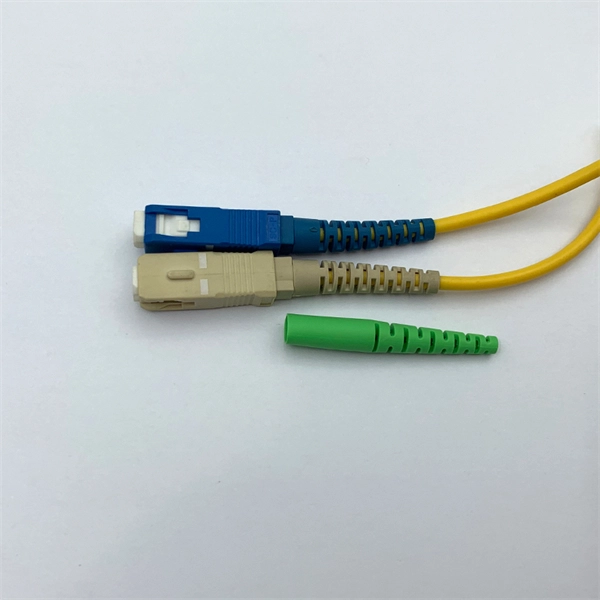
A pigtail is used to provide fiber optics with a connector. This creates a stable and reliable connection. Fiber pigtails are simple in appearance, yet essential in function. They are the bridge between fiber optic cables in the field and the equipment or patch panels that manage them. By combining factory-installed connectors with spliced bare fiber, pigtails ensure that network installers can create. A fiber optic patch cord is a short-length cable (typically 1–10 meters) with pre-terminated connectors on both ends. Its primary function is to connect active network devices (e., switches, routers, transceivers) to passive components (e., patch panels, ODFs) or other devices. A fiber optic pigtail is a short optical fiber cable that has a connector on one end and an exposed (unterminated) fiber on the other. The connector end plugs into devices like transceivers or patch panels, while the bare end is typically fusion spliced to a fiber optic cable. Get the wrong connector type, the wrong polish, or skip proper fusion splicing technique—and you're looking at elevated signal loss, increased back reflection, and a. A pigtail fiber indicates a short length of optical fiber cable that has a pigtail connector (for example, SC, FC, ST, LC, etc. This essential function of pigtail fiber is.
[PDF]

Outdoor Kitchen systems require structural durability, weather resistance, and long-term stability under changing environmental conditions. The manufacturing of outdoor kitchen cabinets involves a combination of material selection, precision fabrication, surface treatment, and quality control. Our manufacturing process blends traditional craftsmanship with advanced technology to create durable, stylish, and functional outdoor cabinetry. Partner with American Outdoor Cabinets as your expert outdoor kitchen manufacturer to deliver exceptional solutions tailored to your clients' need Our. hey have many advantages over wood. Wood for instance has to be finished, typically in mul�ple step processes, and in outdoor applica� ons typically fades, rots or warps. King StarBoard® ST and King StarBoard® WG are both environmentally stabilized and will not rust, delaminate, or ne re in a. Intelligent Manufacturing Ensures Precise Execution Once production begins, we treat every step as a critical part of quality assurance. Every technician follows detailed SOPs to ensure consistent results. This approach improves uniformity, strengthens traceability, and reduces human error. Dongguan shiru technology co. Was established in 2012. It is a company specializing in the production of outdoor projectors, three-proof intelligent constant-temperature cabinets, constant-temperature and constant-humidity cabinets, network cabinets, commercial display products, and sheet.
[PDF]

Calculate horizontal, vertical, or compound cable tray offsets based on bend angle, offset distance, and available installation space. Use this tool to estimate sloped section length, horizontal run requirement, cut marks, and installation feasibility. Click "Calculate" to see the minimum bending radius and the recommended standard tray bend radius (300mm to 900mm) required for safe installation. Tray bend radius must be ≥ minimum cable bend radius. Use the largest cable diameter in the tray for calculation. Always select the next higher standard. Would someone kindly let me know the formula to create a flat 45 in say 100 mm cable tray for example. So I can then use the formula on different cable tray sizes and to different angles. the cable tray is 3 metres in length, this doesnt matter but i think the width does. each bend is a 45 degree angle. but the length of the part in the centre is the concern as i have seen different. The method for producing bridge bend elbows is as follows: Take a 90-degree cable tray bend elbow as an example, and apply the same principles for 45-degree bends accordingly. The length of the bottom side (bottom diagonal) after bending the cable tray should be equal to the width of the cable. How to bend 22. 5 degree of cable tray 3 layer with the same distance and gap • HOW TO BEND 22. 5 DEGREE OF CABLE TRAY 3 LA. Measure this distance along the straight tray.
[PDF]
A cable management rack is designed to route, protect, and organize copper and fiber cables inside network cabinets. Beyond keeping cables tidy, a well-structured cable manager reduces cable stress, improves heat dissipation, and ensures bend-radius compliance for data transmission. This article provides a clear technical view of cable management racks, their structures, and how to select the right solution for modern networks. Cable management in server racks simply refers to organizing, routing, and securing power and data cables so they stay neat, accessible, and. Simply put, a cable rack is a structured set of shelves designed to organize, protect, and manage cables in various settings. These racks range from simple, affordable options to complex, high-capacity models that accommodate a vast number of cables. The benefits of using cable racks are numerous. Horizontal cable management is a cornerstone of efficient IT infrastructure, ensuring that server racks and enclosures remain organized, accessible, and functional., Ethernet, fiber optic, coaxial). At its core, it aims to: Minimize cable tangling, kinking, and wear. Simplify troubleshooting and maintenance. As businesses increasingly rely on robust network infrastructure, proper cable organization becomes critical for.
[PDF]
President Ibrahim Mohamed Solih highlighted on Friday the importance of connecting the country to the international fibre cable system, stating that it is a crucial step in establishing the Maldives as a hub for technology and innovation. The President's remarks at the inauguration of the Ocean. Today, we're announcing Dhivaru, a new Trans-Indian Ocean subsea cable system that will connect the Maldives, Christmas Island and Oman. This investment will build on the Australia Connect initiative, furthering the reach, reliability, and resilience of digital connectivity across the Indian Ocean. A new domestic Maldivan subsea cable from Dhiraagu and Ooredoo has landed on the island of Hulhumalé in the North Malé Atoll. Dubbed the Domestic Submarine Cable of Maldives (DSCoM), the telecommunications cable has five segments and will connect eight islands in the Maldives including Hulhumale'. Huawei Marine today announced that it has partnered with Ooredoo Maldives to deploy a Nation-wide Fiber Optic Submarine Cable, which will support the country's broadband policy and give the Maldives the most advanced ICT infrastructure in the SAARC region. The nationwide submarine cable utilizes.
[PDF]
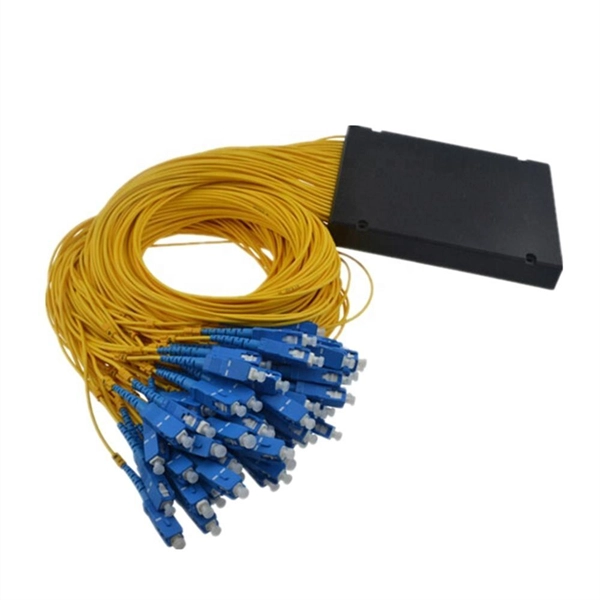
In a fused fiber splitter, the input fiber is aligned with the fused region, which causes the optical power to be divided between the output fibers. The tapering process gradually guides the light from the input fiber to the output fibers, resulting in a proportional split of the. A fiber-optic splitter, also known as a beam splitter, is based on a quartz substrate of an integrated waveguide optical power distribution device, similar to a coaxial cable transmission system. The optical network system uses an optical signal coupled to the branch distribution. It plays a crucial role in enabling multiple devices to share a single fiber optic connection, maximizing the utilization of the available. Essentially, a fiber optic splitter performs the following actions: Light Enters: Light travelling through a fiber optic cable enters the splitter. Passive Separation: Inside the splitter, the light is split into multiple separate beams using optical components. Conversely, it can also combine multiple signals into one. Its primary role is in Passive Optical Networks (PON), which are the foundation of. A fiber optic splitter is a passive optical component that divides a single incoming optical signal into two or more outgoing signals, or combines multiple incoming signals into one. However, modern splitters can have multiple inputs and outputs, allowing for the distribution of a single signal to dozens of receivers. The internal workings of a passive.
[PDF]