Hengtong, in collaboration with China Unicom, has successfully deployed and begun operating China Unicom's first commercial hollow-core fiber optic cable line. This hollow-core fibre cable is now serving a dedicated line for a bank branch in Jiangsu, where it has been integrated into the live. China has officially leapfrogged global broadband standards by launching the world's first commercial 10G fiber broadband network in Suning County, Hebei Province. The high-speed network is powered by the cutting-edge 50G PON (Passive.
[PDF]

GrenTech specializes in the development and production of optical splitters, offering a comprehensive range of 1xN and 2xN splitter products known for their low insertion loss and compact design. A must-have gigabit upgrade for your home or office in 2025! the nocin 1x2 splitter supports sc/lc/fc interfaces, features carrier-grade tapering technology, boasts a low insertion loss of just 0. 3db, and delivers a stable transmission rate exceeding 980mbps in real-world testingSuitable for. Wuhan Wolong communication technology Co., Ltd is located at Optical Valley, Wuhan, China, with the registered capital of 5. With development for many years Wolong is now one of the professional suppliers in communication industry. We are known as high-quality products with good. Shenzhen Shengcomm Co. Their PLC fiber splitters are particularly suited for applications in FTTH, passive optical networks. Product Details: Shiningfiber is a fiber optic manufacturer and supplier in China, offering a range of products including Terminal Boxes, Fiber Splitters, SFP Transceiver Modules, Patch Cords & Pigtails, Fast Connectors, and Accessories & Tools. China Fiber Patch Cable, Fiber Optical Splitter. Since 2020 is not over yet, we have to refer to the 2019 annual corporate financial report to list the top 10 fiber optic communication brand suppliers in China: In 2019, Huawei's revenue was US$122 billion, slightly lower than Microsoft's US$125. 8 billion, making it a veritable multinational.
[PDF]
A 24-port patch panel is a networking device that allows for the organization and management of incoming and outgoing network connections. It acts as an interface between different devices such as computers, switches, and routers, allowing for easy connectivity and communication. This guide explains how to use a 24-port patch panel to manage copper and fiber cabling in a small LAN, how to choose between different patch panel types, how to design your cabinet layout, and why a patch panel is still irreplaceable in 2026. What is a Patch Panel and Why it Matters in 2026? A. Choosing a 24-port patch panel is crucial for efficiency. Learn how it enhances network capabilities. Typically, patch panels are available in a huge number of port densities from 12. In this article, we will define what a patch panel 24 port is, explain its purpose, and discuss why it is a crucial component in organising network cables. A patch panel 24 port is a device used in network cabling to connect and organise multiple network cables in one central location. It is a. Choose a 24-port patch panel when you care about clean labeling, comfortable “finger room,” and fast moves/adds/changes—especially if technicians touch the rack often and you want straightforward port-to-port mapping (Panel 01–24 ↔ Switch 01–24). Choose based on port density, cabinet space.
[PDF]

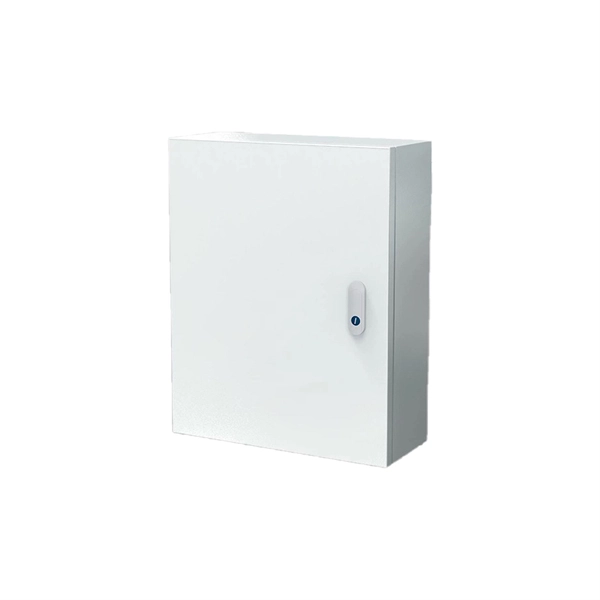
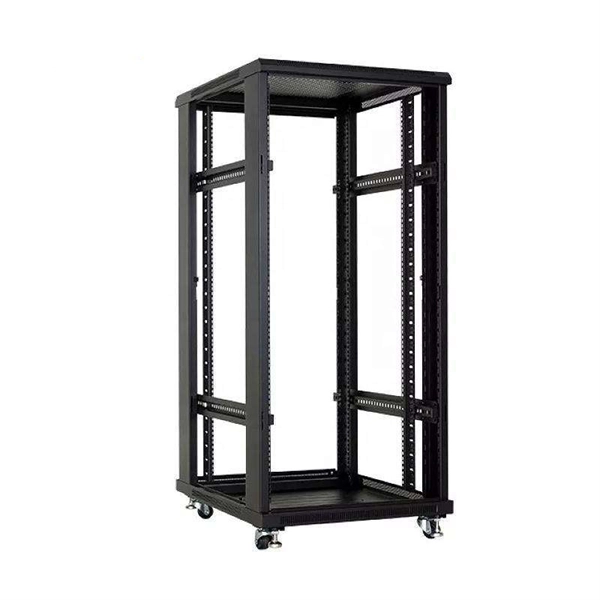
The use of locking cabinets with advanced steel and tamper-resistant designs utilizes physical barriers to limit access to sensitive materials, making them harder to reach for unauthorized individuals. This pressure can cause the gap below server cabinets, which is often 2” or more, to become an air stream between hot and cold aisles. The resulting mix of air reduces the effectiveness of a containment solution. The Cool Shield Magnetic Cabinet Skirt provides an easy fix for this issue. These. Commercial environments have evolved as technology advances, and having a robust cabling infrastructure is crucial for scalability, minimising downtime, and enhancing productivity. Educational institutions are increasingly adopting smart technologies and cloud-based resources, so the foundation of. Many network devices are stored in the cabinets. In order to meet the normal operation of these devices in the cabinets, when the computer room cabinets are full of various cabinets and devices, we need to consider how to place the network cabinets? 1. Network cabinet placement skills (1) Before. A network cabinet is defined as a physically enclosed compartment built to store networking gadgets like patch panels, modems, switches, and a multitude of cables. Network cabinets support large, modular network switches by providing additional space for cable management and side-to-side airflow solutions. Networking cabinets tend to have.
[PDF]

This comprehensive guide will explore the importance and benefits of this integration, provide an understanding of fiber optic cable and Ethernet ports, discuss their compatibility, and offer a step-by-step process for connecting them. Proper connection of fiber optic cables is essential to harness these benefits fully, as even minor errors can lead to significant performance issues like signal loss. This article will guide you through the necessary tools, materials, and methods on how to connect fiber optic cables effectively. But here's the thing: how you connect fiber optic cable really matters. A shaky connection means weaker signals, dropped streaming, or slow uploads. Get the hookup right, and you'll enjoy streaming, gaming, and video calls without interruptions. Fiber optic cables need careful handling. Unlike. The process to connect fiber optic cable to router requires careful attention to detail, but I'll walk you through every critical step with the precision and clarity you deserve. Why Use Fiber Optic Internet? Before diving into the setup, let's quickly recap why fiber optics are worth the effort: Lightning-fast speeds (up to 1 Gbps or higher). Low latency for. Connecting a fiber optic cable to an Ethernet network involves a few key steps and requires some specific hardware to ensure a seamless transition between these two different types of network mediums.
[PDF]

It plugs into network equipment (like switches, routers, or servers) and its primary function is to convert electrical signals from the device into light signals for transmission over fiber optic cables, and then convert received light signals back into electrical signals. People can also refer to an optical transceiver as a fibre optic transceiver or optical module. A transceiver is a mix of the words 'transmitter' and 'receiver. ' An optical transceiver includes an optical. This section explains the core IP and optical components used in traditional hierarchical networks. It helps readers understand the router, transponder, ROADM, amplifier, and management elements that form the baseline network architecture. In fiber optics, this data is sent in the form of pulses of light over an optical fiber, at very high speeds and across long distances. Essentially, these devices. Why choose Nokia for your optical network? The Nokia industry-leading optical network portfolio leverages highly vertically integrated coherent optical engines and includes the latest generation of open and flexible optical line systems, intelligent coherent pluggables, ultra power-efficient. This page provides an introduction to optical wireless networks. It compares short-range (directed and diffused) and long-range optical wireless technologies, highlighting their differences. The broadband wireless.
[PDF]
GPON uses passive optical network (PON) is a access in which a single optical fiber from a central location is shared by multiple end users through one or more in series (cascaded). Unlike traditional fiber connections, PON systems distribute optical signals from an (OLT) to many (ONUs) or (ONTs) without requiring active electronic equipment in the distribution network. The absenc.
[PDF]

The EFB configurator for network and server cabinets: No matter whether as a floor distributor or in the data center. As a standing cabinet or wall housing. Simply select the model, frame and accessories and put them together. Patch cabinets are network cabinets in which you manage all connections of your network, these are sometimes also sold as server cabinets. Servers are computers or programs that provide services to clients. Patch cabinets are network. FS provides a portfolio of server racks & cabinets that cater for your needs with a secure and complete infrastructure solution. At Network-Cabs we have a full range of AV/Data/Networking wall cabinets and shelving, along with every conceivable accessory, including drawers and products for cable management. Network-Cabs specialise in data and network cabinets but also stock an extensive range of patching cabinets, patch. For different environments, models are available with various protection ratings such as IP20 or IP55, making them suitable for standard IT environments as well as more demanding industrial applications. and plan your building infrastructure solutions in a time-saving and. A leading UK supplier of 19 inch racking and bespoke datacentre solutions for the IT, Data, Telecoms and Data Centre industries. Our UK-manufactured server cabinets combine durability, security, and.
[PDF]

How does a passive optical network work? A PON system consists of an optical line terminal (OLT) at the communication company's central office and several optical network units (ONUs) near end users. Typically, up to 32 ONUs can be connected to a single OLT. This paper presents the design and implementation of a passive optical network (PON) based on a gigabit-capable passive optical network (GPON) standard to deliver fiber-to-the-home (FTTH) services in a small-town setting. The proposed solution prioritizes cost-effectiveness, scalability, and. Passive optical networking (PON), like active optical networking, uses fiber-optic cabling to provide Ethernet connectivity from a main data source to endpoints. While there are many subtle differences, a clear distinction between active optical networking and PON topology is PON's use of a. Network designers and ISPs aiming for efficiency must focus on effective passive optical network design, with careful consideration of PON architecture planning and splitter placement. Instead of running a separate fiber strand to every home or office, a PON shares a single fiber using optical. Passive Optical Network (PON) technology is finding its way deep into the Local Area Network (LAN) to provide significant features, benefits and cost savings to large businesses and organizations. This is particularly true for the Gigabit PON (GPON) flavor, which is standardized by the.
[PDF]

We propose several attack detection schemes for wireless localization systems. Next, we define test metrics for two broad localization approaches: multilateration. The Internet of Things (IoT) has revolutionized the world, connecting billions of devices that offer assistance in various aspects of users' daily lives. Context-aware IoT applications exploit real-time environmental, user-specific, or situational data to dynamically adapt to users' needs, offering. Wireless Sensor Networks (WSN) support data collection and distributed data processing by means of very small sensing devices that are easy to tamper and cloning: therefore classical security solutions based on access control and strong authentication are di cult to deploy. In this paper we look at. Wireless Sensor Networks (WSNs) rely heavily on localization to provide location aware services for applications including military surveillance, smart agriculture, environmental monitoring and healthcare. Morden methods that combine range-based and range-free techniques including Time of Arrival. Location-awareness plays a crucial role in many wireless network applications, such as localization services in next generation cellular networks, search-and-rescue operations, logistics, and blue force tracking in battlefields. The performance of such networks can be significantly improved via the use of.
[PDF]

Cratus Technologies, a Brillanz Group Company, proudly inaugurated Pakistan's largest Smart Theft-Resistant Telecom Cabinet manufacturing facility in Humak, Islamabad, spanning an area of 100,000 sq. This state-of-the-art 100,000 sq., the facility aims to enhance the country's telecom infrastructure by increasing domestic manufacturing. We're innovators in the 19” racks & cabinets industry, manufacturing and supplying IT infrastructure solutions throughout U. Today, Bolein is established as a global force and a one-stop shop for IT infrastructure solutions. We're industry leaders yet still. MEK Network Cabinets protect electrical components from harsh environm. Getting in touch with us is easy. So if you have a query, a doubt or an opinion to share, there are three easy ways to contact us. Pick up the phone and call us. You can also email to us for a prompt reply or write to us at. Pakistan Network Cabinet Suppliers Directory provides list of Pakistan Network Cabinet Suppliers & Exporters who wanted to export network cabinet from Pakistan. Don't know your target market? Wanted to market your Network Cabinet products globally? Join TradeFord. com to list your products online.
[PDF]

They are used to connect two fiber optic cables with different connectors or to change the connector type of a cable. In this article, we will discuss how to use fiber optic adapters, product selection, engineering applications, and precautions in use. Fiber optic adapters, also known as couplers, play a crucial role in fiber optic networks by providing a connection point between two fiber optic connectors. Using the wrong type or neglecting cleaning can lead to signal loss and unstable connections. In this guide, we'll explore what fiber optic adapters are, their main types, how to choose the. Fiber optic adapters play a critical role in ensuring stable and low-loss fiber connections. This guide covers adapter types, selection criteria, cleaning tips, FAQs, and B2B customization options to help businesses build reliable and scalable fiber networks. It ensures precise alignment between fibers and facilitates effective transmission of optical signals. Without the proper adapter, signals can degrade or become unstable, which can dramatically decrease the reliability of a network.
[PDF]

OSFP, or Octal Small Form-factor Pluggable, is a high-speed transceiver form factor designed for next-generation data center networking. Compared with previous generations of optical modules, OSFP is optimized for higher bandwidth, better thermal performance and denser port. Among the various 400G optical transceiver form factors, OSFP stands out as a next-generation form factor specifically designed for high-speed Ethernet, offering clear advantages. This article introduces the fundamental concept and key characteristics of 400G OSFP Ethernet optical transceivers, and. Optech, a Taiwan-based optical transceiver manufacturer, provides professional 400G OSFP and 800G OSFP solutions designed for AI, cloud, high-performance computing, data center and advanced networking applications. Understanding MSA is critical for compatibility validation, cost. As data centers transition from 400G to 800G interconnects, bandwidth demand, power efficiency, and thermal constraints have forced the industry to look beyond traditional form factors. Designed to support 400 Gigabit Ethernet transmission with improved thermal performance and higher power capacity, OSFP modules are widely adopted.
[PDF]