✅ 1U steel aluminum rack drawer. ✅ Pre-drilled for easy rack ing on standard 19” rack. 81”) deep steel chassis with aluminum front. ✅ Cooling side vents. 19 inch Horizontal Rack Mountable 1U PDU Available. 6-way and 8-Way Universal Socket 19″ Rack Mount PDU Power Distribution Units Available in Different Brands Like TOTEN, NEC, Matrix e. Also Available in Non-Branded (Chinese) Variants. 37"H. Shop your favourite Server Racks & Cabinets with us because we offer a price matching guarantee. If you find better pricing, share the screenshot or URL. We will match the price and even give you an additional discount. We guarantee 100% after-sale service, and all of our products come with a full. We have Wall mount and a free-standing Data cabinet from 4U - 42U. Market Forecast By Form Factor (1U, 2U, 4U), By Data Center Type (Mid-Sized, Enterprise, Large Data Centers), By Tier Type (Tier 1, Tier 2, Tier 3, Tier 4), By Services (Design and Consulting, Installation and Deployment, Support and Maintenance), By Industry (Banking, Financial Services and. A 1U rack mount server cabinet is a cabinet in which one or more servers can be placed in a rack. There are different types of 1U server cabinets, which include; Small Compact 1U Server Cabinets: These cabinets are ideal for.
[PDF]
This comprehensive guide will delve into the most effective practices, key considerations, and strategic approaches for designing and implementing an efficient cabling system within a data center environment. At the core of data center connectivity are fiber optic cables, which are thin strands of plastic that transmit data using light signals or wavelengths, offering unparalleled speed and efficiency. The data superhighway paved by fiber optics forms the backbone of modern data centers, ensuring rapid. An end-to-end cabling system is an ideal solution for data centers especially when time for traditional cable installation and termination is limited. Explore advanced configurations, testing protocols, and industry best practices. As the demand for data surges, these switches become more vital in sustaining networks that are efficient, scalable, and. As data centers continue to grow in complexity and scale, efficient fiber optic cabling is essential for maintaining high performance, reliability, and scalability. Proper planning and implementation of cabling infrastructure can significantly reduce downtime, improve airflow, and ensure. center hardware layout design. This map should include the cabinet placements, patch panels, hardware, port-counts, trunking locations and power access connection points. Future plans for change will be discussed, as well as the bandwidth required. infrastructure design. The design's intent is to.
[PDF]
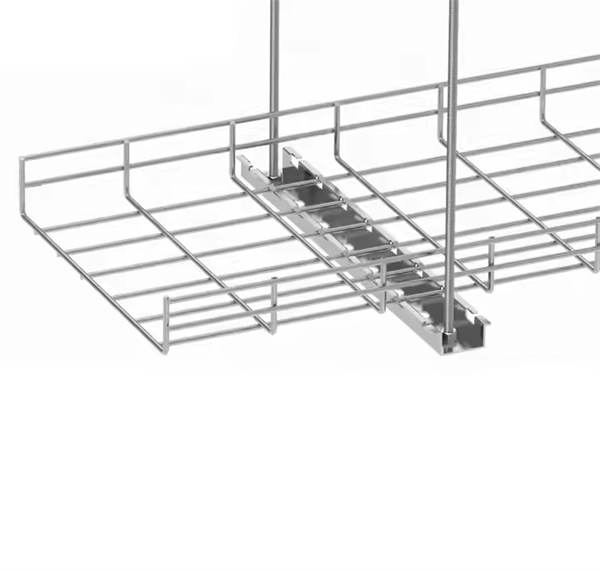
This cabling system organizes and manages fiber optic cables and copper cables through cable trays, patch panels, and structured cabling systems, enabling easy maintenance and scalability. Fiber and Cat6a can run together in shared trays when properly separated. Protect the fiber bend radius at all transition points. Avoid stacking heavy copper bundles on delicate fiber. Separate power cables from data cabling. Prevent tray overcrowding to maintain airflow. Wire mesh trays enhance. Data center cabling refers to the organized system of cables and related infrastructure to connect and manage the various components within a data center. This system ensures efficient data transmission and reliable connectivity in a data center environment. Structured cabling is a methodical. As data centers continue to grow in complexity and scale, efficient fiber optic cabling is essential for maintaining high performance, reliability, and scalability. Cabling not only supports current performance but also ensures future adaptability. Proper planning and implementation of cabling infrastructure can significantly reduce downtime, improve airflow, and ensure.
[PDF]

As AI transforms computing into a race shaped as much by climate, water and power as by code, modular micro-data centers are redefining digital infrastructure by strategically shifting heavy workloads to cooler, resource-rich regions while preserving latency-critical. As AI transforms computing into a race shaped as much by climate, water and power as by code, modular micro-data centers are redefining digital infrastructure by strategically shifting heavy workloads to cooler, resource-rich regions while preserving latency-critical. Artificial intelligence and cloud computing are driving multi-gigawatt expansions in regions where interconnection queues are already stressed, leaving developers in search of reliable, round-the-clock, low-carbon power that doesn't require hundreds of acres of land. Further reading: That search is. The global data center landscape is undergoing a seismic shift, driven by the explosion of AI, edge computing, and sustainable imperatives. Housed within a single IT rack, these solutions provide robust computing power, storage, and networking for environments that require localized data. While advancements in artificial intelligence, edge and high-performance computing help drive innovation across industries, they also put the squeeze on traditional data centers. This remarkable expansion, driven by the increasing adoption of prefabrication and micro-modular data center solutions. 28, 2024 /PRNewswire/ -- According.
[PDF]
Just connect an Ethernet cable from the modem or ONT to the closest Ethernet jack, and then do the same with the router in the room where you want it (if an Ethernet jack is available, that is). The network switch connecting all your Ethernet cables should automatically pair. The process to connect fiber optic cable to router requires careful attention to detail, but I'll walk you through every critical step with the precision and clarity you deserve. This comprehensive guide combines industry standards with field-tested practices to ensure you achieve a rock-solid. Setting up an internet connection involves a complex journey, starting at the data centers where internet services are routed, and ending at subscribers' home routers. This process involves multiple fiber optic components, accessories, and networking equipment to ensure fast, reliable, and secure. However, setting up a fiber optic connection to your router can seem daunting if you're unfamiliar with the process. In this guide, we'll walk you through how to connect a fiber optic cable to a router safely and efficiently. The fiber. The primary advantage of using a wireless solution for connecting your upstairs floor to your network is that it may not require drilling holes. The simplest way to extend a Wi-Fi network is via a Wi-Fi repeater (range extender). Check compatibility: Before you begin, make sure your router supports fiber optic connection.
[PDF]

Check 400G QSFP-DD price from the latest Cisco price list 2022. QSFP-DD transceiver module, coherent DCO generic, 400G-ZR. QSFP-DD 400G-ZR+ High TX Power DCO Pluggable - C-Band. QSFP-DD 400G-ZR+ High TX Power DCO - Licensed. There are several models available, including 400G-QSFP-DD-SR8, 400G-QSFP-DD-SR4, 400G-QSFP-DD-DR4, 400G-QSFP-DD-DR4+, and more, based on transmission distance, optical characteristics, and network environment requirements. You can select the most suitable model according to your specific needs. This plug-in module supports a data transfer rate of 400 Gbps, providing high-speed connectivity over long distances up to 3000 km. Designed for wired connectivity, it utilizes Digital Coherent Optics (DCO). AscentOptics' QDD-400S431-10CM 400G QSFP-DD PLR4 optical transceiver modules are designed to support 400G Ethernet, suitable for data center links up to 10km over single mode fiber with FEC. The 400G QSFP-DD PLR4 modules are compatible with IEEE 802. The transmission side converts. 400G QSFP-DD FR4 is a 400Gb/s Quad Small Form Factor Pluggable Double Density (QSFP-DD) optical module supporting link lengths up to 2km SMF through duplex LC connectors. It adopts 50G PAM4 and LWDM8 technology and supports 10km the maximum transmission distance.
[PDF]

Filter your results below. The 400G OSFP SR8 optical module supports speeds up to 425Gbps, short-range distance reaching up to 100m over 16 parallel multimode fiber (MMF) OM4. OSFP-400G-SR8 has an MTP/MPO-16 connector. 400G SR8 is designed based on PAM4 (Pulse Amplitude Modulation 4-level) modulation technology, DSP (Digital. MaxLinear's highly integrated PAM4 DSPs offer superior link-margin performance and low power to enable 100G, 400G, 800G, and 1. 6T optical interconnects inside the data center. NADDOD OSFP-400G-SR4 optical transceiver is a four-channel, parallel, pluggable fiber-optic OSFP with built-in Broadcom DSP and Broadcom VCSEL, designed for 400G Ethernet applications. It integrates four transmit and four receive lanes, each operating at 53. 125 GBd, delivering an aggregate. Support 100GBASE per lane in multimode fiber. Fibres: 8 fibres (ribbon patchord). Hot-pluggable OSFP Type form factor. Data rate up to 425Gbps (4x 10⁶. Connector: MPO-16/APC. Max reach: 100m, over multimode OM4 (MMF) fibre. This high-performance module is optimized for short-range data communication and interconnect applications, delivering exceptional speed and reliability. It integrates. The Marvell® PAM4 optical DSP portfolio, including Spica™ and Nova™ DSPs, addresses the critical the need for high-bandwidth optical interconnects to power AI infrastructure. Marvell leads the pluggable module ecosystem with low-power, high-performance silicon for AI, cloud, enterprise and 5G.
[PDF]

This guide explores the most common types of wire cable trays manufactured and used in China, highlighting their materials, structural designs, performance characteristics, and ideal applications. Regional concentration is skewed towards Tier-1 cities such as Shanghai, Beijing, and Guangzhou, accounting for roughly 60% of sales, driven by large-scale infrastructure projects and industrial zones. Emerging regional players from second-tier cities like Chengdu and Wuhan are gaining traction. Cable trays are essential for organizing and supporting electrical cables in commercial, industrial, and residential settings. These standards ensure that cable trays are. This report provides a comprehensive analysis of China's cable tray manufacturing landscape, highlighting key industrial clusters, regional supplier strengths, and critical sourcing considerations. It consists of connectors, hanging parts and perforated components. The combination of these components can effectively fix the. We provide a range of speciality cable management product & solutions to the Mining, Heavy Industrial, Renewable, Solar, HVAC and Oil & Gas markets across Africa. We offer extremely innovative solutions for even the most arduous & complex cable support application that would fall outside the scope.
[PDF]

The distribution box and switch box shall be installed upright and firmly. The distance between the switch box and its internal control fixed foundation electric information equipment should not be more than 3 m. There should be enough students around the distribution box and. Any copyrighted material included in this UFC is identified at its point of use. Removed reference to IEEE C57. 1 and Appendix A. COPYRIGHT © 2026 INTERNATIONAL CODE COUNCIL, INC. ICC Digital Codes is the largest provider of model codes, custom codes and standards used worldwide to construct safe, sustainable, affordable and resilient structures. Electrical clearances set the minimum safe distances for panels, overhead lines, pools, and buried wiring — and ignoring them has real consequences. Electrical clearances are the minimum separation distances the National Electrical Code (NEC) requires between wiring, panels, overhead conductors. Electrical panel clearance is a critical aspect of workplace safety, ensuring that electrical equipment is accessible and maintainable without risk of injury. Proper clearance prevents hazards such as electric shock, fires, and equipment damage, contributing to a safer working environment. Covers wiring, placement, standards, and expert tips for a compliant setup. It takes the incoming power and safely distributes it to different circuits throughout your building.
[PDF]
Central operating wavelength is a term used to describe the nominal value of the wavelength of light that is generated by a cable. It is the wavelength at which the majority of the optical power generated by the cable is concentrated, and is determined by measuring the peak power of. Light in optical fiber travels in the near-infrared region, far beyond visible light, and choosing the right transmission wavelengths is fundamental for minimizing loss and maximizing bandwidth. This article delves into why 850, 1310, and 1550 nm are standard, what less-known regimes and tradeoffs. Fiber optic transmission wavelengths are determined by two factors: longer wavelengths in the infrared for lower loss in the glass fiber and at wavelengths which are between the absorption bands. Thus the normal wavelengths are 850, 1300 and 1550 nm. Fortunately, we are also able to make. The OS1 designation refers to the cable's optical specifications, specifically its attenuation characteristics. OS1 cables have a maximum attenuation of 0. This standardization ensures interoperability between different manufacturers' equipment and facilitates the global deployment of fiber optic networks. Bandwidth refers to the capacity of a fiber optic cable to transmit data — much like the width of a highway determines how many vehicles can pass through at once. Typically measured in gigahertz (GHz) or gigabits per second (Gbps), it indicates the maximum amount of data that can flow through the.
[PDF]
An optical module sends data as light through fiber cables. Light is faster than electricity, making it great for quick communication. The optical module serves as a crucial component in optical fiber communication systems, operating at the physical layer, which is the lowest layer in the OSI model. Its primary function is to achieve optoelectronic conversion by converting electrical signals into optical signals and vice versa. This technology is crucial for fast and reliable data transfer in networks. Optical modules typically have an electrical interface on the side that connects to the inside of the system and an optical interface on the side that connects to the outside. Optical fiber transmission forms the backbone of modern high-speed communication networks, enabling the efficient transfer of massive datasets across vast distances. These modules typically consist of a transmitter, which converts electrical signals into a light signal, and a receiver, which converts the received signal back. In high-speed data networks, the seamless integration of fiber optic cables with SFP (Small Form-Factor Pluggable) modules is critical for reliable signal transmission. SFP transceivers bridge electrical and optical signals, making them indispensable in data centers, telecom networks, and.
[PDF]

Organizations expanding their IT footprint face critical decisions around infrastructure, availability, and cost. The benefits of data centers extend beyond simple equipment housing, offering growing companies strategic advantages in reliability, scalability, security, and. Their importance stems from several core functions: Data Storage and Processing: Data centers house the infrastructure to store and process the exponentially growing volumes of data generated by individuals, businesses, and governments. This includes everything from personal photos and videos to. The AI data center boom is reshaping economies while straining power grids, water supplies, and communities. Here's the real cost behind AI's rise. When ChatGPT launched in late 2022, I watched something remarkable happen. Within two months, it hit 100 million users, a growth rate that sent. In today's data-driven digital environment, many companies are increasingly relying on data centers to support digital transformation, improve operational efficiency, and meet customer expectations. But in the age of cloud computing, artificial intelligence, and the Internet of Things (IoT), a data center is far more than just a physical storage space for hardware. It is the beating heart of the digital economy, enabling everything from storing vast amounts of data to powering websites, apps.
[PDF]

An optical modulator is a critical component in the realm of photonics and optical communications, playing a pivotal role in manipulating light to encode information. This article delves into the nuances of high-speed, precision optical modulators and their. The basic operating principle of optical modulators at high speeds is usually based on the Mach-Zehnder interferometer (MZM) or the electro-optic effect. Taking the MZM as an example, the input light is split into two separate interferometer arms. An electrical signal is applied to one of the arms. The 100GBASE-SR4 QSFP28 optical module is a parallel 100G module, as shown in Figure 1 (a). QSFP28 uses four independent transmit and receive channels, employing a vertical-cavity surface-emitting laser (VCSEL) array and a 12-core multimode ribbon fiber. Light itself is a single waveform and cannot directly carry complex information. Therefore, certain characteristics of light (such as brightness and vibration state) need to be adjusted. A Silicon Photonics modulator is a high-speed photonic integrated circuit for optical data transmission in high-capacity optical networks. Silicon Photonics modulators in the configuration of a Mach–Zehnder interferometer, in which a PN-junction rib-waveguide phase shifter is inserted in each arm.
[PDF]