Power over Ethernet (PoE) is a technology that enables the transmission of electric current and data simultaneously over Ethernet cables, eliminating the need for separate power cables. This section wil.
[PDF]

In this video, I explain how to set up a Power over Ethernet (PoE) switch, and I also detail some things to consider when setting up your PoE switch. more Audio tracks for some languages were automatically generated. Learn more. UniFi Switch Settings let you configure how your network switches handle traffic, VLANs, port behavior, and Layer 3 isolation. These settings are critical for managing both basic Layer 2 switching and advanced Layer 3 routing features in UniFi deployments. Some settings apply to individual VLANs. A powered device can receive redundant power when it is connected to a PoE switch port and to an AC power source. After the switch detects a powered device, the switch determines the device power requirements and. The correct connection between PoE switches and routers is a key step in building a stable and efficient network. Next, we will delve into the usage knowledge of PoE switches and the connection methods with routers. 1、 Understand PoE switches and routers (1) PoE switch PoE switch is a network. HPE Aruba Networking switches are designed to be used primarily in wiring closets directly connected to computers, printers, and servers to provide dedicated bandwidth to those devices. Additionally, the HPE Aruba Networking switch family supports the IEEE 802. 3bt. NOTE: The following PoE CLI commands are available starting in FortiSwitchOS 3.
[PDF]

Huawei S6320-SI series switches are Huawei-developed next-generation multigigabit 10GE fixed switches. The S6320-SI can provide high-speed wireless access, and access for 10GE servers in data centers or function as access/aggregation switches on a campus network. As a result, it decreases energy use by over 40% compared to traditional switch systems. The S5730-SI series switches are next-generation standard gigabit Layer 3 Ethernet switches. The S5700-EI series gigabit enterprise switches (S5700-EI) are next-generation energy-saving switches developed by Huawei to meet the demand for high-bandwidth access and Ethernet multi-service aggregation. Based on the cutting-edge hardware and Huawei Versatile Routing Platform (VRP) software, the. S5700-10P-LI-AC Switch is a simplified Gigabit Ethernet Switch with 8*10/100/1000Base-T Ethernet ports, 2 Gigabit SFP, AC powered. The product features the green and energy-saving and provides flexible full Gigabit access and 10 Gigabit uplink ports. Moreover, it features innovative advanced sleep. For small businesses and IT managers juggling tight budgets and limited rack space, the Huawei 10 port switch often emerges as a silent hero. This unassuming device bridges the gap between basic connectivity and scalable network performance, but its true value lies in solving problems most.
[PDF]

Shines green when PoE is being drawn (active PoE). Shines blue when link speed is 10 Gbps (max port speed). Turned off when device is online. The PSX28 is equipped with several LED indicators to display the device's operational status and activity. The number of PoE devices that they can run depend on the model, how much current each device requires, and on the power supply used for the POEmax. The 100 Watt (W) model supplies enough power for seven devices to draw the maximum load (13W each). The 50W models run four or seven devices in any. The lights on POE switches mainly include power indicator lights, system operation status lights, POE mode status lights, and business interface indicator lights. Their meanings are as follows: Power indicator light (PWR): Green constantly on: indicates that the power supply of the switch is normal. POEmax S witch Assembly (8 RJ-45 Ethernet Ports w/ 1 PoE Input, 8 Link-Activity LED' s, 1 Po wer LED, P ower Input Jack, 2 Slide R ails w/Rubber F eet). 5Amp); IPS8450/8750 Models: 50W (1Amp); IPS8000/8400 Models: None, PoE. Perhaps it crashed before it could finish displaying it. Example of the complete display here:.
[PDF]

Search results of Top 2 Cabling and Fibre Optics Companies in Papua New Guinea, near me. Listings are verified with accurate business information. Cetelnet is a leading fiber optic contractor Papua New Guinea, delivering expert network design, installation, splicing, and maintenance services for clients across the country. From high-speed internet rollouts in urban centers to connectivity solutions in rural and remote areas, Cetelnet provides. Fully licensed since 2017 as an internet service provider under the National ICT Authority (NICTA) of Papua New Guinea, Netlink is dedicated to delivering high-speed, reliable connectivity across the nation. Click here to view our current satellite plans. East Coast NetLink provides fiber optics connectivity solutions for businesses and organizations in Papua New Guinea. We offer high-speed, reliable and secure internet access, data transmission and cloud services through our extensive network of fiber optic cables and equipment. Our fiber optics. Bringing Papua New Guinea closer together with Affordable Internet. We are commited to bring digital equity and equality at an affordable price to all Papua New Guineans. Affordable internet connectivity services will create. These Networking Hubs & Switches are being sold at Theodist showrooms in Port Moresby, Lae and Mount Hagen, Papua New Guinea. Upgrade your company network now!.
[PDF]

The main switch, or main breaker, controls the entire electrical supply to the distribution box. This large switch allows you to disconnect all power to the building during emergencies or maintenance work. It's typically rated for the maximum current capacity of the electrical. A distribution box, also known as a distribution board, electrical panel, or breaker box, is an enclosure that houses electrical components responsible for distributing electricity throughout a building. It receives power from the main electrical supply and divides it into separate circuits, each. A distribution box is a key part of electrical systems in buildings. It helps control and distribute electricity to different areas. Inside, you'll find parts like circuit breakers and fuses that protect the system from problems like overloads and short circuits. Today, electrical systems are essential for homes and industries. But what exactly is a power distribution box, and why is it so essential in our daily lives? The DB panel board controls the flow of electricity. Distribution boards, often referred to as electrical panels or breaker boxes, serve as the nerve center of any electrical system. Key components of an electrical panel include the main circuit breaker, individual circuit breakers, and bus bars, all playing vital roles in. The power distribution boxes deliver electricity from the main electrical main to other circuits. Main Distribution Board (MDB) 2. Unitized Panel.
[PDF]
The Aggregation Switch has a 160 Gb/s switching capacity with a 119. 04 Mpps forwarding rate, features steel construction with a fanless design, and can be rack mounted using the included kit. An Aggregation or "Top-of-Rack" switch is designed to connect everything in a rack at high speeds, then have an even bigger pipe out to the rest of the network. Power Consumption A 32-port, Layer 3 switch made for high-capacity 10G SFP+ and 25G SFP28 connections. The three layers of a traditional three-layer network design are the core layer, aggregation layer, and access layer. As the physical part of the aggregation layer, aggregation switches typically play a. IEEE 802. 3ad link aggregation enables you to group Ethernet interfaces to form a single link layer interface, also known as a link aggregation group (LAG) or bundle. The LAG balances. What is an Aggregate Switch? Understanding Centralized Network Management An aggregate switch is a high-capacity network switch that consolidates connections from multiple access switches, acting as a central point for managing network traffic and providing enhanced bandwidth capabilities. It is. Switch aggregation, also known as link aggregation or trunking, is a method used in computer networking to combine (aggregate) multiple network connections in parallel. This arrangement increases throughput beyond what a single relationship could sustain, offers redundancy in case one of the links.
[PDF]

One SFP module is inserted into the switch's SFP port, and another module is inserted into the SFP port of the target device, facilitating data transmission through the fiber optic cable. SFP ports are small hot-pluggable module interfaces typically used for connecting fiber optics or copper cables. They support various transmission rates and distances, including 1G, 10G, and higher speeds. SFP modules can be selected based on the requirements, whether it's single-mode fiber for. An SFP port is a physically small slot in a networking device that accepts an SFP module insert. Most modern networking devices, such as Ethernet switches, servers, routers, network interface cards, and fiber media converters, generally have two or more built-in SFP ports. You may connect different. In plain terms, an SFP port on a gigabit switch is the little plug-in hole that gives the switch physical flexibility — the ability to use fiber one minute and copper the next without buying a different switch. Unlike fixed RJ45 copper ports, SFP ports support both fiber and copper modules, enabling far longer distances, greater flexibility, and improved scalability in enterprise. First, to connect SFP modules with fiber optic cables, ensure that the module type matches the line, as there are different modules for single-mode and multimode fiber. Next, insert the module firmly and securely into the SFP port, then attach the cable to the module using the connector. Switches with SFP ports can.
[PDF]

Solution: To solve this problem, you can follow these steps: Check if the fiber and optical modules are compatible. A switch must use optical or copper modules that have been certified for use on Huawei switches. Huawei is not liable for any problem caused by the use of non-certified optical or copper. This article summarizes several solutions for using optical modules with switches and common problems encountered during usage, along with specific solutions. Huawei S5720-32P-EI-AC Switch II. During use, reading optical module information helps understand its real-time operating status, enabling faster troubleshooting of link abnormalities. The following uses the. ers, only the short transmission distance is supported. Whether optical attenuators need to be deployed at the receive end o. A leaf-spine refresh can fail in subtle ways: a port locks in an unexpected speed, optics negotiate but traffic stays dark, or DOM readings mismatch. This case study helps network engineers and field technicians validate a Huawei CloudEngine transceiver against switch requirements before rollout.
[PDF]
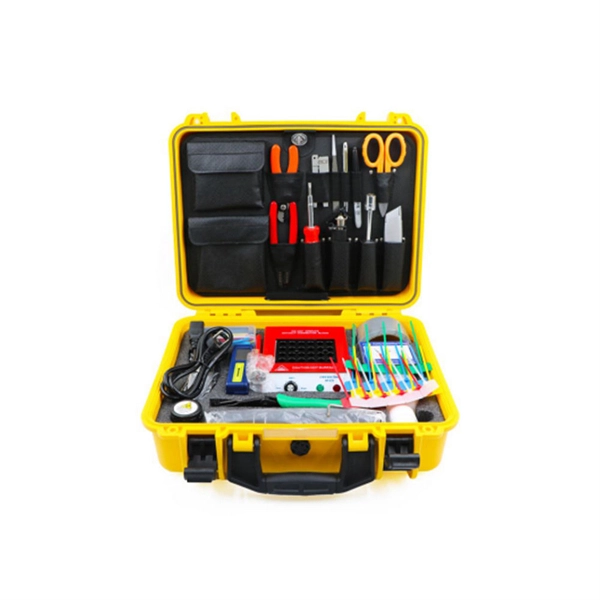
6 core Fiber Optical Splicing With 24 Port LIU || Full Installation || Beginner Watch this video Fiber optic splicing is the process of joining two fiber optic cables together to create a conti. more. In this article, we'll explain how to connect multiple Ethernet switches using fiber optic cables and the equipment required for this to work. Network topology refers to the way in which the links and nodes of a network are arranged in relation to each other. Simply put, it defines how network. Choose an SFP module based on the fiber optic cabling that will be connected to the network switches. SFP transceiver modules almost always require two fiber optic cable strands. Most modern SFP transceiver modules. Most modern fiber-enabled network switches require an SFP transceiver module featuring a duplex (two strand) multimode OM3 or duplex single mode OS2 connection with LC connectors. Direct attach cables with pre-terminated SFP connections may also be used. Download the Application PDF SFP transceiver. This article will guide you through the necessary tools, materials, and methods on how to connect fiber optic cables effectively, ensuring you achieve optimal performance from your fiber optic network. These diagrams help engineers plan infrastructure for residential and commercial buildings. By using light signals, fiber optics provide faster speeds and better reliability than.
[PDF]

This document describes auto provision options for the L3VNI, core-SVI and core-vlan using VNID on Catalyst 9000 Series Switches. Cisco recommends that you have knowledge of these topics:. If your access/distribution switches connect the user vlans to the core using trunks, then you will need to configure the vlans on both the access/distribution and on the core. If the access/distribution switches connect the user vlans to the core using access ports (per vlan) then you will need to. Should the VLANs be created and configured on the core switch, or directly on the Peplink 3? Which approach is considered best practice, and why? Thanks in advance for your advice! Either is fine, but whatever you choose, that needs to be the one and only place you manage them from or add new ones. In this scenario, IP addresses of the interfaces connecting the core switch to the BRASs and firewalls and OSPF need to be configured on the core switch, so as to implement connectivity between the user network to egress network through the core switch. When configuring interfaces and routes, you. Three methods of VLAN partition in switch are introduced in detail When using switches, we usually need to divide VLANs. How do switches divide VLANs? If you don't know much about VLAN, this article can take you to learn more about VLAN, with detailed comments. Can you help me with the best practice for this issue? Welcome to the community. We will probably need more info. Natting is done at the.
[PDF]

No, TP-Link does not directly provide fiber optic internet service to homes or businesses. The TL-SG1428PE is fully compatible with PoE devices, such as IP cameras, access points, and IP phones. Compliance with the 802. 3af/at PoE+ standard supports up to 30 W on each PoE port. Instead, TP-Link offers a wide range of networking equipment designed to work seamlessly with fiber optic internet connections that you get from your Internet Service Provider ISP. Think of them as the. Both of the TP-Link switches have SFP ports which can be used to connect to other SFP devices such as other network switches. The nice thing about using these ports is that you do not have to use up any of your Ethernet connections. Default port rate: 10G/2. To connect. My main requirements for a new home lab switch were passively cooled and fully managed devices that include features such as a full CLI, jumbo frame support, SNMPv3, sFlow, LLDP, and static routing. I originally began looking at Ubiquiti Unifi 8-port Aggregation (USW-Aggregation) switches for $269.
[PDF]

A virtual switch in Hyper-V is a software-based network switch that allows virtual machines to communicate with each other, with the host computer, and with external networks. When you first install the Hyper-V role on Windows Server, you can optionally create a virtual switch at the same time. To learn more about virtual switches, see Hyper-V Virtual Switch. It acts like a physical network switch but exists entirely in software, managing network traffic for your VMs. Hyper-V. This guide walks you through creating and configuring a virtual switch to connect your VMs to external, internal, or private networks. What is a Virtual Switch in Hyper-V? Be sure to check out our previous blog post for a step-by-step guide on installing the Hyper-V Server role on Windows Server. A network switch (also called switching hub, bridging hub, Ethernet switch, and—by the IEEE — MAC bridge) is networking hardware that connects devices on a computer network by using packet switching to receive and forward data to the destination device. A network switch is a multiport network. An Internal Virtual Switch in Hyper-V lets your virtual machines talk only to each other and your host PC. Open the Virtual Switch Manager and create a new Internal switch. Then assign this switch to the network adapter of each guest system. Depending on the type.
[PDF]
