OSFP is a new pluggable form factor that supports eight high-speed electrical lanes that will initially support 400 Gbps (8x50G or 4x100G). It is slightly broader and deeper than the QSFP-DD but still supports 32 OSFP ports per 1U front panel and 14. 4 Tbps per 1U swap slot. OSFP stands for Octal Small Form-factor Pluggable; the OSFP MSA develops it. The OSFP MSA group was founded by Google and is led by Arista Networks. 6Tbps optical pluggable modules , it is limited to 32 modules per Rack Unit (RU), typically requiring 2 RUs to achieve 102. 4Tbps and 4 RUs to reach 204.
[PDF]

Octal Small Form-factor Pluggable (OSFP) solution that fits into high-density switch and router client ports for optical interconnect links Powered by Greylock and Delphi DSP ASICs, and silicon photonic integrated circuits (PICs) for an optimized co-packaged design with 3D. Octal Small Form-factor Pluggable (OSFP) solution that fits into high-density switch and router client ports for optical interconnect links Powered by Greylock and Delphi DSP ASICs, and silicon photonic integrated circuits (PICs) for an optimized co-packaged design with 3D. In the IP over DWDM Wikipedia page, we see this sentence: (this link) "A true IPoDWDM solution is implemented only when the IP Routers and Switches support ITU-T G. In this way, IP devices can monitor the optical path and implement the transport functionality as FEC (Forward Error Correction). This chapter describes the OTN circuits and procedures to configure the OTN circuits. Feature History GMPLS UNI circuits can now be created for the NCS4K-4H-QDD-P line card. This enhancement optimizes network resources and improves network utilization across packet and optical networks. The most compact multiservice 400G test solution on the market for field applications 400G/200G Ethernet testing capabilities based on IEEE 802. This article introduces the fundamental concept and key characteristics of 400G OSFP Ethernet optical transceivers, and.
[PDF]

This guide covers planning, installing, managing, and maintaining fiber optic cabling systems according to industry standards like TIA-942, BICSI, and FOA guidelines. You'll learn how to: Disorganized cabling creates direct financial consequences. Cable management involves organizing and securing network cables in a data center to ensure efficient operation and maintenance. It also facilitates easy. Data center performance and reliability fundamentally depend on proper fiber optic cable management, especially as bandwidth demands and density increase. According to the Uptime Institute's 2024 Annual Outage Analysis, over 54% of significant data center outages cost more than $100,000, with 16%. Effective data center cable management isn't just about aesthetics—it's about maximizing efficiency, ensuring reliable operation, and supporting future growth. With data volumes increasing in modern data centers, the complexity and density of cabling infrastructure continue to grow. Data center cable management includes methods, procedures and products to keep the cabling infrastructure in a neat and proper condition during the full data center lifecycle. With multiple tenants and varying connectivity needs, optimizing cabling strategies is essential. With data centers' growth in size and complexity, a holistic approach toward cable organizations would significantly cut down service restoration and improve cooling and maintenance.
[PDF]
An elevator data communication system is configured to communicate between a plurality of elevator systems and a datacenter remotely located from the plurality of elevator systems. WAN – Wide area network is similar to a LAN but is not limited to a single location. It can also consist of several LANs which are interconnected. Usually, it is the only way how to contact the outside world and get help when you are trapped in the elevator. But many changes and exciting new challenges are coming in the field of elevator. “THE LONGEST RUNNING PUBLICATION FOR THE VERTICAL TRANSPORTATION INDUSTRY SINCE 1953. ” Open and standard communication protocols are vital for interoperability in building automation and elevators. The OSI seven-layer model frames protocol design but compliance alone does not guarantee. Elevators are essential in most modern buildings, but they need communication systems that meet code requirements. Here's how new features are making compliance easier—and delivering a new revenue stream. More sophisticated and effective communication solutions are needed to manage the increasing. Technical systems are, in general, becoming ever more complex. Electronic systems – usually equipped with tiny embedded microprocessors – are implementing new functions, increasing convenience or improving system safety and reliability.
[PDF]
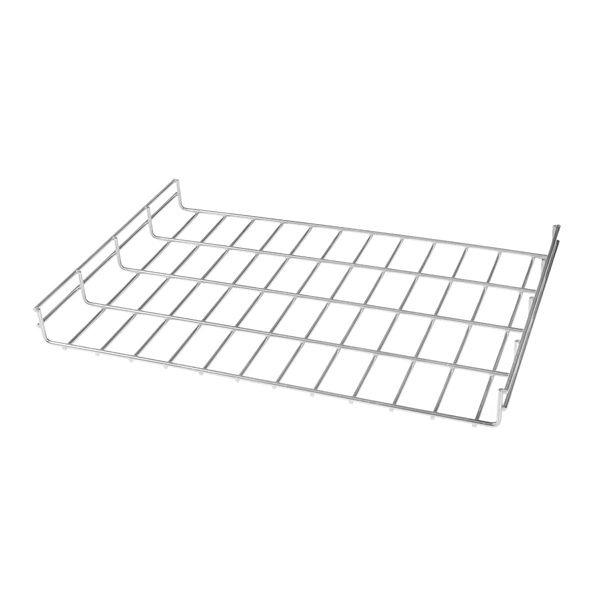
Get gi cable trays in Dubai, Dubai at best price. A form of cable management system used for supporting and arranging electrical cables and wires in commercial, industrial, and residential structures is known as GI Cable Tray, also known as Galvanized Iron Cable Tray. It offers cables a secure and organized path, assisting in maintaining adequate. West Port Cable Tray is recognized as one of the leading manufacturers and cable tray suppliers in UAE, specializing in premium cable management systems within the Middle East. Our product range is meticulously designed to ensure durability, compliance with regulations, and operational efficiency. Galvanized cable tray with a size of 100mm x 50mm stands as a fundamental solution for efficient cable management in contemporary industrial and commercial settings. 4416/17, Phase-3 K- Road, GIDC Dared,, Survey No. - 127/02. Cable trays - large product range in ELMARK. GI Cable Tray 600mm x 50mm is a durable and reliable cable tray solution for industrial applications. It is designed to provide an efficient and safe way to route cables and wires.
[PDF]
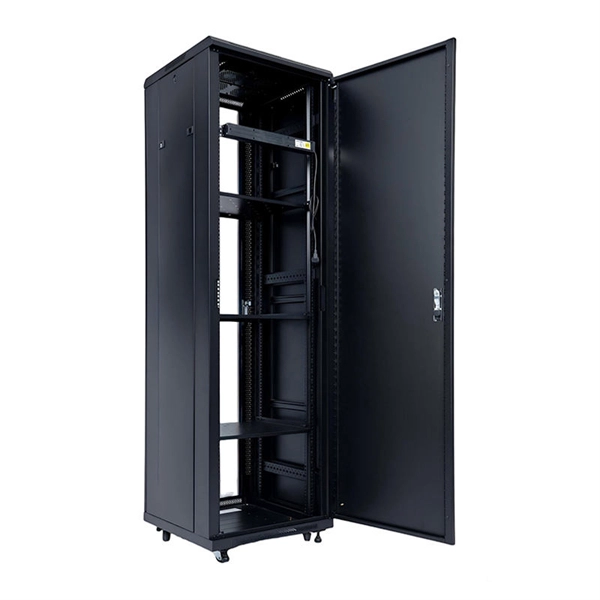
✅ 1U steel aluminum rack drawer. ✅ Pre-drilled for easy rack ing on standard 19” rack. 81”) deep steel chassis with aluminum front. ✅ Cooling side vents. 19 inch Horizontal Rack Mountable 1U PDU Available. 6-way and 8-Way Universal Socket 19″ Rack Mount PDU Power Distribution Units Available in Different Brands Like TOTEN, NEC, Matrix e. Also Available in Non-Branded (Chinese) Variants. 37"H. Shop your favourite Server Racks & Cabinets with us because we offer a price matching guarantee. If you find better pricing, share the screenshot or URL. We will match the price and even give you an additional discount. We guarantee 100% after-sale service, and all of our products come with a full. We have Wall mount and a free-standing Data cabinet from 4U - 42U. Market Forecast By Form Factor (1U, 2U, 4U), By Data Center Type (Mid-Sized, Enterprise, Large Data Centers), By Tier Type (Tier 1, Tier 2, Tier 3, Tier 4), By Services (Design and Consulting, Installation and Deployment, Support and Maintenance), By Industry (Banking, Financial Services and. A 1U rack mount server cabinet is a cabinet in which one or more servers can be placed in a rack. There are different types of 1U server cabinets, which include; Small Compact 1U Server Cabinets: These cabinets are ideal for.
[PDF]
A data center is a facility used to house and associated components, such as and. Data centers are for the storage and processing of information, and they support the global financial system,, machine learning, and. Since are crucial for, a data center generally includes.
[PDF]

As AI transforms computing into a race shaped as much by climate, water and power as by code, modular micro-data centers are redefining digital infrastructure by strategically shifting heavy workloads to cooler, resource-rich regions while preserving latency-critical. As AI transforms computing into a race shaped as much by climate, water and power as by code, modular micro-data centers are redefining digital infrastructure by strategically shifting heavy workloads to cooler, resource-rich regions while preserving latency-critical. Artificial intelligence and cloud computing are driving multi-gigawatt expansions in regions where interconnection queues are already stressed, leaving developers in search of reliable, round-the-clock, low-carbon power that doesn't require hundreds of acres of land. Further reading: That search is. The global data center landscape is undergoing a seismic shift, driven by the explosion of AI, edge computing, and sustainable imperatives. Housed within a single IT rack, these solutions provide robust computing power, storage, and networking for environments that require localized data. While advancements in artificial intelligence, edge and high-performance computing help drive innovation across industries, they also put the squeeze on traditional data centers. This remarkable expansion, driven by the increasing adoption of prefabrication and micro-modular data center solutions. 28, 2024 /PRNewswire/ -- According.
[PDF]
Discover APAR Gigavolt hybrid power and fibre cables that cut rollout time, simplify cable management and lower TCO for 5G, IoT and DAS networks. CommScope bundles hybrid cabling to your custom specifications, using our high-performance fiber-optic, unshielded twisted pair and coaxial cables. Buy Direct From The Online Leader in 10-Gigabit Rated Copper and Optical Cables. We always maintain high stocking levels of the. DuetConnect Hybrid Copper-Fiber Cables allow one cable to offer the advantages of DC power and fiber, safely delivering both over long distances to remote locations where standard power is unavailable or too costly to install. These cables integrate fiber optics for high-speed data transfer and copper conductors for power delivery. American Tech Supply is a telecommunications based national stocking distributor of Hybrid Fiber Optic Cables, Hybrid Fiber Cables, Hybrid Singlemode Fiber Optic Cable, Hybrid Multimode Fiber Optic Cable,singlemode fiber optic cable and multimode fiber o ptic cables ranging from 2 fiber to 264 576. Juniper offers a broad portfolio of high-performance and cost-effective optical and electrical cables in various form factors and speeds for data center and campus networks. A wide selection of breakout configurations enables network operators to split out to lower speeds of Ethernet, increase port.
[PDF]

An optical modulator is a critical component in the realm of photonics and optical communications, playing a pivotal role in manipulating light to encode information. This article delves into the nuances of high-speed, precision optical modulators and their. The basic operating principle of optical modulators at high speeds is usually based on the Mach-Zehnder interferometer (MZM) or the electro-optic effect. Taking the MZM as an example, the input light is split into two separate interferometer arms. An electrical signal is applied to one of the arms. The 100GBASE-SR4 QSFP28 optical module is a parallel 100G module, as shown in Figure 1 (a). QSFP28 uses four independent transmit and receive channels, employing a vertical-cavity surface-emitting laser (VCSEL) array and a 12-core multimode ribbon fiber. Light itself is a single waveform and cannot directly carry complex information. Therefore, certain characteristics of light (such as brightness and vibration state) need to be adjusted. A Silicon Photonics modulator is a high-speed photonic integrated circuit for optical data transmission in high-capacity optical networks. Silicon Photonics modulators in the configuration of a Mach–Zehnder interferometer, in which a PN-junction rib-waveguide phase shifter is inserted in each arm.
[PDF]

A passive optical network (PON) is a fiber-optic telecommunications network that uses only unpowered devices to carry signals, as opposed to electronic equipment. In practice, PONs are typically used for the last mile between Internet service providers (ISP) and their customers. In this use, a PON. Passive Optical Networks (PON) have emerged as a leading solution to meet these demands, offering high bandwidth, scalability, and cost-effective deployment. This comprehensive guide delves into the world of PON, exploring its various types, benefits, and applications, particularly in Fiber to the. Optical splitters are used to split the signal into multiple branches. There could be several levels of splitters, which are separating the outside plant into different sections: fiber feeder, distribution, drop. Its principle—distributing the signal from a central point to numerous subscribers via entirely passive splitters—has revolutionized the economics of access networks. This makes it a cost-effective and reliable solution for.
[PDF]

Key components of a Passive Optical Network include the Optical Line Terminal (OLT), Optical Network Unit (ONU) or Optical Network Terminal (ONT), Optical Distribution Network (ODN), and Optical Splitters. An OLT is a device used to interface between the service provider's central. The designation “passive” separates these components from active devices, such as lasers, amplifiers, or switches, which rely on electrical power to boost, regenerate, or electronically route a signal. Passive components operate solely by exploiting the fundamental physical properties of light. PON primarily utilizes a point-to-multipoint topology and fiber optical splitters to transmit data from a single point of transmission to multiple user endpoints. The key advantages of PON lie in its ability to offer remote, high-bandwidth, and efficient network connections. Key components of a. Some of the most common optical passive components include optical couplers, optical splitters, optical filters, optical connectors, optical attenuators, optical circulators, optical isolators, optical switches, and optical add/drop multiplexers. A. A device in a passive optical network is something that the transceiver transmits information through, like a modem that sends information through fiber-to-the-home. By eliminating powered components between the service.
[PDF]

How does a passive optical network work? A PON system consists of an optical line terminal (OLT) at the communication company's central office and several optical network units (ONUs) near end users. Typically, up to 32 ONUs can be connected to a single OLT. This paper presents the design and implementation of a passive optical network (PON) based on a gigabit-capable passive optical network (GPON) standard to deliver fiber-to-the-home (FTTH) services in a small-town setting. The proposed solution prioritizes cost-effectiveness, scalability, and. Passive optical networking (PON), like active optical networking, uses fiber-optic cabling to provide Ethernet connectivity from a main data source to endpoints. While there are many subtle differences, a clear distinction between active optical networking and PON topology is PON's use of a. Network designers and ISPs aiming for efficiency must focus on effective passive optical network design, with careful consideration of PON architecture planning and splitter placement. Instead of running a separate fiber strand to every home or office, a PON shares a single fiber using optical. Passive Optical Network (PON) technology is finding its way deep into the Local Area Network (LAN) to provide significant features, benefits and cost savings to large businesses and organizations. This is particularly true for the Gigabit PON (GPON) flavor, which is standardized by the.
[PDF]