This qualitative inquiry discusses AI governance in Southeast Asia in the past 5 years and what regulatory policies ASEAN can explore to better modulate its use among its member states. Artificial Intelligence (AI) is a driving force behind ASEAN's ongoing digital transformation. With a rapidly expanding digital economy, AI is projected to contribute between 10% and 18% of the region's GDP by 2030 (Prilliadi, 2025). Among the most disruptive innovations is Generative AI, which. The sixth ASEAN Digital Ministers' Meeting (ADGMIN) held in Hanoi marked a pivotal transition for the region's technical landscape. Under the theme "Adaptive ASEAN: From Connectivity to Connected Intelligence," ministers from the 11 member states—notably including Timor-Leste's historic. onal standards. Recognizing that ASEAN countries are at “different stages of digital development,” the guide is intended to offer ASEAN member states a “flexible” approach to national policies on how to implement, design, develop, and deploy AI systems safely and responsibly, with an eye toward. Only six ASEAN Member States (AMS) have explicit artificial intelligence (AI) strategies, creating regional fragmentation in governance, data protection, and ethical safeguards. It considers the unique political landscape of the region, defined by the adoption of unique norms such as.
[PDF]

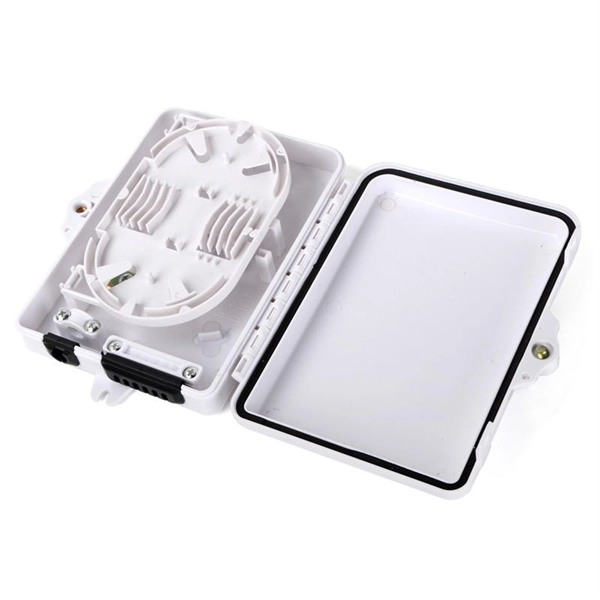
This comprehensive report provides an in-depth analysis of the global optical splitters market, forecasting its trajectory from 2019 to 2033. The study meticulously examines market dynamics, technological advancements, and strategic initiatives shaping the industry. Optical Splitter has a multiple input end and multiple output end fiber tandem devices, M * N is commonly used to represent M input end and N output end of one optical splitter. According to APO Research, The global Optical Splitter market is projected to grow from US$ million in 2024 to US$. The global Optical Splitters market is poised for significant expansion, projected to reach a substantial market size of approximately $1. 5 billion by 2025, with an anticipated Compound Annual Growth Rate (CAGR) of around 12% through 2033. 5% from 2026 to 2032. tariff policies introduce profound uncertainty into the global economic landscape. 6 billion by the end of the forecast period. Optical splitters, also referred to as fiber optic beam splitters. The Optical Cable Splitter Market is experiencing consistent expansion driven by accelerating fiber-to-the-home (FTTH) deployment, 5G infrastructure expansion, hyperscale data center investments, and increasing bandwidth consumption.
[PDF]

This article unpacks the technologies powering this leap (silicon photonics, advanced modulation, and co-packaged optics), compares deployment paradigms, and delivers a tactical upgrade roadmap that balances performance, cost, and scalability. OFC 2025 made one thing clear: The transition to Co-Packaged Optics (CPO) switches in data centres is inevitable, driven primarily by the power savings they offer. From Jensen Huang showcasing CPO switches at GTC 2025 to a wide range of vendors demonstrating optical engines integrated inside ASIC. AI and cloud traffic surged, driving inter-data-center bandwidth purchases up 330% from 2020 to 2024. By 2025, operators moved past 400G, with 800G becoming the mainstream, and early pilots pushing into 1. 6T 224 Gb/s PAM4 links. Yet supply has lagged demand. In early 2024, primary North American. With 400G modules now the baseline, 800G adoption is surging—especially across AI and hyperscaler environments—while 1. 6T modules edge closer to reality. With 9 years' experience in semiconductor technology, Martin is currently involved in the development of technology &. Active Electronic Cables (AECs) and Active Copper Cables (ACCs) will gradually gain market share at the expense of passive Direct Attached Copper (DACs). AECs and ACCs offer longer reach and are much thinner than DACs. Another advantage of ACCs is lower latency – critical for AI clusters.
[PDF]