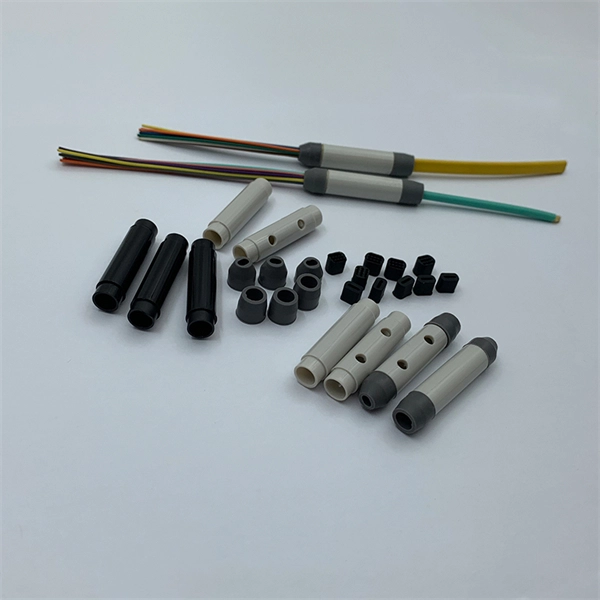
A simple 1-core FTTH drop cable costs around $0. 13 per foot, while a 288-count optical fiber cable for building backbones can reach $6 per foot or more. In this article, we'll take a closer look at the main parameters determining the price of a fiber patch cord, provide up-to-date pricing ranges, and assist you in becoming a smarter buyer—regardless of whether you are making a purchasing decision for a project, replenishing inventory, or placing an. Check each product page for other buying options. Need help?. Fiber-optic cable materials typically cost $1 to $6 per linear foot, depending on fiber count and cable type. Commercial building installations with 100-200 network drops generally range from $15,000 to $30,000. Single-mode fiber costs less per foot than multimode fiber, but it requires more. Knowing how much fiber optic cable costs, which factors can impact cost, and key cost considerations can help you avoid unnecessary expense and get the most out of your budget. First. Get low-loss fiber patch cables & cords with various connector options that support fiber optic cabling up to 400G. Customized cables available. Main cost drivers include cable grade (indoor vs outdoor, armoured), distance, and labor for trenching, splicing, and termination. This guide presents ranges in USD and practical price estimates to help.
[PDF]

Typical cost range for laying fibre optic cable per kilometer in the U. generally spans roughly $12,000 to $90,000, depending on terrain, urban density, and regulatory requirements. Main cost drivers include cable grade (indoor vs outdoor, armoured), distance, and labor for trenching, splicing, and termination. This guide presents ranges in USD and practical price estimates to help. Understanding the costs of fiber optic cable is a top concern for businesses planning network infrastructure upgrades. Whether you're expanding your data center, connecting multiple buildings, or future-proofing your connectivity, accurate pricing information helps you budget effectively. With 19+. Whether you need singlemode, armored, or indoor plenum, this guide gives you the exact cost per foot of fiber optic cable — including installation — so you can budget without guesswork. Data aggregated from Q1 2026 contractor invoices across Texas, Ohio, and North Carolina. Cost per foot of fiber. Buyers typically pay for fiber laying by combining material costs, labor time, and permitting plus trenching or aerial support fees. The main cost drivers are trench depth, fiber count and type (single-mode vs multi-mode), conduit requirements, and local permitting rules. Additionally, we detail the entire process for deploying both underground and aerial fiber. The price or cost to install fiber reflects material choices, labor hours, and local regulations, with per-mile and per-ft metrics common in.
[PDF]

In the drawing that is not at 1:1 scale, find an object or line whose length you know. Start the scaling command with SC (or SCALE). Make a selection for the objects that need to be included in the scaling operation. Click in the drawing for the first point of the. AutoCAD 2D drawings are commonly drawn in model space at a 1:1 scale (full-size). In other words, a 12-foot wall is drawn at that size. The drawings are then plotted or printed at a plot "scale" that accurately resizes the model objects to fit on paper at a given scale such as 1/8" = 1'. In some. To scale a CAD drawing object that has been inserted into another application, you typically access its properties to adjust the display size relative to the page or other elements. Scaling a CAD drawing, particularly when it's embedded or linked in another document like a technical diagram or. In this video, I'll show you how to scale any object to an exact size in AutoCAD—perfect for resizing blocks, drawings, or imported items to match real-world dimensions. This process ensures that all elements in your designs are proportionally accurate, allowing for efficient layouts and designs. Selecting the Object. The below table shows you how to set the scale within paper space in AutoCAD to the correct scales. Scaling refers to the proportionate resizing of an object within a drawing. In 2D CAD, it ensures that objects fit within the drawing space while maintaining real-world proportions.
[PDF]
Prices range from $50 to $200, depending on size and material. The manufacturing cost of fiber optic cable depends on factors such as the type of fiber, cladding material, and production scale. Commercial building installations with 100-200 network drops generally range from $15,000 to $30,000. Single-mode fiber costs less per foot than multimode fiber, but it requires more. The actual price of such cables varies significantly based on several factors including cable type (single-mode vs. multimode), length, jacket material (indoor, outdoor, or armored), installation environment, and brand reputation. For instance, single-mode 4 core cables, which use OS2 fiber and. This guide outlines the major factors that influence fiber optic cable costs and provides practical tips for estimating pricing in bulk or project-based scenarios. 1 What's the Typical Price Range? 2 1. Fiber Count and Cable Construction 3 2. Fiber. Buyers typically pay for fiber optic cable by length, fiber type, and installation complexity. This guide presents ranges in USD and practical price estimates to help. Single-mode fiber (OS2): This is the industry workhorse. In 2025, the base glass price has stabilized. You are looking at $0., 12-core vs 96-core) and brand. First and foremost, fiber cables are either singlemode or multimode. Singlemode cables with a small core diameter of 9 microns use high-power laser light sources to support high-speed.
[PDF]

High Initial Investment Costs:The transition to LED and smart lighting systems involves substantial upfront costs, estimated at around $1. 5 billion for large-scale implementations in South Korea. The South Korea Lighting Distribution Cabinet Market was valued at 8. 04 billion in 2025 and is projected to grow at a CAGR of 6. 17% from 2026 to 2033, reaching an estimated 12. This expansion is fueled by rising demand across industrial, commercial, and technology-driven. The South Korea LED and Smart City Lighting Market, valued at USD 1. 7 billion, is growing due to demand for IoT-enabled systems, energy savings, and urban development in cities like Seoul and Busan. 7 billion, based on a. Market Forecast By Offering (Hardware, Software, Services), By Installation Type (New Installations, Retrofit Installations), By End Use Application (Indoor, Outdoor), By Communication Technology (Wired, Wireless) And Competitive Landscape The South Korea smart lighting market is experiencing. Find local businesses, view maps and get driving directions in Google Maps. Market segmentation highlights a preference for hanging cabinets, likely due to space efficiency. 15 million by 2026–31, driven by smart city pilots and commercial modernization. The evolution of South Korea's smart lighting market is rooted in the country's early nationwide commitment to digital infrastructure.
[PDF]

You are looking at $0. The price swing usually depends on the fiber count (e., 12-core vs 96-core) and brand. Generic glass is cheap; premium glass (like Corning) costs more but guarantees lower attenuation. You are looking at $0. The main price drivers include cable grade, jacket material, pull tension, connectorization, and any required conduit or protection. The following coverage gives a practical price. Fiber-optic cable materials typically cost $1 to $6 per linear foot, depending on fiber count and cable type. Commercial building installations with 100-200 network drops generally range from $15,000 to $30,000. Single-mode fiber costs less per foot than multimode fiber, but it requires more. The unit cost of fiber optic cables can vary from $0. Here's a general pricing reference: Cable TypePrice Range (USD/meter)Simplex / Duplex Indoor Cable$0. 30Single-mode Outdoor Cable$0. 50Multimode (OM1/OM2/OM3)$0. 10 –. Buyers typically pay for fiber optic cable on a per-foot or per-meter basis, plus materials, labor, and permits where applicable. Understanding cost ranges helps buyers budget. This guide outlines the major factors that influence fiber optic cable costs and provides practical tips for estimating pricing in bulk or project-based scenarios. 1 What's the Typical Price Range? 2 1. Fiber Count and Cable Construction 3 2.
[PDF]
It is relatively affordable, especially when considering its durability and long lifespan. Additionally, it requires minimal maintenance, reducing ongoing costs. It is generally easy to install and can be quickly integrated into different systems or structures. Cable Tray is often a cost-effective solution compared to other materials. However, since this design is open, it. Cable tray pricing depends on materials, coatings, size, supplier margins, and order quantity —plus hidden costs like shipping and installation. This guide breaks down everything buyers need to know, from price trends to cost-saving tips. Additionally, these solutions help ensure compliance with fire safety codes and regulations, fostering a safer environment. Ensure your infrastructure's safety with NewReach Fire Rated. Lightweight: GRP cable trays are significantly lighter than metal cable trays. Electrical Insulation: GRP cable trays provide excellent electrical insulation. The landscape is shaped by regional manufacturing dominance and evolving buyer preferences. The market is growing steadily, driven.
[PDF]

More specifically, these systems keep tabs on voltage, current, and temperature limits and control the disconnect relay. This allows them to disconnect themselves from the external application in case of malfunction. From a drop of rain to the shining sea, an energy storage system is like the earth's bodies of water (hear us out). In a battery energy storage system (BESS), the energy in the battery cells is like raindrops that combine to form a brook. Made of the combined energy from cells, these brooks combine. Battery energy storage systems (BESSs) investment is expected to grow to $103 billion by 2030. ) Battery systems aren't just designed to serve as local power backups, such as the systems used to power critical facilities (including hospitals and data centers) when the normal. When a 300 MWh battery energy storage system (BESS) in Arizona tripped offline during July's heatwave, operators discovered voltage fluctuations had overwhelmed its protection relays. Could your facility withstand such stress? As global BESS installations surge—projected to reach 1. Protection is necessary when energy and voltages combine from the modules, as well as from the battery racks. Fuses are an efficient. The electrical integration design of a Battery Energy Storage System (BESS) is based on the application scenario and includes various aspects such as DC, high/low voltage distribution, control power distribution, grounding, lightning protection, and safety standards.
[PDF]
The World Bank Group has approved plans to develop Botswana"s first utility-scale battery energy storage system (BESS) with 50MW output and 200MWh storage capacity. The World Bank will support the 4-hour duration BESS via a loan of US$88 million. Botswana has today marked a historic milestone in its energy transformation journey with the groundbreaking ceremony and signing of the Power Purchase Agreement (PPA) for the 500MW Maun Solar Photovoltaic (PV) Plant and 500MWh Battery Energy Storage System (BESS), one of the most ambitious. By 2030, 140MW of BESS will be needed to support the uptake of renewable energy generation. This financial boost will fund the construction of a 100-megawatt solar power plant and support a comprehensive renewable energy program designed to bring. Botswana has received an $88 million loan from the World Bank for its first utility-scale battery energy storage system (BESS). The 50 MW/200 MWh project will allow for the stable integration and management of renewable energy on the nation"s grid. In conclusion, the strategic imperatives. The World Bank has provided Botswana, one of the world's fastest-growing economies, with a loan to finance a 50 MW/200 MWh battery energy storage system, the nation's biggest such project to date.
[PDF]
Online catalog w/end user & wholesale pric. Online catalog w/end user & wholesale pric. Check each product page for other buying options. Shop products from small business brands sold in Amazon's store. Learn more Need help?. What's the price range for Telephone Cords? The average price for Telephone Cords ranges from $10 to $900. Price when purchased online BUTTERFLY- Softalk 25' Phone Handset Cord Black Coiled, 4P4C Rj9 High Quality New Shipped!. Shop for Telephone Handset Cords at Walmart. Live better. 25 Ft., white, modular line cord, allows phone to extend 25 Ft. from wall, modular plugs at both ends and is compatible with 2 or 4 wire systems. Make a good call by choosing the Power Gear 100ft. line cord and replace your old, worn-out or damaged cord with a high-quality upgrade. Find the items you need to hook up your landline phone.
[PDF]
Total material cost: $22,000 (excluding fittings and shipping) Always request: A reliable supplier should offer: The price of hot-dip galvanized cable trays reflects product performance, service life, and long-term safety. Best Galvanised 50mm x 25 mm Cable Tray price in South Sudan. Enjoy speedy delivery and excellent service. Shopit has the best prices' Cable Trays sale and is a trusted Cable Trays dealer in South Sudan since 2012. We have a track record of giving our customers access to a big variety on the Cable Trays products line, speedy delivery and excellent service. This guide breaks down everything buyers need to know, from price trends to cost-saving tips. The material from which a cable tray is made is one of the most important factors that affects.
[PDF]
You are looking at $0. The price swing usually depends on the fiber count (e., 12-core vs 96-core) and brand. Generic glass is cheap; premium glass (like Corning) costs more but guarantees lower attenuation. You are looking at $0. It is composed of 6 multimode fibers (50 micron core) inside a water blocking Aramid yarn wrapped in a black PVC outer jacket. Commercial building installations with 100-200 network drops generally range from $15,000 to $30,000. Single-mode fiber costs less per foot than multimode fiber, but it requires more. The unit cost of fiber optic cables can vary from $0. Here's a general pricing reference: Cable TypePrice Range (USD/meter)Simplex / Duplex Indoor Cable$0. 30Single-mode Outdoor Cable$0. 50Multimode (OM1/OM2/OM3)$0. 10 –. The price of fiber optic cabling depends on cable type, length, installation method, and surrounding materials. Typical costs hinge on fiber count, indoor versus outdoor use, and whether trenching, splicing, or termination is required.
[PDF]

Basic — 1,000 ft single-mode run indoors with minimal termination: Cable $0. 00/ft, Permits $150, Accessories $100. Total ≈ $2,650–$3,100. 60/ft, Permits. How does 6Wresearch market report help businesses in making strategic decisions? 6Wresearch actively monitors the North Korea Fibre Optic Cable Market and publishes its comprehensive annual report, highlighting emerging trends, growth drivers, revenue analysis, and forecast outlook. Our insights. North Korea's pursuit of fiber optic cables reflects its struggle with connectivity and modernization, revealing complexities in information control and international dynamics. Our insights. Pre-paid SIM cards can be purchased by visitors to North Korea to make international (but not domestic) calls. Prior to January 2013, foreigners had to surrender their phones at the border crossing or airport before entering the country, but with the availability of local SIM cards this policy is. Buyers typically pay for fiber optic cable by length, fiber type, and installation complexity. Main cost drivers include cable grade (indoor vs outdoor, armoured), distance, and labor for trenching, splicing, and termination. This guide presents ranges in USD and practical price estimates to help.
[PDF]