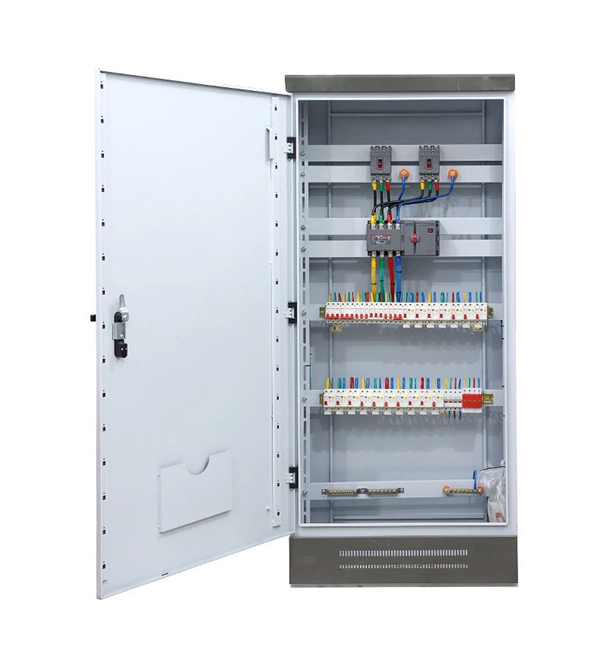
The real cost: one worker's severe injuries, destruction of the main elevator structure, weeks of facility shutdown, and permanent damage to the company's safety record. The junction boxes that ignited the disaster? Standard NEMA 1 steel enclosures, $18 each. The explosion-proof Class II, Division. Outdoor explosion proof distribution box are essential components in modern electrical infrastructure, designed to manage and distribute electricity safely and efficiently within various settings. They play a pivotal role in ensuring the reliable flow of power, serving as the backbone of electrical. For electricians, engineers, and safety managers working in petrochemical plants, refineries, and manufacturing facilities, selecting the right explosion proof junction box ensures compliance, reliability, and peace of mind. Need Certified Explosion-Proof Junction Boxes? Get ATEX/IECEx options for. Uses item details. Price when purchased online Shop for Explosion Proof Electrical Box at Walmart. The article outlines cost ranges, per-unit pricing, and practical budgeting notes for U. Cost ranges account for panel amperage, location, and whether a full upgrade or repair is needed. A typical home replacement for a 100–125A indoor panel runs about $1,200–$2,500 in parts and labor; a.
[PDF]

Explore the top 6 stainless steel enclosure manufacturers in Egypt, offering robust solutions for electrical systems in various sectors for enhanced safety and efficiency. A Complete offer for all environmental conditions. Schneider Electric is a leading name in enclosure design. We have been protecting your. KSA was Approved from Schneider Electric to be Eco Expert in Low Voltage Panels and produce TYPE TESTED Panels. KSA has become an Approved Eco Expert in Power Distribution. Establish a striking presence, a better power management, or elevate your project through our products. Our Type Tested LV. Wall-mounted enclosure of fiberglass-reinforced polycarbonate with either grey or transparent cover. Protection category IP 66. Covers feature quick-release fasteners for speedy maintenance. Self-extinguishing material for safety. Wall-mounted enclosure with cover made from sheet steel, available. Our ODF systems are designed to streamline and organize optical fiber connections within data centers, telecommunications facilities, and enterprise networks. QNAP TS-832PX-4G 8-Bay Cloud Storage NAS Enclosure (Diskless) QNAP TS-832PX-4G 8-Bay Cloud Storage NAS Enclosure (Diskless) QNAP TS-832PX-4G 8-Bay Cloud Storage NAS Enclosure (Diskless) Notice: Please confirm price & availability before submitting your order due to unstable prices and shipping.
[PDF]

We'll explain what they are, the different panel types you'll encounter, NEC 408 requirements that govern their installation, and common applications for each type. Distribution panels, breaker panels, load center, and/or distribution boards—any name you call them, they're a key part of every electrical system. Wiring distribution panels serve as the central hub and nerve center, routing power from the main service feed to multiple circuits. When setting up. In the world of electrical installations, the term DB box —short for Distribution Board box —refers to the central unit that distributes incoming electrical power to multiple outgoing circuits in a building. Whether you're powering up a residential home, a commercial office, or an industrial plant. Electrical Wiring is a process of connecting cables and wires to the related devices such as fuse, switches, sockets, lights, fans etc. to the main distribution board is a specific structure to the utility pole for continues power supply. It receives power from the main electrical supply and divides it into separate circuits, each. A distribution box, or DB box, is a circuit breaker enclosure. It is a vital part and central hub of any electrical system. It is for the economical use of wiring conductors inside, and outside of a room or building with better load control. Cleat Electrical wiring 2.
[PDF]

This guide covers how to build a winning retail distribution strategy including how to select the right channels, choose a strategy, and manage logistics. Ever felt like a competitor is beating you simply because they appear everywhere?. Understanding distribution channels is essential for any business aiming to effectively deliver products and services to customers. By Jake Hammerman, Global Salesforce Manager, Ingredion May 1, 2026 Distribution channels are the paths that products and services take when moving from. How to Define Common Distribution Channels and Div. - SAP Community 2021 Sep 10 10:09 AM In this blog I'll introduce the configuration and usage of common distribution channels and divisions. Many businesses struggle with this crucial step. They might not know where to start, or they might choose the wrong approach. Distribution channels are the paths your product takes. Pathway Selection: The initial step involves discerning the most suitable channels that align with the company's target market and product type.
[PDF]

(i) For accessibility, it is necessary that the distribution box be located and have a removable cover not more than 12 inches below grade. Where, due to site conditions, a distribution box must be greater than 12 inches below the surface, an exte. (i) For accessibility, it is necessary that the distribution box be located and have a removable cover not more than 12 inches below grade. Where, due to site conditions, a distribution box must be greater than 12 inches below the surface, an extension collar shall be installed to within 12 inches of the surface. (ii) All outlets from the distribut. (i) In serial distribution, an upper distribution line is allowed to fill before the effluent overflows into a lower line. This method is acceptable for use with dosing systems only. (ii) The connections between distribution lines is made with non-perforated pipe placed in undisturbed soil. (i) Drop manholes are used on sloping sites to reduce the velocity of flow to lower distribution lines. This system may be used with gravity distribution. (ii) Baffles at the inlet end of the manhole and approximately four inches from the inlet are required in drop manholes. (iii) The inverts of all outlets in each manhole shall be at the same leve.
[PDF]

A distribution box, also known as a junction box or distribution point, is a enclosure or housing used to distribute electrical or telecommunications cables to multiple directions. A distribution box (DB box) is a key part of electrical wiring, acting as a central hub where cables branch out to various outlets and switches in a building. It supports different cable sizes and types, enabling smooth and fast power distribution. Each. Distribution boxes, also known as electrical distribution boards or panels, are pivotal components in electrical systems, ensuring the safe and organized distribution of electrical power throughout residential, commercial, and industrial environments. These boxes house various circuit breakers. With the new distribution box, centrally routed cables can be distributed 360° in all desired directions. Cables with and without connectors can be routed, sealed with IP54 (acc. to 60529) and strain relieved in accordance with EN 62444. This article will provide a detailed introduction to electrical distribution boxes, including their functions, components, types, and uses. Today, electrical systems are essential for homes and industries. But what exactly is a power distribution box, and why is it so essential in our daily lives? The DB panel board controls the flow of electricity.
[PDF]

Free electrical load calculation tool for residential and commercial buildings. Calculate service entrance sizing, panel loads, demand factors, and ensure NEC Article 220 compliance. Always verify calculations with a. Electrical load calculation is a critical process in electrical design that determines the total electrical demand of a building or facility. Proper load calculations ensure that electrical systems are safely designed with adequate capacity for present and future needs. What is Electrical Load. What is Electrical Load Calculation? 1. Connected Load (CL) 2. Demand Factor (DF) 3. It accounts. This technical drawing presents a detailed residential electrical service cabinet and main power distribution layout with accurate load calculations. The image shows meter installation, service cabinet arrangement, MCCB panel board, isolator positioning, and incoming and outgoing cable connections. This standard only addresses fixed (or. Electrical load calculator estimates power demand, ampacity, and panel capacity, guiding circuit sizing, load balancing, voltage drop checks, and NEC-compliant design for residential, commercial, and industrial electrical projects, planning safely.
[PDF]

Connect the phase and neutral wires from the input power supply to the input of the Main MCB. Learn how to install a distribution box safely and correctly. Covers wiring, placement, standards, and expert tips for a compliant setup. It takes the incoming power and safely distributes it to different circuits throughout your building. Learn how to wire a distribution box step by step! This video shows real on-site footage of electrical installation, demonstrating safe and standardized wiring methods used by professionals. Below is a quick checklist of everything you will need for a safe and efficient installation: Connecting a distribution box involves several steps to ensure proper electrical flow. It is usually equipped with circuit breakers, fuses, terminal connectors, and other components. It is mainly used to isolate fault circuits, prevent overload, and ensure the safe operation of. Box installation: Make sure that Distribution box has been correctly installed and fixed. Location determination:. An electrical panel box, also known as a breaker box or a distribution board, is a crucial component of any electrical system. It serves as a central hub for distributing electricity throughout a building, ensuring that power is delivered safely and efficiently to all the required locations.
[PDF]
California's warehouse quota law protects workers in two main ways: (1) increased transparency on quotas from employers, and (2) protection for bathroom breaks and other health and safety activities. If you're a warehouse employee, you're entitled to a written description of each quota that you are subject to. Employers must give you quota descriptions upon hire, or within 30 days of changed or updated quotas. In addition to a description of the quota, employers must also describe the potential consequences you may face (such as a warning or te. Under AB 701, you can't be required to meet quotas that prevent you from taking all the bathroom, rest and meal breaks you are legally entitled to, or prevent you from complying with occupational health and safety laws. If it takes you longer to do a task in an OSHA-compliant way (than a non-compliant way), AB 701 says that time mustbe considered p.
[PDF]

Choose the right box based on environment (indoor/outdoor), load capacity, and durability. Check for proper IP/NEMA ratings and material quality. Ensure safe placement: install in dry, accessible areas with good ventilation and at appropriate height (typically ~1. In this guide, we'll break down everything you need to know to install a distribution box correctly and confidently. While major installations should always involve qualified electricians, understanding the process helps ensure quality work. Begin by determining the electrical load requirements and selecting an. Think of your home's distribution box as the Grand Central Station of your electrical system. Just like travelers need clear pathways and safety protocols, your electrical circuits need proper management to prevent chaos. Dividing incoming electrical power from the main supply into subsidiary circuits is the. The following instructions and specifications are intended to set forth the general practices and procedures to be followed in connection with customer primary and high voltage installations. These instructions define the areas in which assistance may be given to a primary customer to coordinate. On every page you will find a navigation bar. Click on the chapter title/number in the navigation bar to move to the start page of the relevant chapter. 1 2 Con- tents Intro- duction Navigation tips Touch screen to navigate Scroll.
[PDF]

A distribution box, also known as a fiber distribution hub or optical distribution box, is a larger enclosure designed to manage and distribute fiber optic cables to multiple endpoints. It serves as a central point for connecting and organizing numerous fiber optic. Although all three are related to fiber connection and management, their installation locations, functional roles, and positions within the network architecture are fundamentally different. Confusing these devices may lead to non-standard cabling at best, and serious challenges in network. In modern FTTH (Fiber to the Home) and optical communication networks, three types of fiber distribution products are widely used: Splitter Distribution Box, ODF (Optical Distribution Frame), and Fiber Terminal Box. The functions of the four connectors can be. First, let us learn the common point among ODF, fibre optic termination box and fiber optical distribution box, actually, they have similar function, we sort out them as following 4 aspects: 1. fiber termination and optical signal splitting 4. What is the difference between these fiber boxes.
[PDF]

Welcome to our channel! In this video, we'll walk you through the process of wiring a home distribution box with a detailed connection diagram. more Welcome to our. A distribution box is the heart of any electrical system. It takes the incoming power and safely distributes it to different circuits throughout your building. Whether in a home or an industrial facility, this box keeps your electrical setup organized, functional, and efficient. It serves as a central hub for distributing electricity throughout a building, ensuring that power is delivered safely and efficiently to all the required locations. What is Distribution Board? Distribution board. A distribution board (also known as a service panel or breaker box) is a centralized collection of circuit breakers, fuses, and/or relays used to control and protect the wiring in a home. The diagram of the distribution board's wiring shows exactly how each circuit is wired and connected. It also. Understanding how to safely set up the main connections of a home's power distribution system is essential for ensuring reliable and secure operation. A correct installation process minimizes the risk of electrical faults and increases the longevity of your setup. Proper knowledge is crucial for.
[PDF]

Typical project ranges for a single distribution box install span from $500 to $3,000, with most residential jobs landing around $1,000 to $1,800. For multi-box configurations or complex trenching, costs often exceed $2,500. Homeowners typically spend several hundred to several thousand dollars for distribution box work in septic systems, depending on system size, material, and installation complexity. The main cost drivers are the number of boxes, trenching, backfill, and permit requirements. This guide outlines typical price ranges, how costs break down, and regional differences to help homeowners budget accurately. Costs vary based on the materials used, local labor rates, and permitting fees in your area. The cost is driven by box size, material, and installation requirements, with price ranges reflecting basic plastic units up to heavier-duty or re-locatable options. The following. Septic distribution box replacement costs between $500 and $1,500, with your box material and outlet size determining your final total. Your distribution box outlet count depends on household size and how many septic lines drain to the leach field. Even the most skilled DIY homeowners should hire a plumber to tackle the job, which can cost anywhere from $550 to $1,800. Labor makes up the largest portion of the cost to replace a septic distribution box, running as high as $1,200 for.
[PDF]