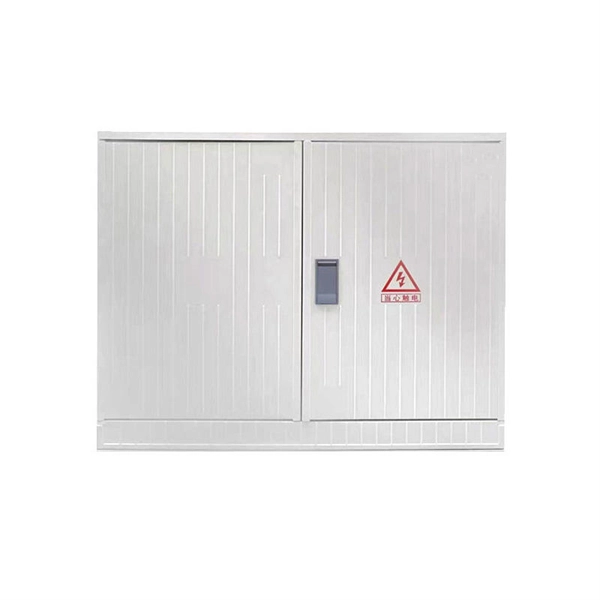
Thus, a fiber termination box is used to terminate the optical fiber cables in the field and connect them to the pigtail by splicing. After an optical cable arrives at the user's end, it is fixed in the terminal box. A fiber pigtail is a specific hardware connection used for cable termination. It serves as a termination point for optical fibers, providing a secure and organized space for connecting and managing fiber optic cables. FTBs play a vital role in ensuring the. A fiber terminal box, also known as a fiber distribution box, is a device used in fiber-optic communication networks to terminate, splice, and distribute optical fibers. It's where delicate strands are protected, splices are routed, connectors are exposed for patching, and future changes are made painless—or painful. Choosing the right fiber optic. The first response is typically to ask what kind of fiber optic installation are you looking at building? This will determine if a box is required or not. If you're ordering or have an existing fiber optic assemby over two strands we highly recommend the use of a termination box as it helps prevent. A Fiber Terminal Box (FTB) is a customer-side termination and distribution device used at the end of the optical network. Key Functions Typical Applications ZION FTB Highlights In essence: The Fiber Terminal Box is an end-user termination device for small-scale distribution. ■ What Is a Fiber.
[PDF]
CamdenBoss PCB terminal blocks come in a variety of sizes and styles. They can accept a wide range. • Rising clamp PCB terminal blocks give excellent repeatable clamping performance. Four mounting holes are provided. Molex's Temperature Sensor Cable Assemblies are available in custom and off-the-shelf solutions with a variety of beta values, resistances, lengths and temperature ranges to meet a diverse range of applications. Molex also offers custom options of these assemblies to ensure the specifications can meet exact design requirements. Thermocouples are made from two dissimilar metals joined at a hot junction and generate a millivolt signal as the temperature changes, while RTDs and thermistors exhibit a change in their resistance. These compact assemblies include a ring terminal, thermal conductive epoxy, and/or a Micro-Lock Plus connector to provide a market-ready solution for temperature.
[PDF]
As electrical signals switch at faster rates, signal integrity problems such as crosstalk and radiated EMI become more severe, and losses on standard substrates increase at higher frequencies. Repla.
[PDF]

Compared to conventional metallic cables, optical fiber provides an advantage of low loss (~ 0. 2dB/km) and wide bandwidth (several hundred MHz to THz) to enable long-distance, high-capacity communication. Fiber-optic communication is a form of optical communication for transmitting information from one place to another by sending pulses of infrared or visible light through an optical fiber. The light is a form of carrier wave that is modulated to carry information. Fiber is preferred. It was almost a century later before optical-based communication was put to practical use, thanks in large part to the invention of optical fiber and lasers. A laser's stable, highly directional beam of light (emitted from tiny semiconductor windows that measure just a few hundred thousandths of a. In 2020, we celebrated the 50th anniversary of the invention of low-loss optical fiber — an innovation that has transformed the way we connect and that lies at the cornerstone of our communications revolution. In a Corning lab on a Friday afternoon five decades ago, a single strand of glass and a. Fibre optics and optical communications is the use of thin strands of glass for sending information encoded into light over long distances. Total internal reflection prevents light inserted into one end of the fibre from escaping through the sides. Transferring information optically in this way.
[PDF]

This article summarizes the research and development of a fully automated production process for optical fiber couplers, covering stages from fiber loading to glue packaging, which was demonstrated through the creation of a prototype and is expected to improve mass production . This article summarizes the research and development of a fully automated production process for optical fiber couplers, covering stages from fiber loading to glue packaging, which was demonstrated through the creation of a prototype and is expected to improve mass production . A fiber coupler is a passive optical device that manages the flow of light signals within an optical network. It functions by dividing a single incoming light path into multiple outgoing paths, or by combining light from several input paths into a single output fiber. They form the foundation of high-speed communications, ensuring that data, sensor signals, and laser outputs reach their destinations with minimal loss. Beyond simple. Fiber optic coupler is a lively type of passive components, and its basic function would be to achieve the optical power and fiber wavelength distribution.
[PDF]
It essentially performs some relatively simple time-division multiplexing of lower-rate signals into a higher-rate carrier within the system (a common example is the ability to accept 4 OC-48s and then output a single OC-192 in the 1,550 nm band).OverviewIn, wavelength-division multiplexing (WDM) is a technology which a number of signals onto a single by using different (i.e., colors) of. A WDM system uses a at the to join the several signals together and a at the to split them apart. With the right type of fiber, it is possible to have a device that does both s.
[PDF]

Fiber optic intrusion detection gives you a reliable way to secure perimeters. The cables detect stress or breaks when someone tries to breach the area. This technology resists interference, making it a strong choice for organizations that want dependable security. You can think of these cables as a sensitive tripwire or a microphone that listens for unusual vibrations. Unlike traditional electronic sensors, fiber optic. Fiber SenSys®, Inc. FSI sensors have been successfully deployed on fences and alongside physical data networks at the most critical sites in the world. Our. Fibre optics refers to the technology that transmits data as light pulses through thin strands of glass or plastic, known as optical fibres. Analysing changes in light patterns is at the heart of the Remsdaq Sabre II PIDS fence protection system. Here are the key reasons why fibre optic technology. Among the advanced solutions available today is Fiber Optic Intrusion Detection, a system that presents numerous advantages and is rapidly becoming the go-to option for protecting sensitive environments. ### What is Fiber Optic Intrusion Detection? Fiber Optic Intrusion Detection is an advanced. Fiber optic cable intrusion detection sensors work by utilizing changes in light transmission through optical fibers to detect unauthorized entries or breaches. When an intrusion occurs, it can cause physical disturbances that affect the light traveling through the fiber, leading to measurable.
[PDF]
Due to combinations of intense securitization, Western sanctions, foreign businesses exiting Russia, tech “brain drain,” and other factors, digital technological isolationism is now both a reality and a desired goal for Moscow. Digital technology has long been a key component of the Russian government's power, and for years following the collapse of the Soviet Union there was significant technology entanglement between Russia, the West, and other areas of the world. That changed in the late 2000s and early 2010s with. ANDREI SOLDATOV is a Nonresident Senior Fellow at the Center for European Policy Analysis and Co-Founder and Editor of Agentura. ru, a watchdog of the Russian secret services' activities. However, another set of players has a key role in the Russian cyber ecosystem: private sector. What's Next for Japanese Security Policy and U. -Japan Relations? Perspectives from the Diet The principal goals driving Russia's cyber strategy across the spectrum of conflict are clear: disruption, destruction, and control of information. Its cyber governance is centralised, hierarchi-cal and under the president's personal control. The country is highly dependent on foreign.
[PDF]

A passive optical network (PON) is a fiber-optic telecommunications network that uses only unpowered devices to carry signals, as opposed to electronic equipment. In practice, PONs are typically used for the last mile between Internet service providers (ISP) and their customers. In this use, a PON. Passive Optical Networks (PON) have emerged as a leading solution to meet these demands, offering high bandwidth, scalability, and cost-effective deployment. This comprehensive guide delves into the world of PON, exploring its various types, benefits, and applications, particularly in Fiber to the. Optical splitters are used to split the signal into multiple branches. There could be several levels of splitters, which are separating the outside plant into different sections: fiber feeder, distribution, drop. Its principle—distributing the signal from a central point to numerous subscribers via entirely passive splitters—has revolutionized the economics of access networks. This makes it a cost-effective and reliable solution for.
[PDF]
This chapter presents the development of the Energy Internet throughout the history as an evolutionary solution based on modern technological development and needs, with the respect of its architecture, key features, and key concepts, such as energy router, prosumer, and virtual. This chapter presents the development of the Energy Internet throughout the history as an evolutionary solution based on modern technological development and needs, with the respect of its architecture, key features, and key concepts, such as energy router, prosumer, and virtual. Energy Internet is a concept proposed to harness, control, and manage energy resources effectively, with the help of information and communication technology. The. Therefore, a new energy paradigm is known as the “Energy Internet” that combines economics, energy, and technology in an open, equal, and coordinated fashion. Energy Internet (often reflects Internet plus energy) is a novel energy network that interconnects the power system components: production. Similar to an internet router to connect and switch networks, the energy router within the energy internet plays a crucial role to integrate and distribute the energy flow. This paper provides an overview of the application and challenges associated with energy routers in the energy internet.
[PDF]

In this study we consider a basic mechanism for the conversion from Sol. Energy to power generation and the progress in PV development by using silicon materials. Modules based on c-Si cells account for more than 90% of the photovoltaic capacity installed worldwide, which is why the analysis in this paper focusses on this cell type. This study provides an overview of the current state of silicon-based photovoltaic technology, the direction of. The U. Department of Energy (DOE) Solar Energy Technologies Office (SETO) supports crystalline silicon photovoltaic (PV) research and development efforts that lead to market-ready technologies. 7 × 10 17 W of Sol. Energy irradiates the Earth, which is more than 10,000 times the global energy consumption [6, 7]. Conventional PV cells are made from a silicon wafer that transforms sunlight directly into electricity. These silicon-based solar cells use 150 to 200. Crystalline silicon (c-Si) photovoltaics has long been considered energy intensive and costly. Over the past decades, spectacular improvements along the manufacturing chain have made c-Si a low-cost source of electricity that cannot be ignored anymore. Over 125 GW of c-Si modules have been.
[PDF]
This manual details the installation, operation and maintenance instructions for type JBDB Junction/Terminal Box (flameproof). This product is ATEX and IECEx certified to meet the requirements for hazardous location equipment. Safely conduct, connect and distribute energy in hazardous areas with R. STAHL's terminal boxes. We offer bespoke, custom-made terminal boxes and terminal box combinations, as well as standard products with short delivery times. Our products are certified for installation technologies all over the. trait or landscape orientation in temperatures ranging from -60 oC up t +90 oC. For terminal and entry device configuration options please see ove er configurations c nal types and ter Attestation of Conformity and instruction. ta g a screwdriver with a #2 Phillips Head, a Standard Slotted or Robertson style head, remove the cover screws. Secu y fasten the enclosure to the mounting location, using up to a 1/4” (M6) diameter steel bolt and washer. It combines and supersedes two previous FAA ACs on this topic: AC 150-5360-13, Planning and Design Guidelines for Airport Terminal Facilities, and AC 150/5360-9, Planning and Design Guidelines for Airport. ABS Plaza 16855 Northchase Drive Houston, TX 77060 USA These Guidance Notes provide ABS recommendations for the design and construction of cable trays and junction boxes. These Guidance Notes are applicable to fixed and floating offshore structures as well as drilling units. These Guidance Notes.
[PDF]

This guide helps you determine the correct dimensions based on wire fill capacity, device requirements, and installation environment, ensuring a safe and efficient electrical system. Selecting the appropriate junction box size prevents overcrowding, overheating, and. A large variety of small enclosures: polycarbonate enclosure PK, aluminum enclosure GA, small enclosure KX, carbon steel in the terminal box versions with and without a flange, e-boxes, and bus enclosure. Learn how to. Connection boxes and terminal | Junction boxes | !. trait or landscape orientation in temperatures ranging from -60 oC up t +90 oC. For terminal and entry device configuration options please see ove er configurations c nal types and ter Attestation of Conformity and instruction. Within electrical installations regulated by NEC and UL standards, the terminology surrounding junction boxes extends well beyond simple measurements of length and width. Choosing the proper enclosure requires fluency in the language of gangs, physical footprint, and—most importantly— internal. Eaton's Crouse-Hinds series GboX junction and terminal enclosures are a glass-reinforced polyester (GRP) terminal box solution designed for use with metallic cable glands, cable entries on multiple sides/ faces, and with industry standard sizes to match common end-user specifications.
[PDF]


