
Main cost drivers include on-site labor, specialized fusion splicing, testing, and any necessary restoration of network performance. This guide provides practical cost ranges in USD with clear low–average–high estimates to help budgeting and planning. Fiber optic splicing costs vary widely depending on project size, location, fiber type, and site conditions. For most commercial projects, expect to pay $50–$150 per fusion splice point — but that number can swing in either direction based on the factors below. The "per splice" rate is the most. There are two primary methods of splicing fiber optic cables: fusion splicing and mechanical splicing. Each method has distinct characteristics and costs associated with it. Fusion Splicing: This method involves aligning two fiber ends and using an electric arc to melt them together, creating a. Adtell Integration is capable of supporting your fusion splicing requirements whether they require Singlemode, Multimode, or Ribbon Splicing. Fusion Splicing Services: Contractor/Customer Fusion Splicing & Installation Services: Adtell integration offers nationwide fusion splicing services. Specifically fiber used for internet. -W2 employee for a decent size telecommunication contractor, all.
[PDF]
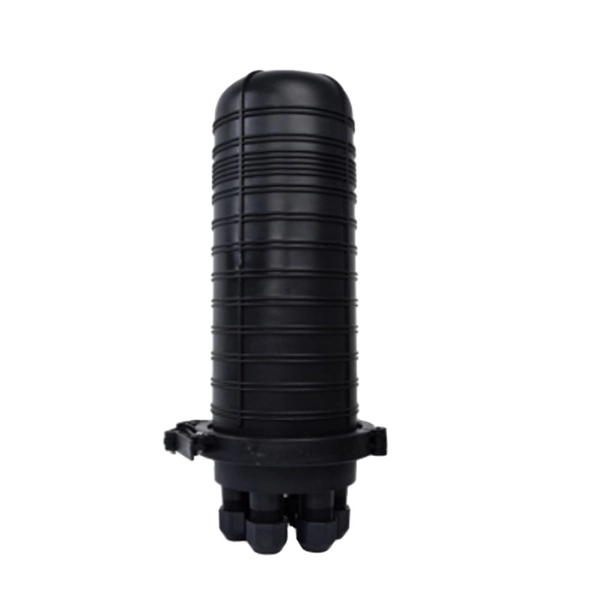
Optical Fiber Cable & Accessories Price in Nepal, Kathmandu. Buy with best and reasonable price @ ITShop Nepal. Nepal - Shop for Best Online at Daraz. np Wide Variety of fiber optic box. Great Prices, Even Better Service. Made of brand new materials, sturdy and durable, resistant to impact, corrosion, sealed and waterproof, safe and worry free Engineered for outdoor use, this junction box showcases a robust waterproof design, safeguarding critical fiber optic connections against harsh weather and ensuring reliable. Optical Fiber Cable & Accessories Price in Nepal, Kathmandu. SÜRGÜLÜ PATCHPANEL SC UPC DUBLEX 24XADAPTÖR 48XPIGTAIL RAL7035 1u 19” MEK. GJS-901-2 fiber optic splice closures (FOSC) are used to distribute, splice, and store the outdoor optical cables which enter and exit from the ends of the closure. There are two connection ways: direct connection and splitting connection. Applicable to situations such as overhead, man-well of. vianet: Vianet Communication Ltd. is a leading Internet & TV service provider in Nepal. Since 24 years, Vianet Communication has always remained at the forefront, providing reliable and affordable Fiber Broadband Internet Services.
[PDF]
Read on to learn how a systematic approach can streamline the process, mitigate risks, and elevate overall performance in telecommunications carriers. Fiber optic cables form the backbone of modern data transmission in telecommunications. Cable identification stands as a critical practice in fiber optic networks. Misidentification can cause downtime, disrupt essential services, and create safety hazards in data centers. Industry standards like TIA-606-B guide professionals to use color codes, print legends, connector types, and. Fiber Optic Cable Tags are the perfect choice for marking your ground level and underground cables. Custom Fiber Optic Tags available upon request. Sold in package of 50 (nylon ties sold separately). Online shipping rates and pricing may differ. Indoor & outdoor fiber cable high visibility markers, id labels, printers, warning signs & posts, cable id sleeves and more for fiber optic applications. Need help? Explore write-on fiber optic cable tags with self-laminating protection. Keep your cables organized and clearly labeled with writable identification solutions. Cable Tags (Cable ID Tags, Fiber ID Tags) simplify wire and cable identification! Cable Tags (Cable ID Tags, Fiber ID Tags) simplify wire and cable identification! Fiber Tag Generic (No Company name) 4 Inches long fits 1/2" to 1" line. They are responsible for carrying vast amounts of.
[PDF]
The features of a fiber termination box can significantly influence its price. Here are some key features to consider: 1. Splice Capacity:Higher capacity boxes will generally be more expensive, as they can accom.
[PDF]

Technical Fiber Optics Lines Factory (TechLine) is a big factory was established in Jordan in 2016 located in Al Qastal industrial area in Amman. It is ISO 9001:2008 certified with a scope distinction of being first of its kind in the Middle East region. It strives to become one of the leading. Techline offers a complete range of Fiber optic passive equipment ranging from FDT, joint closures, enclosure boxes, distribution boxes and frames, and indoor/outdoor fiber cables to be used inside the network from the Central Office to the user. Products are designed for easy installation with the. APAR's Fireoproof Fibre Optic cables are specially designed cables for complying specific fire standards. Fireoproof cables are suitable for communication networks across all emergency systems and other key equipment where fire safety is of utmost importance and are available in customised designs. When a fire breaks out in a data center or a high-rise building, the cabling in your walls acts in one of two ways: The Fuse: It melts, drips, and carries the flame from room to room. The Barrier: It self-extinguishes and stops the spread of toxic smoke. Choosing the right Fire-Resistant Fiber. All feature a corrugated steel tape armour for protection from rodents, a central loose tube construction and internal/external LSZH (Low Smoke Zero Halogen) sheath. The outer sheath is black with a red stripe for easy identification and also provides UV stability. A key feature of the Draka.
[PDF]

Typical total project ranges and per-meter ranges with assumptions: A straightforward indoor fiber install with standard single-mode cable might cost about $0. 50 per meter for cable alone, with total project costs commonly in the $0. 50 per meter range when including. The cost per foot of fiber optic cable is now the lowest it's been since 2021. Labor dominates the installed price. 80 per ft – fastest, lowest cost. Directional boring (road. Buying fiber optic installation services involves several cost components, with total price influenced by length, location, and access. The main cost drivers include trenching or aerial deployment, materials, labor hours, and any required permits. How do you navigate these costs effectively? The pricing of single-mode fiber optic cables varies significantly based on. The initial cost of installing fiber optic cables can vary depending on the chosen installation method and specific project requirements. Total Project Costs: For commercial installations, expect costs ranging from $5,000 to $20,000 per mile for underground projects and from $40,000 to $60,000 per. Check each product page for other buying options. Need help?. In this article, we'll take a closer look at the main parameters determining the price of a fiber patch cord, provide up-to-date pricing ranges, and assist you in becoming a smarter buyer—regardless of whether you are making a purchasing decision for a project, replenishing inventory, or placing an.
[PDF]

Current project activity related to the submarine cable is focused on two key areas: fibre optic production at Nexans' facility in Rognan, Norway, and high-voltage subsea cable manufacturing at the company's plant in Charleston, South Carolina. Nexans has produced and shipped approximately half of the total fiber optic cable length from Norway to the U. to be integrated into the high-voltage subsea cable destined for the second Malta-Sicily interconnector. The IC2 interconnector will consist of a new ~122-kilometer-long 225 MW HVAC. Enemalta, Malta's energy provider, has once again submitted an application to excavate a trench over Comino, this time with the purpose of laying a fiber optic cable. The application, initially filed by former CEO Jonathan Cardona, comes after his departure from Enemalta following the summer power. Being a Southern European island country consisting of an archipelago in the Mediterranean Sea, Malta is located 80km south to Sicily, Italia. Now, all the submairne optical fiber cables landing in Malta are connecting to Sicily, Italia and onward to the rest of the world. There are now 4 submarine. Around 50% of the work on the 104-kilometre fibre optic cable for the second interconnector between Malta and Sicily has already been manufactured and tested and has made its way from Norway to the United States for the next stage of production.
[PDF]

It is a technique that uses controlled heat to permanently fuse two optical fiber ends together. Unlike mechanical splicing, which relies on alignment sleeves and index-matching gel, this thermal approach creates a continuous glass path between fibers. Optical fiber transmission has the advantages of wide transmission frequency, large communication capacity, low loss, no electromagnetic interference, small diameter of optical cable, light weight, rich source of raw materials, etc., so it is becoming a new transmission medium. When light is. Common splicing methods include optical fiber cold splicing and optical cable hot fusion splicing. Advantages and disadvantages of fiber optic cold splicing Fiber cold splicing refers to using special tools to mechanically connect two optical fibers. Its advantages include: Simple operation and. This is part 6 of a tutorial on passive fiber optics from Dr. The tutorial has the following parts: Optical fibers can be joined together, such that light is efficiently transferred from one fiber to another. There are various possibilities: Mechanical splicing means that two fiber ends. This guide reveals the secrets to fusion splicing with little fluff—just proven, straightforward techniques refined from years of work in the field. The result is a joint that closely matches the.
[PDF]
Fiber optic adapters play a vital role in modern optical communication systems by enabling seamless connections between fiber optic cables. These small yet essential components ensure efficient data transmission, reduce signal loss, and maintain system integrity (1). In this article, we'll explore. Explore the essentials of fiber optic adapters, their types, benefits, selection, maintenance, and their role in future tech. They serve as interfaces for connecting fiber optic cables, facilitating. Fiber optic adapters are small but essential components that ensure precise alignment between connectors. Using the wrong type or neglecting cleaning can lead to signal loss and unstable connections., two fiber connectors) such that light can reliably pass from one to the other with minimal insertion loss and maximum return loss. Though fiber optic adapters are small accessories often ignored by technicians, they play a vital role in fiber telecommunications, connecting fiber optic cables and connectors. This article discusses their purposes, features, types, and how to choose and clean them. Most fiber optic connectors are composed of.
[PDF]

Every fiber optic patch cable has a rated attenuation and bandwidth. For example, OM1 is rated at 200 MHz·km at 850 nm and is intended for use in legacy applications. The higher OM ratings provide more speed and distance. Attenuation should remain within acceptable limits for reliable transmission. Executive Summary: Choosing the right fiber patch cable is one of the most consequential decisions in network infrastructure planning. The wrong choice — whether it's an underperforming multimode grade or an unnecessarily expensive singlemode run — can either cripple your network's reliability or. Fiber optic patch cords are key components for efficient, low-loss optical signal transmission between devices and fiber optic cabling links. One or both ends of the patch cord are equipped with standardized fiber optic connectors, and common interfaces include LC, SC, FC, ST, etc. They are manufactured and tested in compliance with TIA 604 (FOCIS), IEC 61754 and YD/T industry standards. OM1, OM2, OM3, OM4, OM5 or OS2 fiber types are available to meet the demand of. Fiber optic patch cables are ideal for supporting high speed telecommunication network fiber applications. They are lengths of optical fiber terminated with connectors on both ends. Their job is to connect two optical devices, like switches, routers, or optical transceivers that communicate.
[PDF]
When you see “PON” on your router, it stands for Passive Optical Network. This light indicates the status of your fiber connection to the network. Passive optical networking (PON), like active optical networking, uses fiber-optic cabling to provide Ethernet connectivity from a main data source to endpoints. While there are many subtle differences, a clear distinction between active optical networking and PON topology is PON's use of a. A passive optical network (PON) is a fiber-optic telecommunications network that uses only unpowered devices to carry signals, as opposed to electronic equipment. In practice, PONs are typically used for the last mile between Internet service providers (ISP) and their customers. The purpose of an OLT is to control, convert signals and coordinate fiber optic service (FiOS) within a PON system. An ONT. Turn off the router and disconnect the power cord. Locate the optical network (PON) port on your router. Inspect the PON cable for make sure that it is correctly connected to the router. Instead of running a separate fiber strand to every home or office, a PON shares a single fiber using optical.
[PDF]
Unlike, single-mode fiber does not exhibit. This is due to the fiber having such a small cross section that only the first mode is transported. Single-mode fibers are therefore better at retaining the fidelity of each light pulse over longer distances than multi-mode fibers. For these reasons, single-mode fibers can have a higher than multi-mode fibers. Equipment for single-mod.
[PDF]
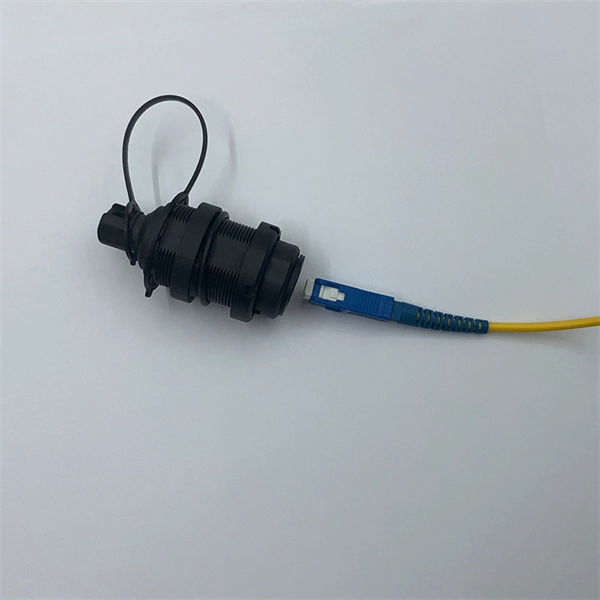
Extending the fiber through the box makes use of a cable entry gland. Fasten the cable to the clamps or ties to assure the cable is immovable. Cable must be properly minimum radius (usually ≥30mm for standard fiber). Remove the cable jacket and buffer coating material. Thus, a fiber termination box is used to terminate the optical fiber cables in the field and connect them to the pigtail by splicing. After an optical cable arrives at the user's end, it is fixed in the terminal box. Fiber adapters: These are used to connect the fiber optic cables to the fiber termination box and should comply with industry. Teleweaver emphasizes the importance of choosing the right FTB based on specific requirements. The common types include: Wall-Mounted FTBs: Ideal for residential and small-scale applications, these are compact boxes designed to be mounted on walls for easy access and space-saving cable management. To address this problem, the fiber termination box (FTB) was created to protect the fragile fiber terminals and provide a simple and clear way to manage the incoming and outgoing cables. more Order it here: https://www. This video shows you a step-by-step instruction on how to terminate 12 strands single mode fiber cables, splicing them with fiber optic pigtails.
[PDF]

