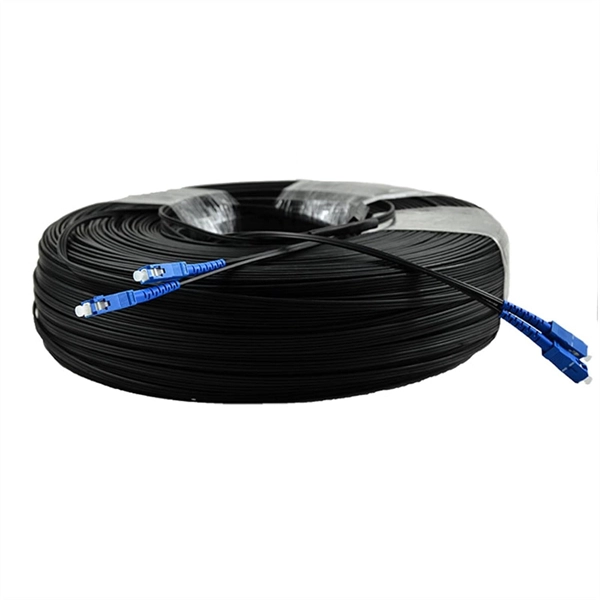
BiDi SFP+ changes the geometry: each module uses a single fiber pair directionally separated by wavelength, so you can run one strand where you previously needed two. One of the most common decisions network engineers face is selecting between single fiber SFP and dual fiber SFP modules. This comprehensive guide explores the differences between single and dual fiber SFPs, their respective benefits, limitations, and use cases—helping you make an informed choice. A single fiber SFP, also known as a BiDi SFP, is designed precisely for this purpose—enabling bidirectional data transmission over a single strand of optical fiber. Unlike traditional SFP transceivers that require two fibers—one for transmitting and one for receiving—a single fiber SFP uses. SFP (Small Form-factor Pluggable) is a compact, hot-pluggable network interface module used to connect network devices (switches, routers, firewalls) to fiber optic or copper cables. An SFP interface on networking hardware is a modular slot for a media-specific transceiver, such as for a fiber-optic cable or a copper. Both transmitting and receiving need one optical fiber to connect. Simplex SFP modules, also known as BIDI transceiver, employs a unidirectional transmission mechanism and have only one port. In practice, that means fewer splice points, smaller patch panels, and less conduit congestion—especially in retrofit buildings.
[PDF]
SFP transceivers are available with a variety of transmitter and receiver specifications, allowing users to select the appropriate transceiver for each link to provide the required optical or electrical reach over the available media type (e.g. or copper cables, or cables). Transceivers are also designated by their transmission speed. SFP modules are commonly available in se.
[PDF]
No, a 10G SFP (Small Form-factor Pluggable) module is designed to operate at 10 Gigabits per second (Gbps) and is not compatible with a 1 Gigabit per second (Gb) port. Therefore, a 10G SFP module will not work. When SFP optical module is inserted into the SFP port of Gigabit switch with fiber optic patch cable or copper cable, it can realize different distance transmission. For example, the maximum transmission distance is 160 km when using SFP1G-ZXC-55 optical module and LC duplex fiber patch cable, and. 10 Gigabit Ethernet (10GE, 10GbE, or 10 GigE) is a group of computer networking technologies for transmitting Ethernet frames at a rate of 10 gigabits per second. It was first defined by the IEEE 802. For example, when using the AE-SFP-ZX160 optical module and LC duplex fiber optic patch cords, the maximum transmission. Can 1G SFP optics work with 10Gb SFP+ ports on a 10Gb switch, or vice versa? This comprehensive guide reveals the intricacies of SFP and SFP+ compatibility and provides useful solutions for network switch users. Can 1G SFP Optics Run at 10G SFP+ Port? Can 10G SFP+ Optics Run at 1G SFP Port? Can. Small form-factor pluggable or SFP Modules can be described as compact and hot-pluggable hardware that connects various networking devices such as servers, routers, and switches. Networking standards, including Ethernet, Fiber Channel, and SONET, are also used with the SFP modules, broadening their.
[PDF]
Compatibility in your network is everything, and the Intellinet SFP Transceiver Module delivers. Use it with any Intellinet SFP equipped network switch or any other MSA-compliant, SFP-enabled switch. And.
[PDF]

We offer a wide range of OEM-compatible optical transceivers & cables, ensuring reliable, high-speed connectivity. The transceiver consists of three sections: a Cooled EML laser transmitter, a APD photodiode integrated with a trans-impedance preamplifier (TIA). As a professional optical transceiver manufacturer, Innoptical offers an extensive assortment of optical transceivers to fit your requirements. Ranging from low-data rate to 800 GB, our transceivers cover types of SFP, SFP+, SFP28, SFP56, QSFP+, QSFP28, QSFP56, QSFP-DD, OSFP, GPON OLT transceivers. Product Specifications/Features SFP Optical Transceivers are hot-swappable, compact media connectors that provide instant fiber connectivity for your networking gear. They are a cost effective way. The optical transceiver is designed for use in 100/155Mbit/s data links. It provides the SC. The LS-SM312G-40C SFP transceivers are high performance, cost effective modules supporting data rate of 2. 5Gbps and 40km transmission distance with SMF. By seamlessly integrating advanced silicon photonics, ultra high speed circuit and packaging designs, Hyper Photonix offers a comprehensive range. Through lean management, manufacturing and our Source Lean Quality (SLQ) system, we run our world-class operation at maximum efficiency, identifying and eliminating waste in our processes to create more value for our customers. Our technical expertise in R&D runs deep with manufacturing process.
[PDF]
An optical module is a typically hot-pluggable optical transceiver used in high-bandwidth data communications applications. Optical modules typically have an electrical interface on the side that connects to the inside of the system and an optical interface on the side that connects to the outside world through a fiber optic cable. The form factor and electrical interface are often specified by an interested group using a (MSA). Optical modules can either plug into a front pa.
[PDF]
A 10GBASE-ER SFP module is a 10Gbps Ethernet optical transceiver designed for long-distance transmission over single-mode fiber, with a maximum reach of up to 40km under the IEEE 802. Compared with short-reach and long-reach 10G SFP+ optics. 1. 10G SFP+ 40KM optical module (1310nm) 10G SFP+ 40KM optical module equipped with 1310nmDFB laser and PIN detector, duplex LC interface, the highest transmission rate of 10. 10G SFP+ 40KM. 10GBASE-ER SFP+ 1310nm 40km DOM Duplex LC/UPC SMF Optical Transceiver Module for FS Switches P/N:SFP-10GER-31 SKU:29797 44,03 € Depending on your delivery address, VAT may vary at Checkout. 34 Reviews 5 Questions Transceiver Models: SFP-10GLRM-31220m SFP-10GMSR-85300m. The M10-40 LC-S module features SFP+ technology, specially designed for the expansion of 10 Gigabit Ethernet networks with a range of up to 40 km. Features standard. The 10G SFP+ ER optical module operates at a wavelength of 1550nm. When used with single-mode fiber, it supports a transmission distance of up to 40km. As a cost-effective ultra-long-distance optical module, it is currently widely used in data centers and enterprise campuses. Providing robust 16 dB link budget over 40km single-mode fiber, this 10G BiDi module reduces infrastructure costs while maintaining performance. Supporting multi-rate transmission.
[PDF]
Optical modules have a series of components inside, some of which have received attention from standards development organizations. In many cases, the baud rate of the optical interface does not equal the baud rate of the electrical interface. In these cases, a gearbox is used within the module to convert between the two rates. For example if the module supports 4 x 25 Gb/s electrical inputs and 2 wavelengths of 50 Gb/s optical inte.
[PDF]
The transceiver is available as a mini-GBIC form factor, making it ideal for environments that require many fiber connections by taking up less space in your cabinet and/or computer room. Compatibility in your network is everything, and the Intellinet SFP Transceiver Module delivers. Use it with any Intellinet SFP equipped network switch or any other MSA-compliant, SFP-enabled switch. And since the Intellinet SFP transceiver module is set to broadcast the vendor on GLC-LH-SM, compatibility to your Cisco gear is provided. No need to power down your LAN switch in order to install or remove the transceiver. This makes it very convenient and easy for you to make adjustments to your network that allow your business to keep pace with the changing demands of the market.
[PDF]
Prices range from $50 to $200, depending on size and material. The manufacturing cost of fiber optic cable depends on factors such as the type of fiber, cladding material, and production scale. Commercial building installations with 100-200 network drops generally range from $15,000 to $30,000. Single-mode fiber costs less per foot than multimode fiber, but it requires more. The actual price of such cables varies significantly based on several factors including cable type (single-mode vs. multimode), length, jacket material (indoor, outdoor, or armored), installation environment, and brand reputation. For instance, single-mode 4 core cables, which use OS2 fiber and. This guide outlines the major factors that influence fiber optic cable costs and provides practical tips for estimating pricing in bulk or project-based scenarios. 1 What's the Typical Price Range? 2 1. Fiber Count and Cable Construction 3 2. Fiber. Buyers typically pay for fiber optic cable by length, fiber type, and installation complexity. This guide presents ranges in USD and practical price estimates to help. Single-mode fiber (OS2): This is the industry workhorse. In 2025, the base glass price has stabilized. You are looking at $0., 12-core vs 96-core) and brand. First and foremost, fiber cables are either singlemode or multimode. Singlemode cables with a small core diameter of 9 microns use high-power laser light sources to support high-speed.
[PDF]
Grating couplers are simply components of a photonic circuit that use diffraction to couple light into or out of a waveguide. By utilizing geometry and diffraction, fiber optic cables can be coupled to silicon chips at any location on the chip, instead of just the edges. How does it. An optical fiber grating is a small segment within an optical fiber altered to act as a selective filter for light. This treated area functions like a specialized mirror, reflecting a specific wavelength of light while allowing all other wavelengths to pass through. How does it work? Key to. coupling efficiency is substantially increased by adding a gold bottom mirror to the structures. The measured coupling effi cloButene (BCB) wafer bonding, gold mirror, grating couplers, in en the fiber and the waveguides on a chip causes high insertion losses and high packaging costs. Periodic index modulation can be permanently written in a waveguide by periodically modulating the doping concentration in the waveguide medium, for example, or it can be created by an. In this example, we will use the Inverse Design toolbox (lumopt) to design a silicon-on-insulator (SOI) grating coupler. Compared to other optimization methods such as particle swarm optimization (PSO), this optimization algorithm enables obtaining the best solution in just a few iterations. How does it work? Key to.
[PDF]

Align the fiber with the connector's guide. Ensure the fiber does not bend or twist during insertion. A proper fit prevents signal loss and enhances performance. Secure the connection using the fast connector's. Optical fiber fast connectors, also known as cold connectors, are becoming increasingly popular due to their ease of use and quick installation. Unlike traditional fiber connectors that require epoxy and polishing, fast connectors use a mechanical splice to join the fibers. In this article, we will. At the heart of any robust fiber optic network lies a crucial process: Preparing a fiber cable for termination of a connector or splice. Two types of splices are used in fiber optic cabling one is Mechanical the other is Fusion. Whether you're installing a new network, expanding an existing one, or. Optic Fiber cleaving, and mechanical splicing through very simple processes in this short series of videos. Thank you for supporting us by viewing our content. Doubts and suggestions? Leave us you. more Audio tracks for some languages were automatically generated. The primary purpose of a fast connector is to ensure a stable and reliable link. Connecting a fiber optic cable to a connector is a precise task that requires careful attention to detail, as well as some specialized tools and equipment. These terminations must be of the right style, installed in a.
[PDF]

The 100FX SFP module for fast Ethernet (FE) ports provides a 100-Mbps optical link using LC connectors and 1310-nm MMF (multimode fiber) cable. The maximum transmission distance for this connection is 2 km. The Cisco 100GBASE Quad Small Form-Factor Pluggable (QSFP) portfolio offers customers a wide variety of high-density and low-power 100 Gigabit Ethernet connectivity options for data center, high-performance computing networks, enterprise core and distribution layers, and service provider. Whether you are maintaining legacy infrastructure or designing industrial Ethernet systems, understanding the technical characteristics of 100BASE-FX SFP modules helps ensure stable and efficient fiber connectivity. 5G SFP Skip to content Search 800G Modules New Arrival! Home Products InfiniBand & Ethernet 800G NDR InfiniBand HOT 400G NDR InfiniBand HOT 200G HDR InfiniBand 100G EDR InfiniBand 56/40G FDR InfiniBand Ethernet Transceiver 25/32/16G Modules 25G SFP28 SR HOT 25G SFP28 LR 25G. OM3 fiber handles 100 meters. OM4 fiber pushes this to 150 meters. OM3 fiber, OM4 fiber, and OM5 fiber support 400G speeds. For a complete listing of hardware compatible with these modules, see the.
[PDF]


