
The table below is a Cross Reference for all Palo Alto Networks Hardware Accessories and includes the Palo Alto Networks SKU, RoHS Compliance, Harmonized Tariff Schedule, ECCN and License information. Choose an option Alt text (alternative text) helps when people can't see the image or when it doesn't load. Aim for 1-2 sentences that describe the subject, setting, or actions. This is used for ornamental images, like borders or watermarks. Short description for people who can't see the image or. The merchandise under consideration is an optical transceiver, part# EOLP-1396-10-X. This item is a single mode transceiver in a small form-factor pluggable (SFP) module for serial optical data communications with an operating data rate of 11. 3Gbps and transmission distance of up to 10 km. The. Currently, the U. import Harmonized Tariff Schedule (HTS) code for optical modules is 8517. HTS website https://hts. gov/,searching for "8517. 00" shows the result "General Free1/", which indicates that attention should be paid to 9903. All parts listed below are RoHS compliant and meet the requirements of the current RoHS 2. How to Reduce Optical Module Costs | SFP & QSFP Cost Optimization Guide-Industry News-Sate Optics-Network Connectivity Solutions! In today's rapidly evolving network environments, reducing operational costs is a top priority for data centers, telecom operators, and system integrators.
[PDF]
SFP transceivers are available with a variety of transmitter and receiver specifications, allowing users to select the appropriate transceiver for each link to provide the required optical or electrical reach over the available media type (e.g. or copper cables, or cables). Transceivers are also designated by their transmission speed. SFP modules are commonly available in se.
[PDF]
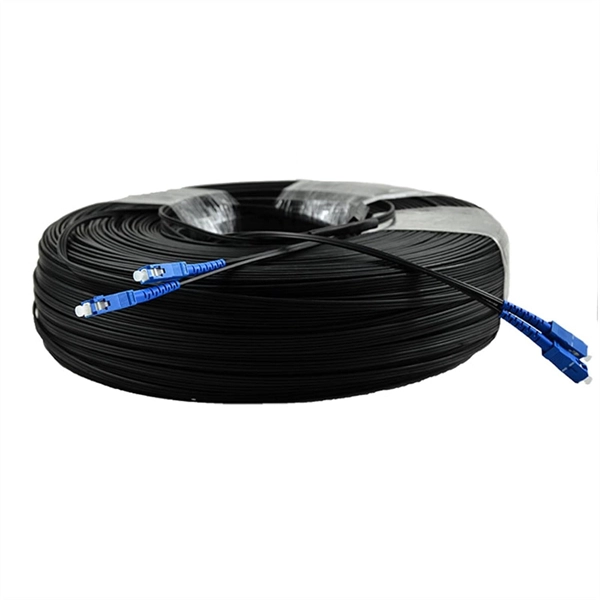
BiDi SFP+ changes the geometry: each module uses a single fiber pair directionally separated by wavelength, so you can run one strand where you previously needed two. One of the most common decisions network engineers face is selecting between single fiber SFP and dual fiber SFP modules. This comprehensive guide explores the differences between single and dual fiber SFPs, their respective benefits, limitations, and use cases—helping you make an informed choice. A single fiber SFP, also known as a BiDi SFP, is designed precisely for this purpose—enabling bidirectional data transmission over a single strand of optical fiber. Unlike traditional SFP transceivers that require two fibers—one for transmitting and one for receiving—a single fiber SFP uses. SFP (Small Form-factor Pluggable) is a compact, hot-pluggable network interface module used to connect network devices (switches, routers, firewalls) to fiber optic or copper cables. An SFP interface on networking hardware is a modular slot for a media-specific transceiver, such as for a fiber-optic cable or a copper. Both transmitting and receiving need one optical fiber to connect. Simplex SFP modules, also known as BIDI transceiver, employs a unidirectional transmission mechanism and have only one port. In practice, that means fewer splice points, smaller patch panels, and less conduit congestion—especially in retrofit buildings.
[PDF]

You can plug various networking devices into an SFP (Small Form-factor Pluggable) port, such as fiber optic transceivers, gigabit Ethernet modules, and SFP modules. These can include devices such as switches, routers, network interface cards, and media converters. SFP (Small Form-factor Pluggable) is a compact, hot-pluggable network interface module used to connect network devices (switches, routers, firewalls) to fiber optic or copper cables. An SFP interface on networking hardware is a modular slot for a media-specific transceiver, such as for a fiber-optic cable or a copper. Optical transceivers are compact, hot-pluggable devices that convert electrical signals into optical signals, enabling high-speed data transmission across switches, routers, and other networking equipment. Transceiver compatibility is a key concern in enterprise network deployments. Can the sfp interface be plugged. SFP modules function by converting electrical signals from a switch or router into optical or copper signals that can travel through various transmission media. They are inserted into SFP ports found on networking hardware and come in multiple variants to support different cable types, distances.
[PDF]

Possible causes for the disconnection are as follows: The optical fiber is improperly inserted. The RX and TX optical ports are inserted reversely. Connect the cables based on their labels. Is it safe to disconnect a yellow cable + green connector Optic Fiber setup from router? Hello all, I'm sorry for the possibly dumb question but I need to move my router and noticed the technician left my Optic Fiber cable very twisted and short in usable length when I had my service installed. Customer reported an urgent issue that more than 150 ONT are disconnected from one OLT suddenly. All these ONT are located in a hotel, clients can not surf internet and IPTV. 1:Check alarm list that there are lots of ONT los alarm reported in MA5608T 2:filter with 'signals (LOS)', shows GPON port. The optical cable on the transmission side is intermittently disconnected. As a result, the active/standby smart-link interface on the switch is switched, causing service loss. The USG supports both 1 Gbit/s, 10 Gbit/s, and 40 Gbit/s optical modules. The optical modules at both ends are. port is disconnected due to optical module faulty (0xF0060004) on port is disconnected. We can see below in config log, the port is in normal status, but the link id is down. Switchshow does not have any output.
[PDF]

Solution: To solve this problem, you can follow these steps: Check if the fiber and optical modules are compatible. A switch must use optical or copper modules that have been certified for use on Huawei switches. Huawei is not liable for any problem caused by the use of non-certified optical or copper. This article summarizes several solutions for using optical modules with switches and common problems encountered during usage, along with specific solutions. Huawei S5720-32P-EI-AC Switch II. During use, reading optical module information helps understand its real-time operating status, enabling faster troubleshooting of link abnormalities. The following uses the. ers, only the short transmission distance is supported. Whether optical attenuators need to be deployed at the receive end o. A leaf-spine refresh can fail in subtle ways: a port locks in an unexpected speed, optics negotiate but traffic stays dark, or DOM readings mismatch. This case study helps network engineers and field technicians validate a Huawei CloudEngine transceiver against switch requirements before rollout.
[PDF]

Huawei routers support optical modules of the following encapsulation types: SFP, eSFP, SFP+, XFP, and QSFP+. SFP: small form-factor pluggable. SFP optical modules support LC fiber connectors and are hot swappable. Optical modules are available in various types to meet diversified requirements. Depending on transmission rates, optical modules are classified into 100GE, 40GE, 25GE, 10GE, 2. 5GE, FE, and GE optical modules. 02315233 - Genuine Huawei SFP-FE-SX-MM1310 Optical Transceiver, SFP, 100M/155M, Multi-mode Module (1310nm, 2km, LC)Basic InformationModule name: SFP-FE-SX-MM1310Part Number: 02315233Model: SFP-FE-SX-MM1310Form factor: SFPApplication standard: 100BASE. 02315205 - Genuine Huawei eSFP-FE-LX-SM1310. Optical modules are important devices in fiber optic communication systems. Huawei Optical Module is manufactured by Huawei Technologies Co. and originated in Shenzhen. is a telecommunications network solutions provider. Huawei's main business scope is switching. Those are SFP (Small Form-factor Pluggable) slots, and the tiny modules that go into them are what make fiber networking actually work. Here's the thing: there are a LOT of different SFP modules out there. GPON SFP sticks, Bidi SFPs, standard duplex SFPs, SFP+ for 10G — and they all look almost. The SFP+ and XFP optical modules are 10GE hot-swappable optical modules. Compared with the SFP+ optical modules, the XFP optical modules have a larger caliber.
[PDF]
BARCELONA, Spain, March 6, 2025 /PRNewswire/ — At the Mobile World Congress 2025 (MWC 2025), Huawei launched the StarryLink optical modules, designed to enhance network experiences with “3S” quality (Spanning, Stable, Secure). This announcement occurred during the data center session titled. The global optical transport market returned to growth mode in 2025, climbing 10% year over year to reach $16 billion, according to new data from Dell'Oro Group. The market, projected to reach $14. 7 billion in 2025, is forecast to.
[PDF]

DANGER Never look directly into an optical module or the ends of optical fibers. Optical modules and connected fibers emit laser radiation that can cause eye damage. NOTICE ● A switch must use optical or copper modules that have been certified for use on. Description: Huawei switches must use Huawei-certified optical modules. Non-Huawei-certified optical modules cannot ensure transmission reliability and may affect service stability. Huawei is not responsible for any problem caused by the use of non-Huawei-certified optical modules and will not fix. How to Configure Optical Ports on Huawei S5720-32P-EI-AC Switch? Problem: All optical ports cannot be connected, and the indicator lights are not on. Solution: To solve this problem, you can follow these steps: Check if the fiber and optical modules are compatible. Single-mode/multimode fibers and. Install an optical module on a port before connecting optical fibers to the transceiver module. Install dust plugs on idle optical ports. Wear an ESD wrist strap or ESD gloves. Before connecting the optical fiber to the. The method used to install a copper transceiver module is the same, except that the copper transceiver module connects to a network cable instead of optical fibers.
[PDF]
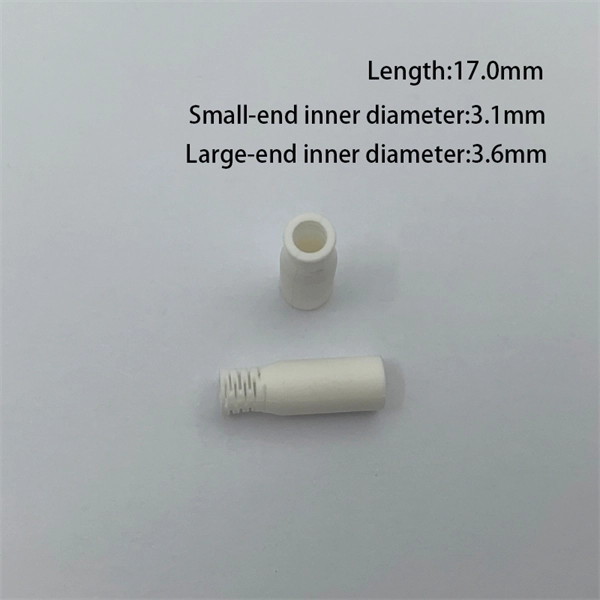
Huawei's fiber to the room (FTTR) solution extends fibers to rooms and provides various gigabit Wi-Fi 6 master/slave FTTR units, all-optical components, and optical cable routing tools. This enables home users to enjoy stable gigabit Wi-Fi experience from anywhere in the home. FTTR is generally an extended FTTH (Fiber To The Home) solution. Drop optical cable terminates at ATB (Access Terminal Box). A patch cord of 1 or 2 m. Huawei will soon be selling its "FTTR" system for do-it-yourself fiber optic home cabling in Germany. Huawei FTTR: Bonding tool for fiber optic installation. A special glue. Fibeye provides FTTR(Fiber to the room) solutions, We specialize in Huawei-adapted FTTR solutions that can help you tap into new markets and grow your business. What is FTTR FTTR(Fiber-to-the-room), is an innovative solution that allows telecom operators to bring optical fibers directly into. Guess what, I spotted Huawei's transparent fibre optic offering! The best Wi-Fi is wired Last year, I wrote about Singtel's FibreEverywhere offering, which allows homeowners to install high-speed wired cabling in every room - without any drilling or trunking. Poor Wi-Fi coverage at home is a common. Watch the video to discover how to use the Huawei FTTR fiber installation kit to route transparent optical cables.
[PDF]

The StarryLink optical module is a core component developed by Huawei for data center networks. It delivers ultra-long-distance transmission, exceptional reliability, and enhanced security, making it well-suited to meet the challenges of computing power upgrades in AI-driven data. On an optical network, a sender needs to convert electrical signals into optical signals before sending them to a receiver, and the receiver needs to convert received optical signals into electrical signals. An optical module is a component that completes electrical/optical conversion on an optical. An eSFP module is an SFP module that supports monitoring of voltage, temperature, bias current, transmit optical power, and receive optical power. Therefore, eSFP is also called SFP sometimes. SFP+: small form-factor pluggable plus, SFP with a higher rate. XFP: 10 Gigabit small form-factor. Optical modules are widely used in switches, network interface cards (NICs), routers, and other communication devices. During use, reading optical module information helps understand its real-time operating status, enabling faster troubleshooting of link abnormalities. and originated in Shenzhen. Huawei Technologies Co. is a telecommunications network solutions provider. The StarryLink optical module series is designed to deliver a premium "3S" network experience—Spanning (ultra-long-distance transmission), Stable (exceptional reliability), and Secure (enhanced security)—to.
[PDF]

Huawei provides a full series of pluggable optical modules. A wide variety of modules give you flexible plug-and-play options for all types of interfaces. In the AI era, Huawei provides a full range of GE to 800GE optical modules, featuring three major capabilities: Spanning (ultra-long transmission), Stable (ultra-high reliability), and Secure (ultra-solid security). Together, they ensure resilient data center interconnectivity and empower. This guide helps network engineers and field techs validate Huawei CloudEngine transceiver compatibility before you touch a live rack. You will also get a short decision checklist, a spec comparison table, and troubleshooting steps that mirror what I see during deployments in mixed-vendor optics. 9. 1 Important Notes About Using Optical Modules Certified for Huawei Routers 9. Non-Huawei- certified optical modules cannot ensure transmission reliability and may affect service. And to keep up with the rapid growth of AI computing power, Huawei offers StarryLink optical modules that can be sold separately, compatible with various types of computing NICs and switches. Through rigorous quality control and end-to-end R&D and manufacturing, Huawei's StarryLink optical modules. Full Huawei Optical Transceiver compatible range - helping you to build cost-efficient networks with ease! SFP, SFP+, QSFP28 and more. Huawei is not liable for any problem caused by the use of non-certified optical or copper.
[PDF]

from outside the US. EMEA Specific: +49 (0) 228 7489 201 HCS and GiHCS are registered tradema time without notice. This document is for informational purposes only and is not intended to modify or supplement any OFS warranties or specifications relating to any of its. from outside the US. STFOC uses our patented cable jacket construction designed to protect the fiber in the harsh subsea environment. Non-KinkTMSTFOC has a patented design to protect. CommScope bundles hybrid cabling to your custom specifications, using our high-performance fiber-optic, unshielded twisted pair and coaxial cables. Devices deployed at the network edge—a 5G radio, a security camera, or an industrial sensor—require high-speed data connectivity and power. It is technically possible to have a separate fiber and electrical cable, but it adds complexity, cost, and maintenance overhead. Optical hybrid cables address. challenge—OCC has what you need. Our team will make sure the configuration is tailored to your needs and will provide a detailed quote. Email us using the Request a Quote below, or give our team a call. Drive, Avon, CT 0600 erat ing Bend Radiu erat ing Bend Radius Cons from outside the US. Teledyne ODI ofers a comprehensive line of fiber optic and electro/optic hybrid wet mate interconnect products. Wet mate connectors are available in ROV Mate, Stab Mate and Manual Mate configurati sm.
[PDF]

