
Cable Tray Size: 12" (width) x 2" (height) or 300mm (width) x 50mm (height). Material: Made from high-quality galvanized steel for durability and corrosion resistance. Construction: Sturdy construction designed to support heavy loads and provide long-lasting performance. Galvanized cable tray systems support reliable electrical installations across Kenya's growing infrastructure projects. Therefore, developers rely on these systems in commercial and industrial buildings. They. Metallic cable trays provide a safe open solution for routing cables and wires. Cable trays can be mounted onto a wall or suspended from a ceiling to provide a track that allows cables and wires to be routed around a building in an easily maintainable manner. Cable trays are available in three types, from light duty through to heavy duty; each system is supported by a fully integrated range. Often made of galvanized or stainless steel cable trays not only provide a perfect cable management solution but also look aesthetically pleasing in any environment.
[PDF]
Browse our T&B galvanized metallic cable tray systems. More adaptable and easier to maintain than conduit pipe, ideal for evolving wiring needs. These metal trays, coated with a special zinc shield, resist rust and last a long time, even in tough environments. They keep your wires tidy, cool, and protected, from power plants to your next building project. We, one of the leading. Looking for a trusted source to buy Galvanized Cable Tray In Botswana? Brilltech Engineers Pvt. Ltd is the one you can reach. We have a highly experienced team, well-loaded manufacturing unit and a lot more to match up the ever-evolving needs of our customers. Moreover, our focus on maintaining. Jeetmull Jaichandlall (P) Ltd. We believe in building fruitful business partnerships. Being one of the. SS304, and SS316. Aluzinc Steel Sh. Started back in 1983, Cable House is a recognized name engaged in manufacturing and supplying wide range including Hose Clamps, Cable Ties, Crimping Tools, Cable Tray, Industrial Connectors and more, to the national as well as the international market. With our manufacturing expertise, we have even.
[PDF]
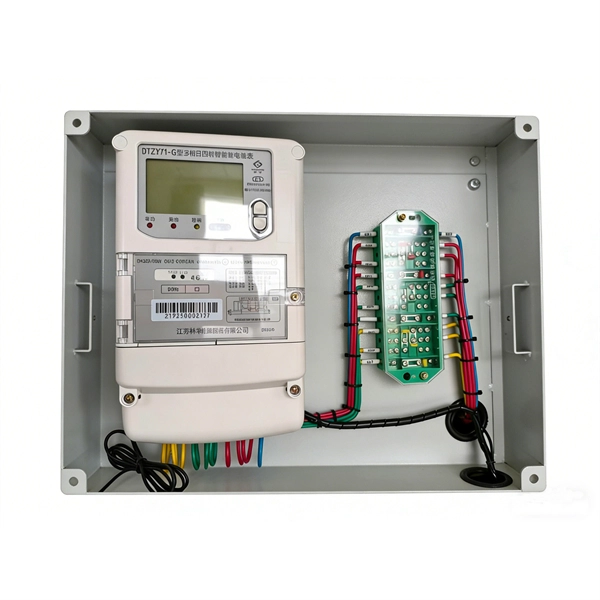
On the US market, a 5. 26 mm 2 (10 AWG) ground wire must be used, and in all other markets a 6 mm 2 must be used. Grounding of the units: Attach a ground wire from one of the threaded studs (A) at the bottom of the housing, to the mounting plate (B). Power from factory ground must be installed by a qualified electrician. Each DISTRIBUTION BOX and controller must be grounded. Whether you're a seasoned pro or just starting out, this comprehensive guide will give you practical. To define the technical specifications for the supply of Fibre Optic Overhead Ground Wire (OPGW) for installation on extra high voltage power lines, under the responsibility of Tasmanian Networks Pty Ltd (hereafter referred to as 'TasNetworks'). This standard applies to all OPGW purchased for. 4. FO-VC2 JOINT USE - VERICAL MIDSPAN CLEARANCES 48. FO-GB GROUNDING AND BONDING 49. FO-RI JOINT USE RISER. The requirement includes the design, supply, stringing and splicing of OPGW cable on 400KV, 220KV & 132KV Transmission Towers. This specification defines the design, material, performance and test requirements for fibre optic cable to support the fibre optic telecommunication needs. The work. IPMENT, STRUCTURES, ETC. IN ELECTRICAL STATIONS INCLUDING TRANSMISSION AND DISTRIBUTION SUBSTAT GR THAN 8 FT FROM THE FENCE. THE FENCE SHALL BE GROUNDED SEPARATELY FROM THE GRID UNLESS OTHERWISE NOTED ON THE A PROPRIATE PROJECT DRAWING. FOR FENC G O OUTSIDE CLEARANCE SPACING. SEE APPLICATION.
[PDF]

Passive receiver that captures an optical signal on a single fiber (1310/1490/1550nm), and demultiplexes it (WDM). The TV signal (1550nm) is converted to an RF output (54-2400MHz), while the 1310/1490nm wavelengths are destined to data signals (GPON) to distribute them through. Facilitates rapid deployment and hassle-free replacement. Contributes to wide coverage and supports multiple optical nodes, facilitating network upgrade and expansion effortlessly. Maintains stable output with minimal gain fluctuation (±0. 5dB) and low noise signature (≤5. Supports. REF. This FTTH WDM Passive Optical Receiver is engineered for high-performance fiber-to-the-home networks. It features a passive design that operates without an external power supply, simplifying installation and reducing maintenance. With integrated WDM technology, it efficiently handles 1310nm/1490nm. Passive FTTH Optical receiver, cost-effective, no need power. ■ High quality plastic case; ■ Digital signal input -10dBm, analog signal input -7dBm; ■ Without power supply and consumption; ■ SC/APC or FC/APC; ■ Output level> 64dBuV (Pin=0dB).
[PDF]

Our customers can count us for buying Electrical Cable Tray, Ladder Cable Tray, PVC Cable Tray, Mild Steel Cable Tray, Perforated Cable Tray, Raceway, Stainless Steel Cable Tray In Botswana. We have our exceptional range designed and. Looking for a trusted source to buy Cable Tray In Botswana? Brilltech Engineers Pvt. Ltd is the one you can reach. We have a highly experienced team, well-loaded manufacturing unit and a lot more to match up the ever-evolving needs of our customers. Moreover, our focus on maintaining high quality. Micro Sheet Crafts have been involved in offering a wide range of storing systems and solutions, as per the requirements of the customers. We offer Cable Tray in Botswana in different specifications at competitive market prices. Our range is customized and passes stringent quality tests, before. We, one of the leading Galvanized Cable Tray Manufacturers in Botswana, bring trays that are designed to offer superior durability, corrosion resistance, and efficient cable management solutions for various applications. What are Galvanized Cable Trays? They are a type of cable support system. Jeetmull Jaichandlall (P) Ltd. We believe in building fruitful business partnerships. Our custom-based products are able to match up your distinct needs. Our products are known for their sustainable performance and all the other features.
[PDF]

Instead of being hardwired to accept only one type of cable, an SFP+ port accepts small, hot-swappable modules—called transceivers—that you simply slide in and click into place. Need a fiber connection? Pop in a fiber module. Prefer copper? There's a module for that too. A fiber optic transceiver (also called an optical transceiver) is a compact module that both transmits and receives data signals through optical fibers. It serves a dual purpose — transmitting electrical signals as light pulses and receiving light pulses to convert them back into electrical form. An SFP transceiver acts as a compact, hot-swappable optical transceiver that. When building or upgrading a network, many IT managers focus on switches, routers, and access points—while overlooking one critical piece of the puzzle: the optical transceiver. These small modules determine how your uplinks operate: the speed, the distance supported, and whether your Cisco or. Fiber optic cabling is an alternative to copper cabling for data transmission. Popular options include: LC: Common on SFP, SFP+, XFP, QSFP, and SFF transceivers. ST, MT-RJ, and MPO: A bit less common but still in use.
[PDF]

This article documents how we paired an EDFA optical amplifier transceiver strategy with transport modules to stabilize signal margin across changing span loss. This installation note provides the installation instructions for the Cisco small form-factor pluggable (SFP) and SFP+ transceiver modules. It helps network and procurement teams compare options, control lead time, and reduce supply chain risk without sacrificing link. This section describes how to install optical transceivers on the SFP or SFP+ ports and connect them to the ports of the peer device using optical fibers according to the network plan. The USG supports both 1 Gbit/s, 10 Gbit/s, and 40 Gbit/s optical modules. The optical modules at both ends are. In the world of fiber optic communications, optical transceiver modules play a pivotal role as interfaces that convert electrical signals to optical signals and vice versa. These standardized devices convert electrical signals from network equipment. Every piece of data traveling across a fiber optic network passes through an optical transceiver.
[PDF]
An optical transceiver is a modular device that serves as both a transmitter and a receiver (hence the name). What constitutes an optical transceiver? An optical transceiver, a crucial device utilized in optical communication, is an optoelectronic element, allowing the interconversion of optical and electrical signals during the information transmission. It serves a dual purpose — transmitting electrical signals as light pulses and receiving light pulses to convert them back into electrical form. Yet, selecting and managing them can be a complex task. Whether you're a seasoned network architect or a procurement specialist, having the right information is. IntroductionEngineers, purchasing managers and installers often see the terms Transceiver, optical module and fiber optic module used interchangeably — and that causes confusion. This article answers the question directly and precisely: what each term usually means, where they overlap, and what.
[PDF]
An optical module is a typically hot-pluggable optical transceiver used in high-bandwidth data communications applications. Optical modules typically have an electrical interface on the side that connects to the inside of the system and an optical interface on the side that connects to the outside world through a fiber optic cable. The form factor and electrical interface are often specified by an interested group using a (MSA). Optical modules can either plug into a front pa.
[PDF]
SFP transceivers are available with a variety of transmitter and receiver specifications, allowing users to select the appropriate transceiver for each link to provide the required optical or electrical reach over the available media type (e.g. or copper cables, or cables). Transceivers are also designated by their transmission speed. SFP modules are commonly available in se.
[PDF]

A beam splitter or beamsplitter is an optical device that splits a beam of light into a transmitted and a reflected beam. It is a crucial part of many optical experimental and measurement systems, such as interferometers, also finding widespread application in fibre optic. Beamsplitters are optical components used to split incident light at a designated ratio into two separate beams. In its. 📦 For purchasing, use the RP Photonics Buyer's Guide for beam splitters. It provides an expert-curated supplier directory, buyer-focused technical background information, and structured selection criteria to support professional procurement decisions. What are Beam Splitters? A beam splitter (or. Beam splitters come in many different forms, including cube and plate configurations, each with its own unique characteristics and applications. Beamsplitters are good at splitting incoming light in specified ratios, and they are required to precisely control light intensity in experiments and. What Is a Beam Splitter? Types, Uses, and How It Works A beam splitter is an optical device that takes a single beam of light and divides it into two separate beams. One portion passes through the device while the other reflects off it, and the ratio between the two can be controlled by design. This passive device uses a specialized surface designed to both reflect and transmit light simultaneously. The resulting beams are directed.
[PDF]


