Companies like Tesla, CATL, and Fluence are deploying battery farms that can store megawatts of solar power and release it on demand. Meanwhile, “smart grids” enabled by AI and real-time data are helping to balance supply and demand dynamically. Energy Internet technology promotes the deep integration of energy and communication infrastructure and creates an open and shared Internet ecosystem. The energy Internet theory has been not only applied to the industrial field but also developed to be used in the agricultural field (Fu and Yang. From the first fires that lit our ancient caves to the towering smokestacks of the Industrial Revolution, each leap forward in power generation has redefined how we live, work, and relate to the planet. But the fossil fuel era—so dominant, so defining—is reaching its inevitable twilight. The signs. ITM University Gwalior, India. coordinating and controlling the many parts of a system, whether they are locally located or geographically dispersed. The study wraps up by outlining the most pressing problems that will need to be solved in order to implement an.
[PDF]

The NetSureTM H series of integrated hybrid DC power systems is designed to increase network reliability and reduce opera-tional costs for wireless network access sites, backbone sites and hub sites with no or poor quality AC utility infrastructure. The systems enable hybrid operation of mains. This paper provides a comprehensive review of hybrid energy systems (HESs), focusing on their challenges, optimization techniques, and control strategies to enhance performance, reliability, and sustainability across various applications, such as microgrids (MGs), commercial buildings, healthcare. As Europe accelerates towards a carbon-neutral future, energy storage is no longer a supporting player, it is the backbone of the energy transition. A Hybrid Power Network Switch is an intelligent energy management device that automatically switches between multiple power sources, such as solar panels, wind turbines, and grid electricity, ensuring an uninterrupted supply to critical network equipment. It doesn't just “switch power”; it balances.
[PDF]

List of the top Energy Management software in 2026 including comparisons, user reviews, pricing, features, and more. With the Enterprise Energy Management Services (EEMS), Yokogawa addresses the compelling needs to reduce energy costs and improve facility process performance. EEMS connects sensors, meters, controllers, building management systems, and other IoT devices to manage and reduce the energy consumption. At Leidos, we provide energy management solutions that meet the full range of our clients' energy concerns, regardless of complexity. We focus on generating results that help our clients leverage future opportunities and support sustainable solutions. Leidos designs, implements, and manages. Energy management software helps organizations monitor, control, and optimize their energy consumption to reduce costs and environmental impact. It collects data from meters, sensors, and energy systems to provide real-time insights and analytics on usage patterns. The software often includes tools. Centralize your building's energy usage data and drive increased efficiencies with our cloud-based energy management solution. It provides real-time data on energy consumption, enabling users to identify inefficiencies and implement strategies for energy conservation.
[PDF]

This paper aims to review various types and techniques for analysing frequency, transient, small-signal, and converter-driven stability, and to assess the importance and challenges of such analyses for HES. By emphasising the need for innovative approaches for stability enhancement, the paper also. The transient stability control for disturbances in microgrids based on a lithium-ion battery–supercapacitor hybrid energy storage system (HESS) is a challenging problem, which not only involves needing to maintain stability under a dynamic load and changing external conditions but also involves. sient stability (TS). The rapid growth of renewable energy sources in power networks further compounds this issue. This paper. Maximum power point tracking (MPPT): High-end controllers have MPPT function, which can adjust the working point in real time so that the solar panel always works at the optimal power point. Data monitoring: Real-time monitoring of system operation data, such as voltage, current, power, etc., so. Hybrid power trains (HPT) run on multiple energy sources, often involving energy storage systems/batteries (ESS). As a result, the risk of battery degra- dation and the reliability of energy storage elements pose a major challenge in designing an energy-efficient hybrid power train.
[PDF]
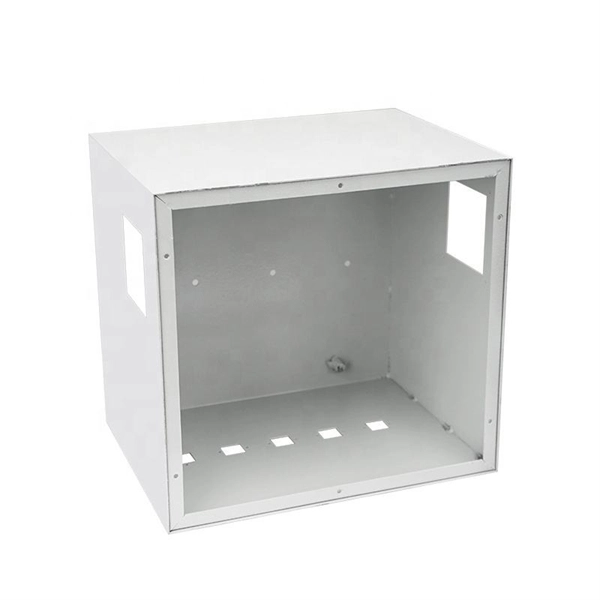
A distribution box is used to receive electrical power from a main supply and distribute it to multiple branch circuits in a safe and controlled way. It helps protect circuits, organize electrical connections, and improve maintenance efficiency. Distribution. The distribution box (DB box) helps safely and efficiently distribute electrical power. Today, electrical systems are essential for homes and industries. But what exactly is a power distribution box, and why is it so essential in our daily lives? The DB panel board controls the flow of electricity. For procurement professionals, electrical contractors, and project managers, choosing the right Distribution Box (DB Box) is a critical decision that directly impacts system safety, reliability, and long-term operating costs. This ultimate guide explains what a distribution box does, its internal. A distribution box, also known as a distribution board, electrical panel, or breaker box, is an enclosure that houses electrical components responsible for distributing electricity throughout a building. They give more power and help machines work well. Tip: If you have big machines or a large building, you probably need a 3-phase box. The Main Distribution Board is the main part of your electrical system. It connects to the main power supply. It integrates power distribution, protection, and monitoring capabilities, and is responsible for distributing power to entire commercial or residential.
[PDF]

Numerous disciplines, including photonics, telecommunications, biomedical imaging, and quantum computation, make extensive use of cube beam splitters and their techniques for manipulating light. A beam splitter or beamsplitter is an optical device that splits a beam of light into a transmitted and a reflected beam. It is a crucial part of many optical experimental and measurement systems, such as interferometers, also finding widespread application in fibre optic telecommunications. A typical cube beam splitter consists of two prisms with right-angle faces that are joined at their hypotenuses. A special dielectric coating is applied to one of these surfaces, which. 📦 For purchasing, use the RP Photonics Buyer's Guide for beam splitters. It provides an expert-curated supplier directory, buyer-focused technical background information, and structured selection criteria to support professional procurement decisions. What are Beam Splitters? A beam splitter (or. Plate beamsplitters are flat substrates with a partially reflecting coating on one surface that divides the optical beam based on power or wavelength. No epoxy or optical contacting is used in fabrication, making plate beamsplitters intrinsically suitable to high energy applications. They come in different types and have numerous applications. However, most do not know how they work.
[PDF]
An optical power meter (OPM) is a device used to measure the power in an signal. The term usually refers to a device for testing average power in systems. Other general purpose light power measuring devices are usually called,, power meters (can be sensors or ), or lux meters. A typical optical power meter consists of a , measuring and display. The sens.
[PDF]

In this article, we break down the major FTTx models, compare their performance and implementation contexts, and showcase how LINK-PP's high-performance optical modules support each deployment type. Huawei's fiber to the room (FTTR) solution extends fibers to rooms and provides various gigabit Wi-Fi 6 master/slave FTTR units, all-optical components, and optical cable construction tools, enabling users to enjoy stable gigabit Wi-Fi experience in every corner of rooms at every moment. In. Fibre-to-the-room (FTTR) delivers Gigabit optical capacity directly to each room in a building, providing very high-speed, reliable internet. FTTR fibre-based technology: designed to enhance digital capabilities. FTTR addresses challenges related to restricted speeds within buildings, providing. Fiber to the Room (FTTR) is a next-generation access network designed to deliver high bandwidth, low latency, and room-level optical coverage. It is envisaged that the topology and functionalities of FTTR technologies may be. Fiber to the Room (FTTR) is a possible solution to issues with indoor connectivity. Demands for high bandwidth, high bit rates in both directions, low latency, and service reliability are constantly growing. FTTR is a very effective way to improve the quality of residential broadband service and reduce customer complaints, more so with the advent of Wi-Fi 7.
[PDF]

Light sources are devices that generate the optical signals transmitted through fiber optic cables. In fiber communication, the most commonly used light sources are LEDs (Light Emitting Diodes) and laser diodes. LEDs are used in short-distance, low-speed systems due to their broader spectral width. Optical fiber primarily uses infrared light, not visible light, due to lower signal attenuation. Common wavelengths are 1310nm and 1550nm, where silica glass fiber has minimal loss (as low as 0. Lasers or LEDs generate the light, which carries data through total internal reflection within. Most systems use a "transceiver" which includes both transmission and receiver in a single module. The transmitter takes an electrical input and converts it to an optical output from a laser diode or LED. It often uses glass or plastic cables, which address the problems of traditional copper cables' poor speed and limited distance bandwidth carrying. VCSEL (Vertical Cavity Surface Emitting Laser)- VCSELs (pronounced 'vixel') emerged in the 80's as a new kind of semi-conductor laser and were soon recognized for their potential in fiber optics. When Gigabit Ethernet products were developed LEDs could not modulate (turn on and off) at required.
[PDF]

Building the Energy Internet involves transforming traditional, one-way power grids into decentralized, intelligent, and two-way, digital networks. Crude oil, gasoline, heating oil, diesel, propane, and other liquids including biofuels and natural gas liquids. Exploration and reserves, storage, imports and exports, production, prices, sales. Sales, revenue and prices, power plants, fuel use, stocks, generation, trade, demand & emissions. In the next 20 years, almost three billion people will join the middle class, propelling global demand for more and better housing, televisions, cars, food, water, energy, and myriad other goods and services. It integrates distributed renewable sources, storage, EVs, and smart buildings, allowing them to exchange data and power in real-time to enhance. Husain is director of the FREEDM Systems Center With funding from the National Science Foundation (NSF) leveraged by additional industry support, the Engineering Research Center has sparked the growth of dozens of clean energy businesses in Raleigh's Research Triangle, making the region an.
[PDF]
The main objective of this paper is to address how the Internet of Things (IoT) would meet the requirements of smart and distributed power generation. We did a comprehensive literature review to provide insights into the IoE applications and enlighten the current. The Internet of Energy (IoE), as a new concept, transforms the way of energy production, supply, and consumption to fulfill high-energy demands via a smart network of industrial energy producers and consumers. The IoEn platform will simultaneously manage both system-level. The Energy Internet (EI) and Smart Grid 2. 0) concepts are potential challenges in industry and research. 0 and EI is to automate innovative power grid operations. To move from Distribution Network Operators (DSO) to consumer-centric distributed power grid management, the.
[PDF]
EI is an integration of DRERs, DESDs, real-time energy monitoring, information sharing, real-time pricing, and energy transactions. EI aims to transform energy production, storage, and transport into an Internet-enabled form. Energy Internet is a concept proposed to harness, control, and manage energy resources effectively, with the help of information and communication technology. It improves a reliability of the system, and provides an increased utilization of energy resources by integrating the smart grid with the. Energy Internet (EI), an emerging topic in the field of energy, is devoted to promoting a deep combination between the energy system and the Internet. It aims at accommodating high-penetration renewables, improving efficiency, and creating a sharing economy to reduce cost on energy assumption. Engineered for durability, the Starlink Performance is enclosed in aluminum and designed for resilient connectivity in harsh and remote environments, extreme weather, and in-motion usage. Operates on AC and/or DC power. Starlink Performance includes a 3-year warranty, is built for 10-year.
[PDF]
This chapter presents the development of the Energy Internet throughout the history as an evolutionary solution based on modern technological development and needs, with the respect of its architecture, key features, and key concepts, such as energy router, prosumer, and virtual. This chapter presents the development of the Energy Internet throughout the history as an evolutionary solution based on modern technological development and needs, with the respect of its architecture, key features, and key concepts, such as energy router, prosumer, and virtual. Energy Internet, a futuristic evolution of electricity system, is conceptualized as an energy sharing network. The. ITM University Gwalior, India. coordinating and controlling the many parts of a system, whether they are locally located or geographically dispersed. The study wraps up by outlining the most pressing problems that will need to be solved in order to implement an.
[PDF]