Energy Internet refers to a combination of advanced power and electronics technology, information technology and intelligent management technology, and a large number of new power networks, petroleum networks, natural gas networks, etc., which are composed of distributed energy gathering devices. The so-called 'low-altitude economy' - encompassing drones, electric vertical takeoff and landing aircraft (eVTOLs), airborne data platforms and the infrastructure that supports them - is poised to become a pillar of China's next develo. read more Kanpai! Space-brewed sake sells for $700,000.
[PDF]
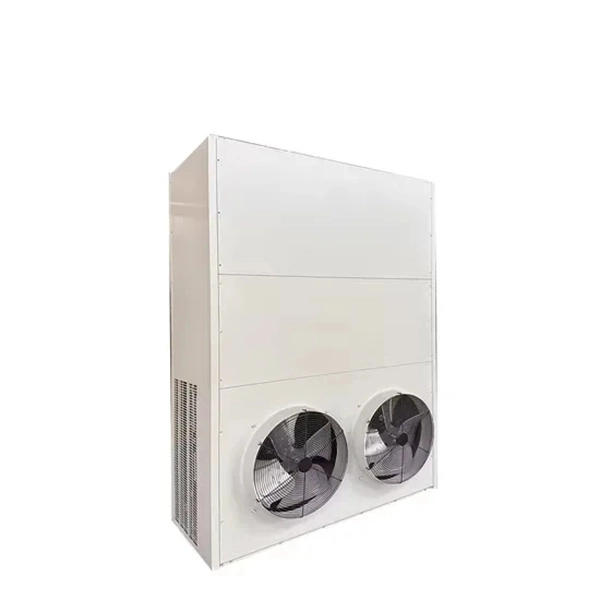
This chapter presents the development of the Energy Internet throughout the history as an evolutionary solution based on modern technological development and needs, with the respect of its architecture, key features, and key concepts, such as energy router, prosumer, and virtual. This chapter presents the development of the Energy Internet throughout the history as an evolutionary solution based on modern technological development and needs, with the respect of its architecture, key features, and key concepts, such as energy router, prosumer, and virtual. Energy Internet is a concept proposed to harness, control, and manage energy resources effectively, with the help of information and communication technology. The. Therefore, a new energy paradigm is known as the “Energy Internet” that combines economics, energy, and technology in an open, equal, and coordinated fashion. Energy Internet (often reflects Internet plus energy) is a novel energy network that interconnects the power system components: production. Similar to an internet router to connect and switch networks, the energy router within the energy internet plays a crucial role to integrate and distribute the energy flow. This paper provides an overview of the application and challenges associated with energy routers in the energy internet.
[PDF]

Companies like Tesla, CATL, and Fluence are deploying battery farms that can store megawatts of solar power and release it on demand. Meanwhile, “smart grids” enabled by AI and real-time data are helping to balance supply and demand dynamically. Energy Internet technology promotes the deep integration of energy and communication infrastructure and creates an open and shared Internet ecosystem. The energy Internet theory has been not only applied to the industrial field but also developed to be used in the agricultural field (Fu and Yang. From the first fires that lit our ancient caves to the towering smokestacks of the Industrial Revolution, each leap forward in power generation has redefined how we live, work, and relate to the planet. But the fossil fuel era—so dominant, so defining—is reaching its inevitable twilight. The signs. ITM University Gwalior, India. coordinating and controlling the many parts of a system, whether they are locally located or geographically dispersed. The study wraps up by outlining the most pressing problems that will need to be solved in order to implement an.
[PDF]
Among the most important emerging trends in fiber optic technology for 2025 are: Ultra-low loss (ULL) fiber, extending long-distance data transmission with minimal signal degradation. Bend-insensitive fiber, delivering reliable performance in tight urban and data center installations. With speeds reaching 100Gbps, 400Gbps, 800Gbps, and. According to a recent study by the Fiber Broadband Association and RVA, 76. 5%) are now serviceable by fiber—an increase of 13% in 2024. By 2028, fiber is expected to reach 80% of U. As the industry looks ahead, six major trends are shaping the future of fiber. The global FTTH market size is estimated at $47 billion in 2022 and is projected toward upward growth at a compound annual growth rate (CAGR) of 12% from 2023 to 2030. Born of a wildly successful experiment The evolution of FTTH networks dates to the 1970s, to an experiment with fused silica. The. From multi-gigabit speeds to open-access models and AI-driven optimization, what's on the horizon suggests that the fiber broadband industry is not just growing – it's transforming. Continued Expansion in Global Coverage The. The future of Fiber Optic communication is on the brink of remarkable advancements, setting the stage for groundbreaking innovations that will shape our daily lives. From enabling high-speed internet connections to.
[PDF]

A passive optical network (PON) is a fiber-optic telecommunications network that uses only unpowered devices to carry signals, as opposed to electronic equipment. In practice, PONs are typically used for the last mile between Internet service providers (ISP) and their customers. In this use, a PON. Passive Optical Networks (PON) have emerged as a leading solution to meet these demands, offering high bandwidth, scalability, and cost-effective deployment. This comprehensive guide delves into the world of PON, exploring its various types, benefits, and applications, particularly in Fiber to the. Optical splitters are used to split the signal into multiple branches. There could be several levels of splitters, which are separating the outside plant into different sections: fiber feeder, distribution, drop. Its principle—distributing the signal from a central point to numerous subscribers via entirely passive splitters—has revolutionized the economics of access networks. This makes it a cost-effective and reliable solution for.
[PDF]

This paper aims to review various types and techniques for analysing frequency, transient, small-signal, and converter-driven stability, and to assess the importance and challenges of such analyses for HES. By emphasising the need for innovative approaches for stability enhancement, the paper also. The transient stability control for disturbances in microgrids based on a lithium-ion battery–supercapacitor hybrid energy storage system (HESS) is a challenging problem, which not only involves needing to maintain stability under a dynamic load and changing external conditions but also involves. sient stability (TS). The rapid growth of renewable energy sources in power networks further compounds this issue. This paper. Maximum power point tracking (MPPT): High-end controllers have MPPT function, which can adjust the working point in real time so that the solar panel always works at the optimal power point. Data monitoring: Real-time monitoring of system operation data, such as voltage, current, power, etc., so. Hybrid power trains (HPT) run on multiple energy sources, often involving energy storage systems/batteries (ESS). As a result, the risk of battery degra- dation and the reliability of energy storage elements pose a major challenge in designing an energy-efficient hybrid power train.
[PDF]

The NetSureTM H series of integrated hybrid DC power systems is designed to increase network reliability and reduce opera-tional costs for wireless network access sites, backbone sites and hub sites with no or poor quality AC utility infrastructure. The systems enable hybrid operation of mains. This paper provides a comprehensive review of hybrid energy systems (HESs), focusing on their challenges, optimization techniques, and control strategies to enhance performance, reliability, and sustainability across various applications, such as microgrids (MGs), commercial buildings, healthcare. As Europe accelerates towards a carbon-neutral future, energy storage is no longer a supporting player, it is the backbone of the energy transition. A Hybrid Power Network Switch is an intelligent energy management device that automatically switches between multiple power sources, such as solar panels, wind turbines, and grid electricity, ensuring an uninterrupted supply to critical network equipment. It doesn't just “switch power”; it balances.
[PDF]
From utilizing public Wi-Fi, Starlink satellite internet, cellular data roaming from U. carriers, obtaining a local SIM card, using cloud-based SIMs, or using personal satellite communicators - it's entirely possible to cruise the Bahamas and be swimming in mobile internet. The cost of utilities and internet in the Bahamas can range from $200 to $500 per month for a medium-sized apartment, depending on usage and service providers. You won't have to. Bahamas internet options have sure expanded since we were there in 2016. Far more options exist, with greater coverage and speed and considerably lower prices. As we're planning to spend three months in the Bahamas this summer, I've been doing a lot of research on this topic. As you step off the plane, excited to explore Nassau's bustling markets, dive into the Blue Hole, or relax in. Leading ISPs in The Bahamas range from fiber optic dealers to mobile broadband and satellite dealers. What internet providers are in the Bahamas? 1. BTC (Bahamas Telecommunications Company) BTC is a state owned telecommunications company offering a range of internet services, including fiber optic. After 30 years in the business we have a bold new identity, driven by innovation, progress and an enhanced customer experience. Along the way we make it our mission.
[PDF]

Also, please take a look at the list of 18 fiber optic sensor manufacturers and their company rankings. Omega Engineering, Inc. What Is a Fiber Optic Sensor?. The top companies in distributed fiber optic sensors market are shaping a rapidly evolving ecosystem driven by infrastructure digitization, energy transition, and advanced monitoring requirements across critical industries. The market is estimated to exceed USD 2. Their systems offer a compelling combination of advanced technology (often utilizing Brillouin or Rayleigh scattering). Fiber optic sensor companies manufacture sensors that use optical fibers for detecting changes in physical properties like temperature, pressure, and strain. The technology is developed at the VU in Amsterdam they built several applications based on the technology, for both academic as well as. com/ Echopoint Medical is a. Fiber optic shape sensing platforms delivering full-length device awareness for radiation-free navigation and real-time procedural insight What is Shape Sensing? Fiber optic shape sensing uses embedded sensors to measure the full 3D shape of a flexible surgical device along its entire length in.
[PDF]

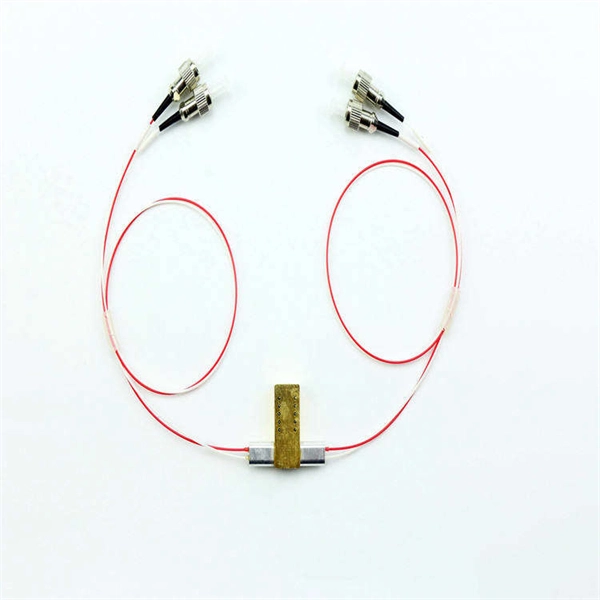
This article summarizes the research and development of a fully automated production process for optical fiber couplers, covering stages from fiber loading to glue packaging, which was demonstrated through the creation of a prototype and is expected to improve mass production . This article summarizes the research and development of a fully automated production process for optical fiber couplers, covering stages from fiber loading to glue packaging, which was demonstrated through the creation of a prototype and is expected to improve mass production . A fiber coupler is a passive optical device that manages the flow of light signals within an optical network. It functions by dividing a single incoming light path into multiple outgoing paths, or by combining light from several input paths into a single output fiber. They form the foundation of high-speed communications, ensuring that data, sensor signals, and laser outputs reach their destinations with minimal loss. Beyond simple. Fiber optic coupler is a lively type of passive components, and its basic function would be to achieve the optical power and fiber wavelength distribution.
[PDF]
It essentially performs some relatively simple time-division multiplexing of lower-rate signals into a higher-rate carrier within the system (a common example is the ability to accept 4 OC-48s and then output a single OC-192 in the 1,550 nm band).OverviewIn, wavelength-division multiplexing (WDM) is a technology which a number of signals onto a single by using different (i.e., colors) of. A WDM system uses a at the to join the several signals together and a at the to split them apart. With the right type of fiber, it is possible to have a device that does both s.
[PDF]

In this study we consider a basic mechanism for the conversion from Sol. Energy to power generation and the progress in PV development by using silicon materials. Modules based on c-Si cells account for more than 90% of the photovoltaic capacity installed worldwide, which is why the analysis in this paper focusses on this cell type. This study provides an overview of the current state of silicon-based photovoltaic technology, the direction of. The U. Department of Energy (DOE) Solar Energy Technologies Office (SETO) supports crystalline silicon photovoltaic (PV) research and development efforts that lead to market-ready technologies. 7 × 10 17 W of Sol. Energy irradiates the Earth, which is more than 10,000 times the global energy consumption [6, 7]. Conventional PV cells are made from a silicon wafer that transforms sunlight directly into electricity. These silicon-based solar cells use 150 to 200. Crystalline silicon (c-Si) photovoltaics has long been considered energy intensive and costly. Over the past decades, spectacular improvements along the manufacturing chain have made c-Si a low-cost source of electricity that cannot be ignored anymore. Over 125 GW of c-Si modules have been.
[PDF]

Fiber optic intrusion detection gives you a reliable way to secure perimeters. The cables detect stress or breaks when someone tries to breach the area. This technology resists interference, making it a strong choice for organizations that want dependable security. You can think of these cables as a sensitive tripwire or a microphone that listens for unusual vibrations. Unlike traditional electronic sensors, fiber optic. Fiber SenSys®, Inc. FSI sensors have been successfully deployed on fences and alongside physical data networks at the most critical sites in the world. Our. Fibre optics refers to the technology that transmits data as light pulses through thin strands of glass or plastic, known as optical fibres. Analysing changes in light patterns is at the heart of the Remsdaq Sabre II PIDS fence protection system. Here are the key reasons why fibre optic technology. Among the advanced solutions available today is Fiber Optic Intrusion Detection, a system that presents numerous advantages and is rapidly becoming the go-to option for protecting sensitive environments. ### What is Fiber Optic Intrusion Detection? Fiber Optic Intrusion Detection is an advanced. Fiber optic cable intrusion detection sensors work by utilizing changes in light transmission through optical fibers to detect unauthorized entries or breaches. When an intrusion occurs, it can cause physical disturbances that affect the light traveling through the fiber, leading to measurable.
[PDF]

