This guide will walk you through the essential steps and best practices for wiring LED modules, with insights from industry-leading models such as the LM Series, SLM Series, LM16 Series, and LM13 Series. WAGO's all-new 2070 Series Through-Board SMD PCB Terminal Blocks provide back-side wiring of LED modules. This new design minimizes on-board LED shadowing and simplifies wiring. 2 to. Watch this video to learn how to set up the Near Module. The Module is a retrofit LED module that can fit most aluminium GU10 housings/frames. Tool required: wire strippers, drilland screw driver and screws 1. Noting metal Box depth, width and face material, choose the suitable spacing and quantity of led module, Carefully choose the acrylic panel, the light-diffusion and permeating of which has great effect on brightness and uniform of. © Copyrights. Control what color your want your LED to be with this RGB LED! On-board resistors make it a breeze to wire up! *This module is part of the KY series of sensors which means that the prints on the board might be mislabelled, do read our notes in the description to understand how to wire it properly. All Rights Reserved Buy LED Modules. element14 Singapore offers fast quotes, same day dispatch, fast delivery, wide inventory, datasheets & technical support.
[PDF]

Porsche is improving the digital experience for the model year 2026 911, Taycan, Panamera and Cayenne model series. The revised Porsche Communication Management (PCM) system features more performance and offers access to the Porsche App Center. Communication Power System by Application (Wireless Access Network Base Station, Renewable Energy System, Internet Data Center, Core Network Center Room, Others), by Types (DC Power Supply, AC Power Supply), by North America (United States, Canada, Mexico), by South America (Brazil, Argentina, Rest. Tokyo – January 23, 2026 – NEC Corporation (NEC; TSE: 6701) today announced the development of a new Radio Unit (RU) for 5G Sub-6GHz band base stations, featuring Massive MIMO (*1) technology. You can find EDB at www. CPI is looking for passionate individuals to help shape the future through innovation and discovery. Job Opportunities » © 2026. In 2026, one theme is becoming increasingly clear: wireless power is evolving from a convenience feature into a foundational infrastructure layer for connected devices. What began as a wireless charging alternative is now shaping device architecture, user experience, and ecosystem design across.
[PDF]

The STAR Module enables thermal and structural deformation data from FEA packages to be imported directly into OpticStudio where the impact on the performance of your optical system can be analysed. Articles in this section provide guidance on using the Ansys Zemax OpticStudio Enterprise-only feature: STAR. STAR tools allow you to integrate deformation, thermal, and stress effects into your optical design. When you use STAR to import structural FEA data onto a diffractive surface. When constructing fiber-optic transmission lines, the optical cable during the installation and installation process is inevitably subject to external mechanical influences. After completion of construction, especially in regions with significant seasonal temperature fluctuations, residual. Thermo-optical simulation is an important extension of classical ray-tracing because many applications, especially in laser technology, have to deal with thermal effects. This enables a deep understanding of the behaviour of your system. Optical beam deflection is a popular method to measure the deformation of micromechanical devices. We present a method to evaluate precisely these parameters, using the relative amplitude of.
[PDF]
This article presents a novel solar photovoltaic energy harvesting system for charging the high voltage Electric Vehicle (E.V.) battery using a Partial Resonant Inverter (PRI) driven doubler rectifier circuit. The.
[PDF]

It provides a general plan for spectrum use and the basic structure to ensure efficient use of the spectrum and the prevention of radio frequency interference between services. Learn about the market conditions, opportunities, regulations, and business conditions in tajikistan, prepared by at U. Embassies worldwide by Commerce Department, State Department and other U. agencies' professionals Information and Communication Technologies (ICT) Tajikistan's ICT sector is. Satellite Internet Market Growth The global satellite internet market is experiencing steady growth, driven by increasing demand for reliable connectivity in remote and underserved areas. Through use of the table, manufacturers will have a guide to where in the spectrum to design and build equipment, and. Ministry of communications of Republic of Tajikistan We have an excellent working relationship with the Tajikistan Telecom Wireless Regulatory Authority, officials at Ministry of communications of Republic of Tajikistan. This means that we can ensure all your applications for Wireless Regulatory. On 7 April 2025, in Dushanbe (Tajikistan), Intersputnik, at the invitation of the Communication Service under the Government of the Republic of Tajikistan, attended the International Forum “Digital Transformation: Prospects and Solutions”. Intersputnik Director General Ksenia Drozdova held a.
[PDF]
A photonic integrated circuit (PIC) or integrated optical circuit is a microchip containing two or more photonic components that form a functioning circuit. This technology detects, generates, transports, and processes light. Photonic integrated circuits use photons (or particles of light) as. architecture and performance of several generations of InP-based PICs. Increased complexity in chip functionality has resulted in a need for increased fabricati n complexity from III-V epitaxy, through wafer fab, die fab, and test. Through continuous learning and improvement, Infinera has. Photonic integrated circuits (PICs) use light (photons) to transmit information, whereas traditional integrated circuits use electricity (electrons), enabling faster signal propagation. Whereas an electronic integrated circuit.
[PDF]
The SFP-1040-WB is a BiDirectional single fiber strand 10G SFP+ optical module using Tx:1330nm and Rx:1270nm wavelengths. The transceiver supports all 10G rated speeds for Ethernet, SONET, SDH or Fibre Channel networks. SFP-1040-WB must be paired with the SFP-1040-WA model to have an operational. The SFP-1040-Wx series single mode transceiver is small form factor pluggable module for duplex optical data communications such as 10GBASE-ER/EW defined by IEEE 802. It has the SFP+ 20-pin connector to allow hot plug capability. All modules satisfy class I laser safety requirements. Digital diagnostics functions are available via a 2-wire serial. The SFP-1040-Dxx is a DWDM 10G SFP+ optical module. It is available for all 45 DWDM 100GHz ITU grid wavelength channels. The transmitter section uses a 1550nm EML, which is class 1 laser compli Rate Select 0, optionally controls SFP+ module recei e Select 1, optionally controls SFP+ module.
[PDF]
Photovoltaic modules, or solar modules, are devices that gather energy from the sun and convert it into electrical power through the use of semiconductor-based cells. A photovoltaic module contains numerous photovoltaic cells that operate in tandem to produce electricity. A single PV device is known as a cell. An individual PV cell is usually small, typically producing about 1 or 2 watts of power. These cells are made of different. Photovoltaics (PV) is the conversion of light into electricity using semiconducting materials that exhibit the photovoltaic effect, a phenomenon studied in physics, photochemistry, and electrochemistry. Here is a description of their main features and of Enel Green Power's innovative solution. A semiconductor.
[PDF]
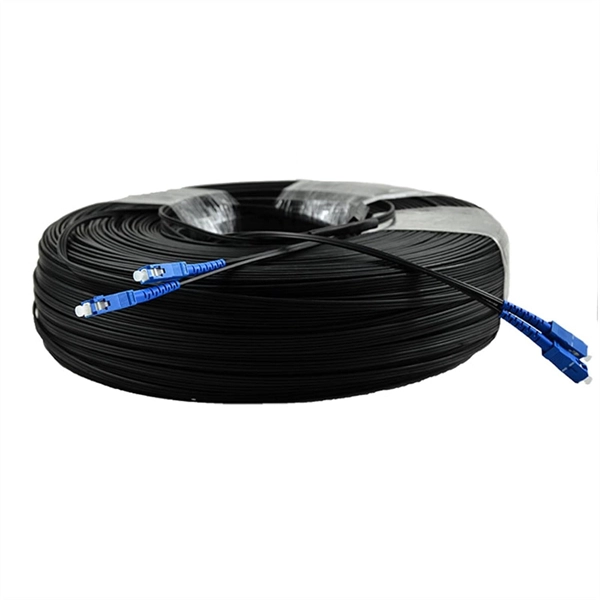
BiDi SFP+ changes the geometry: each module uses a single fiber pair directionally separated by wavelength, so you can run one strand where you previously needed two. One of the most common decisions network engineers face is selecting between single fiber SFP and dual fiber SFP modules. This comprehensive guide explores the differences between single and dual fiber SFPs, their respective benefits, limitations, and use cases—helping you make an informed choice. A single fiber SFP, also known as a BiDi SFP, is designed precisely for this purpose—enabling bidirectional data transmission over a single strand of optical fiber. Unlike traditional SFP transceivers that require two fibers—one for transmitting and one for receiving—a single fiber SFP uses. SFP (Small Form-factor Pluggable) is a compact, hot-pluggable network interface module used to connect network devices (switches, routers, firewalls) to fiber optic or copper cables. An SFP interface on networking hardware is a modular slot for a media-specific transceiver, such as for a fiber-optic cable or a copper. Both transmitting and receiving need one optical fiber to connect. Simplex SFP modules, also known as BIDI transceiver, employs a unidirectional transmission mechanism and have only one port. In practice, that means fewer splice points, smaller patch panels, and less conduit congestion—especially in retrofit buildings.
[PDF]
An optical module is a typically hot-pluggable optical transceiver used in high-bandwidth data communications applications. Optical modules typically have an electrical interface on the side that connects to the inside of the system and an optical interface on the side that connects to the outside world through a fiber optic cable. The form factor and electrical interface are often specified by an int. Electrical Interface TypesThere have been multiple variants of the electrical interface of optical modules that have been used over the years. The earliest forms of optical modules had an analog electrical interface. In the transmit dir. Many different forms of optical modulation and multiplexing have been employed in optical modules. The most common modulation technique historically has been or NRZ.
[PDF]

By providing a physical air gap via photoelectric isolation, this 817 optocoupler board ensures that noise or electrical faults on the load side never reach your expensive processing unit. This voltage level shifter is designed for high-reliability interface driving. Onboard 4-Channel 817 Are Independent:can achieve different voltage control at then same time The output ports are independent of each other. Module Diagram: One Channel of the 4-Channel Optocoupler High-Power Motor Drive Module. Optocoupler Isolation Relay Mo. AC 110V Motor Forward Reverse. The FOD3182 is a 3A output current, high-speed MOSFET gate drive optocoupler. It consists of an aluminium gallium arsenide (AlGaAs) light emitting diode (LED) optically coupled to a CMOS detector with PMOS and NMOS output power transistors integrated circuit power stage. It is ideally suited for. An optocoupler, also known as photo-coupler or opto-isolator, is a component which can transfer an electrical signal across two galvanically¬-isolated circuits by means of optical coupling. Inside the package, an infrared LED on the input side shines onto a phototransistor on the output side. They are sometimes known as opto-isolators, photocouplers, or optical isolators.
[PDF]

One SFP module is inserted into the switch's SFP port, and another module is inserted into the SFP port of the target device, facilitating data transmission through the fiber optic cable. SFP ports are small hot-pluggable module interfaces typically used for connecting fiber optics or copper cables. They support various transmission rates and distances, including 1G, 10G, and higher speeds. SFP modules can be selected based on the requirements, whether it's single-mode fiber for. An SFP port is a physically small slot in a networking device that accepts an SFP module insert. Most modern networking devices, such as Ethernet switches, servers, routers, network interface cards, and fiber media converters, generally have two or more built-in SFP ports. You may connect different. In plain terms, an SFP port on a gigabit switch is the little plug-in hole that gives the switch physical flexibility — the ability to use fiber one minute and copper the next without buying a different switch. Unlike fixed RJ45 copper ports, SFP ports support both fiber and copper modules, enabling far longer distances, greater flexibility, and improved scalability in enterprise. First, to connect SFP modules with fiber optic cables, ensure that the module type matches the line, as there are different modules for single-mode and multimode fiber. Next, insert the module firmly and securely into the SFP port, then attach the cable to the module using the connector. Switches with SFP ports can.
[PDF]

They are the bridge between fiber optic cables in the field and the equipment or patch panels that manage them. By combining factory-installed connectors with spliced bare fiber, pigtails ensure that network installers can create fast, reliable, and cost-effective terminations. Fiber pigtails are simple in appearance, yet essential in function. This unique design is the key to seamless integration with a variety of optical devices, ensuring signals traverse with. Executive Summary: A fiber optic pigtail is one of the most commonly specified yet least understood components in structured cabling. Get the wrong connector type, the wrong polish, or skip proper fusion splicing technique—and you're looking at elevated signal loss, increased back reflection, and a. A pigtail fiber indicates a short length of optical fiber cable that has a pigtail connector (for example, SC, FC, ST, LC, etc. ) fitted on one end and the other end undressed (for connection through fusion or splicing) to the main fiber optic cable. This essential function of pigtail fiber is. Fiber optic pigtails are short, single, or multi-strand pieces of optical fiber cables with a connector on one end and exposed fiber on the other end. But what exactly is a pigtail and why do you use it? In this article, we explain why they are important and which pigtail connector you should choose, with a focus on SC and LC pigtails. What is a pigtail? A pigtail is used to.
[PDF]