This guide provides CISOs and IT leaders with an in-depth look at network security architectures. Perimeter security is the first line of defense, protecting the network from external threats. It includes firewalls, intrusion prevention systems (IPS), and other security devices that control network traffic at the network's boundary. When effectively designed, network security reduces threats like unauthorized access and malware from impacting your network or. Network security architecture is a strategy that provides formal processes to design robust and secure networks. Effective implementation improves data throughput, system reliability, and overall security for any organization. It explains the key concepts in plain language, dives into the core components, shares a framework for. Microsoft Defender for Cloud provides cloud security posture management (CSPM) and cloud workload protection (CWP). It assesses your resources for security compliance, provides a secure score to track your posture, and offers threat protection across Azure, on-premises, and multicloud workloads. It encompasses hardware, software, policies, and procedures.
[PDF]

Run a ground wire from your metal patch panel rack to the grounding bar, use grounding lugs on the rack. Probably not necessary, but use Noalox between the lug and the rack. Remove paint if you want to go all in. Install and ground coax grounding blocks for your antenna. A Cat6 shielded patch panel is a modular component that connects and organizes multiple Ethernet cables in a central location. Unlike unshielded panels, shielded patch panels feature a conductive metal body and a grounding terminal to block EMI and maintain network integrity. GYA's shielded patch. A patch panel is a hardware device used to organize and manage network cable connections, helping to keep network wiring neat and efficient. Based on the shielding type, Cat6 copper patch panels are categorized into two types: shielded and unshielded. The rack itself is then bonded to the Secondary Busbar (SBB) of the telecommunications room. This. Correct STP grounding turns shielding into real EMI protection. This guide shows how to maintain drain‑wire continuity, bond safely at the equipment side, avoid ground loops, and validate results with simple tests. Cabling is cat5e UTP for data and phone. Coax is RG6 with 2 seperate runs, one for commercial tv provider, other for an attic mounted antenna that I'd like to eventually move to the roof. Is there a requirement (USA NEC) to.
[PDF]

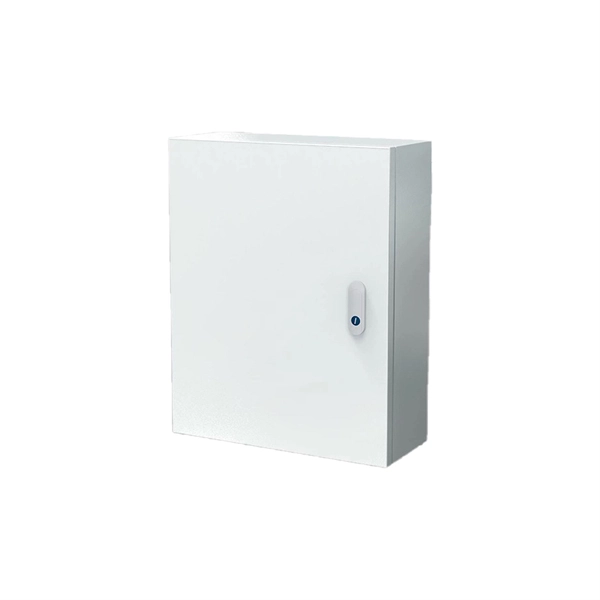
The good news is that network cabinet prices range from as low as $100 for basic wall-mounted units to over $3,000 for specialized outdoor models. However, understanding what drives these costs will help you make a smart buying decision. In this complete guide, we'll break down everything you need. Check each product page for other buying options. VEVOR 6U Wall Mount Network Server Cabinet, 15. 5" Deep, Server Rack Cabinet Enclosure, 200 lbs Max. 5". Explore our top-tier selection of Networking Cabinets and Racks designed to keep your IT infrastructure organized and secure. Whether you're setting up a home lab, a corporate data center, or managing network equipment for a small business, our collection offers robust and versatile solutions. Cabinets are used for storing routers, patch panels, switches and a wide variety of networking equipment and accessories. Network cabinets support large, modular network switches by providing additional space for cable management and. Network cabinets are enclosed systems designed to securely store, organize, and protect networking and IT equipment such as switches, routers, patch panels, servers, power strips, and cable management components. They allow users to secure their data and communication connections. The product will be reserved for you when.
[PDF]

The system cover is off or incorrectly installed. The intrusion switch might be triggered or not working. In this scenario at least one fan or fan assembly (contains two fans) is either damaged (connector, fan blade, fan blade frame), missing or failed. Check the front LCD or system event log to. What do the BMC logs say? Does the server overheat? Are the fans just off because it's not under load? what kind of server do you have, give a spec sheet. Server fans maintain critical airflow to prevent component overheating and system failures. (Adapted from hardware diagnostic methodologies in service docs) 💡 *Pro Tip: Replacing bearings extends fan life by 2-3 years at 20% of new fan cost* (Cost data from “Dell & HPE Server Repair Services. we've got 3 Dell PowerEdge R6615 with an AMD Epyc 9174F in it and the fans are doing something weird. Most of the time they are at 8-9k RPM and fairly quiet. But every minute or 2 they are revving up to full speed (~ 24k) or half speed (~ 13k) and then back down. From failed capacitors to deep grime hiding in your rotor shaft — I show you how to diagnose each fault step-by-step using. Server racks can get hot fast. When the heat isn't managed well, it can slow down your servers, cause shutdowns, or even damage your equipment. Over time, this.
[PDF]
Islamabad, October 31, 2024 – Jazz, Pakistan's leading digital operator and a member of the VEON Group, has taken a significant leap in advancing the nation's telecommunications infrastructure by deploying a 400G IP-based RAN Access Optical Network in collaboration with Huawei. Islamabad, October 31, 2024 – Jazz, Pakistan's leading digital operator and a member of the VEON Group, has taken a significant leap in advancing the nation's telecommunications infrastructure by deploying a 400G IP-based RAN Access Optical Network in collaboration with Huawei. Huawei Technologies and Transworld Associates announced the successful deployment of Pakistan's first 400G optical network, a major milestone in the nation's digital infrastructure development. The cutting-edge network spans 72 sites nationwide, underscoring both companies'. Islamabad: In a landmark step toward Pakistan's digital transformation, Huawei Technologies and Transworld Associates on Wednesday afternoon announced the successful deployment of the country's first 400G optical network, significantly enhancing connectivity across the China-Pakistan Economic. Huawei provided a 400G solution designed for high bandwidth and low per-bit cost. Key features include: a. A CDF network architecture enables smooth evolution to higher speeds (400G+ and beyond) while facilitating L-band expansion for enhanced capacity. Delivering 400G per wavelength, each fiber.
[PDF]
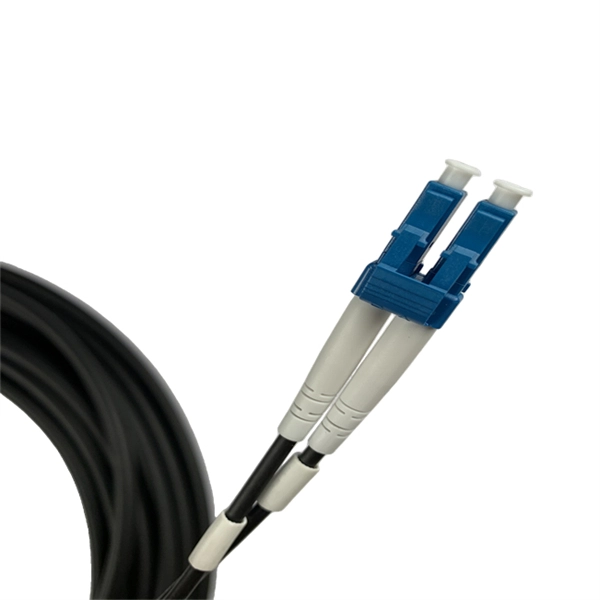
QSFP-DD is a new module and cage/connector system similar to current QSFP, but with an additional row of contacts providing for an eight lane electrical interface. It is being developed by the QSFP-DD MSA as a key part of the industry's effort to enable high-speed solutions. Cisco QSFP-DD and OSFP 800G ZR/ZR+ digital coherent optics modules enable 800G traffic over amplified Dense Wavelength-Division Multiplexing (DWDM) links up to 120 km for 800ZR and over 1000 km for 800G ZR+. QSFP-DD (Quad Small Form-Factor Pluggable Double Density) transceivers double the number of high-speed electrical interfaces in QSFP to achieve 400G Ethernet speeds – and double them again to reach 800G. As a. Abstract: This specification defines: the electrical and optical connectors, electrical signals and power supplies, mechanical and thermal requirements of the pluggable QSFP Double Density (QSFP-DD) module, connector and cage system. This document provides a common specification for systems. Amphenol's QSFP-DD high-speed connector family features a scalable, high-performance interconnect platform with 76 contacts on a 0. 8mm pitch and a dual-mating interface. The QSFP-DD family supports legacy QSFP channels on the front interface and four additional channels on the rear interface. With its compact form factor, backward.
[PDF]
GPON uses passive optical network (PON) is a access in which a single optical fiber from a central location is shared by multiple end users through one or more in series (cascaded). Unlike traditional fiber connections, PON systems distribute optical signals from an (OLT) to many (ONUs) or (ONTs) without requiring active electronic equipment in the distribution network. The absenc.
[PDF]

Our guide delivers actionable, step-by-step best practices for rack layout, cable management, and patch panel installation. Following these steps helps you build a clean and efficient structured cabling system that simplifies maintenance and maximizes network performance. Patch panels are one of the best ways to manage an expansive local area network (LAN) by providing quick and easy access to the ports and connections that connect them altogether. Before a single cable is. H. Use cabinet screws to fix the network patch panel to the network cabinet. Note the wiring sequence on the patch panel when wiring, as T568A and T568B have different sequences. Different brands of patch panels may also have different wiring sequences, so always pay attention to the sequence. A patch panel is a board that houses multiple network ports. It acts as a bridge between incoming and outgoing Ethernet cables. Instead of plugging and unplugging devices directly from network switches, you connect them to the patch. Patch panels are a crucial component in any network infrastructure, providing a centralized location for managing cables and connections. By using patch panels, network administrators can simplify cable management, improve network scalability, and reduce downtime. This innovative tool combines precision with automation, ensuring accurate network documentation for IT professionals and network administrators.
[PDF]
See this topic to learn how to remove and install a door. Unlock and open the door. Removing a door Hold the door in place, and lift both hinge pins until they lock in the open position so that the door is disengaged. Remove the door from the rack cabinet frame. Install. Before installing your server in a rack cabinet, review the following guidelines: Two or more people are required to install the device in a rack cabinet. Ensure that the room air temperature is below 35°C (95°F). Do not block any air vents; usually 15 cm (6 in. ) of space provides proper airflow. In this comprehensive guide, we will walk you through the step-by-step process to ensure a successful installation and setup of your network cabinet system. Key steps include measuring the installation area, mounting rails, organizing cables, and testing stability. Proper grounding and compliance with safety. Page 3 M3. Click Side Panels (E) into place. To install the Tempered Glass Door (G), locate the side with two pins. With your thumb, pull down on the spring pin and slide it. Complete Assembly Procedure for 9U Wall Mounted Network Cabinet (Double Section) How to assemble a double section wall mounted network cabinet server rack? 1, Insert top and bottom panels into the side frames. And fixed the frame on the front door position with 4 M5*8 self-tapping screws.
[PDF]
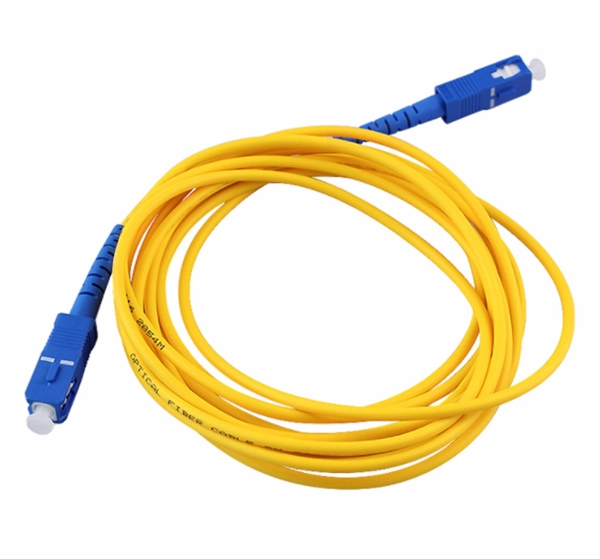
Directory of 84 fiber optic cable manufacturers in the US. Find fiber optic cable assemblies, connectivity products, and subsea cables, plus contact info and. Buyers seek manufacturers to solve challenges like achieving specific optical return loss (ORL) targets for. Thomas has been North America's number one industrial sourcing platform for more than 125 years. You can filter these companies by location, certifications, and more factors to easily find and connect with the right. 171 Fiber Optic Cable manufacturers listed. Fiber optic cable is composed of two layers of glass, the core, which carries the actual light signal, and the cladding, which is a layer of a glass surrounding the core. Narrow down on the. Find 1,029 Fiber Optic Cables suppliers with GlobalSpec. Our catalog includes 106,451 manufacturers, 20,792 distributors and 94,628 service providers. Charlton Precision. The data fields provide comprehensive information including a description of the Fiber Optical Cable product, its HSN code, shipment date, price, quantity, countries of origin and destination, ports of origin/destination, details of Suppliers and Buyers, and top decision makers' contact.
[PDF]
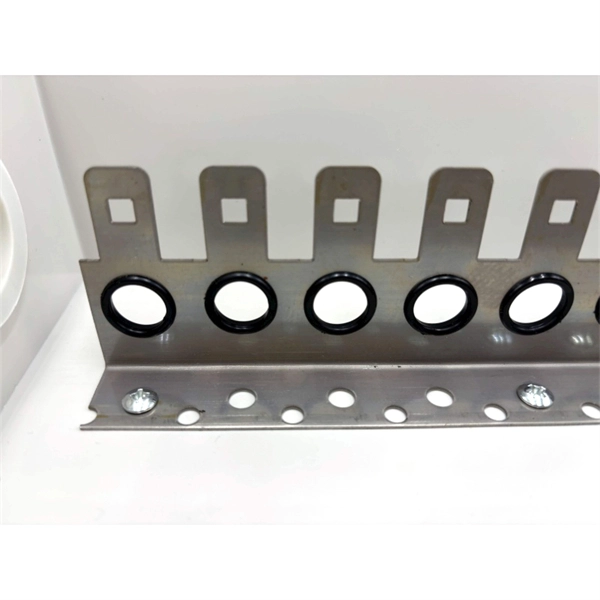
This guide is intended to present the fundamentals of power system design for commercial and industrial power systems. A distribution board, also known as a panel board or breaker panel, is an enclosure that houses electrical components such as circuit breakers, fuses, and busbars. Its primary function is to distribute electrical power from a main supply to various circuits while providing protection against. These Distribution Boxes enable decentralized installation of the electronics close to the load. The range of applications extends from pure energy distribution in buildings to building automation and through to industrial plants. SMART DISTRIBUTION BOXES FOR FLEXIBLE BUILDINGS. It is a vital part and central hub of any electrical system. Whether it's a home, office, or factory. Electrical distribution system design is a critical aspect of industrial facility engineering that determines how electrical power is delivered from the utility service to end-use equipment. A well-designed distribution system provides reliable power, adequate capacity, proper protection, and. In industrial power distribution systems, cable distribution boxes (also known as power distributor boxes, distribution electrical boxes, or electrical power distribution boxes) are the core hub of power transmission, branching, and protection. Its layout directly affects the efficiency of the.
[PDF]

As Armenia transitions to renewable energy (15% of its power already comes from solar!), these cabinets act like Swiss Army knives for electricity—versatile, compact, and ready for action. Here in Triangle Connected Technologies we do Electrical Engineering and consulting. We are a systems integration company that provides exceptioanal solutions for your needs. We are expertise in Electrical, Low Current Systems and KNX Smart Home automation systems design, supply, installation and. Who makes energy storage enclosures?Machan offers comprehensive solutions for the manufacture of energy storage enclosures. We have extensive manufacturing experience covering services such as battery enclosures, grid energy storage systems, server cabinets and other sheet metal enclosure OEM. transforming Armenia"s energy landscape. But instead of unloading goods, it stores nough energy to power 300 homes for utdoor Cabinet Type Energy Storage System. The outdoor cabinet energy storage system, is a compact. This scenario explains why the smart energy storage cabinet solution is becoming the talk of Yerevan's tech circles. Cooperate with solar panels to form an. Huijue Group"s Industrial and commercial distributed energy storage, with independent control and management of single cabinets, has functions such as peak shaving Lithium Battery Energy Storage Cabinet. Energy Storage System. :-20°C~ 60°C.
[PDF]

One rack unit equals 1. 45 mm), defined by the EIA-310. Measure your deepest server and add 3–6 inches for cabling and airflow. While rack height is standardized in rack units (U), external dimensions vary by manufacturer. A rack space calculator is a specialized tool designed to help data center professionals, IT administrators, and network engineers determine the optimal placement and space requirements for equipment in server racks. This calculator helps you plan rack layouts by calculating the total rack units. Server rack height is measured in rack units (U). Use the. When planning LAN infrastructure, selecting the correct data rack size is essential for proper equipment fit, ventilation, cable management, and future expansion. A practical formula often used for estimating the required rack size is: Rack size = 1. Common sizes: 42U, 48U, and compact options like 22U–27U. Standard width is 19 inches (EIA-310 compliant), while outer widths vary (e. Rack depth matters for. The three primary dimensions to consider are rack height (measured in rack units or U), rack width (most commonly the industry-standard 19-inch format), and rack depth (typically ranging from 24 inches to 48 inches). Each of these factors influences equipment fit, airflow management, cable routing.
[PDF]